SlamBall's unique slang reveals the sport's airborne rulebook
SlamBall’s jargon is more than flavor. It is the language of a sport that lives on springbeds, resets on the Island, and measures greatness in the air.
A ball trap near the glass, a bounce down through the springbeds, and a legal reset on the Island tell you more about SlamBall than “drive” or “dunk” ever could. The sport invented its own vocabulary because it invented its own geometry.
Why the slang matters before the highlight does
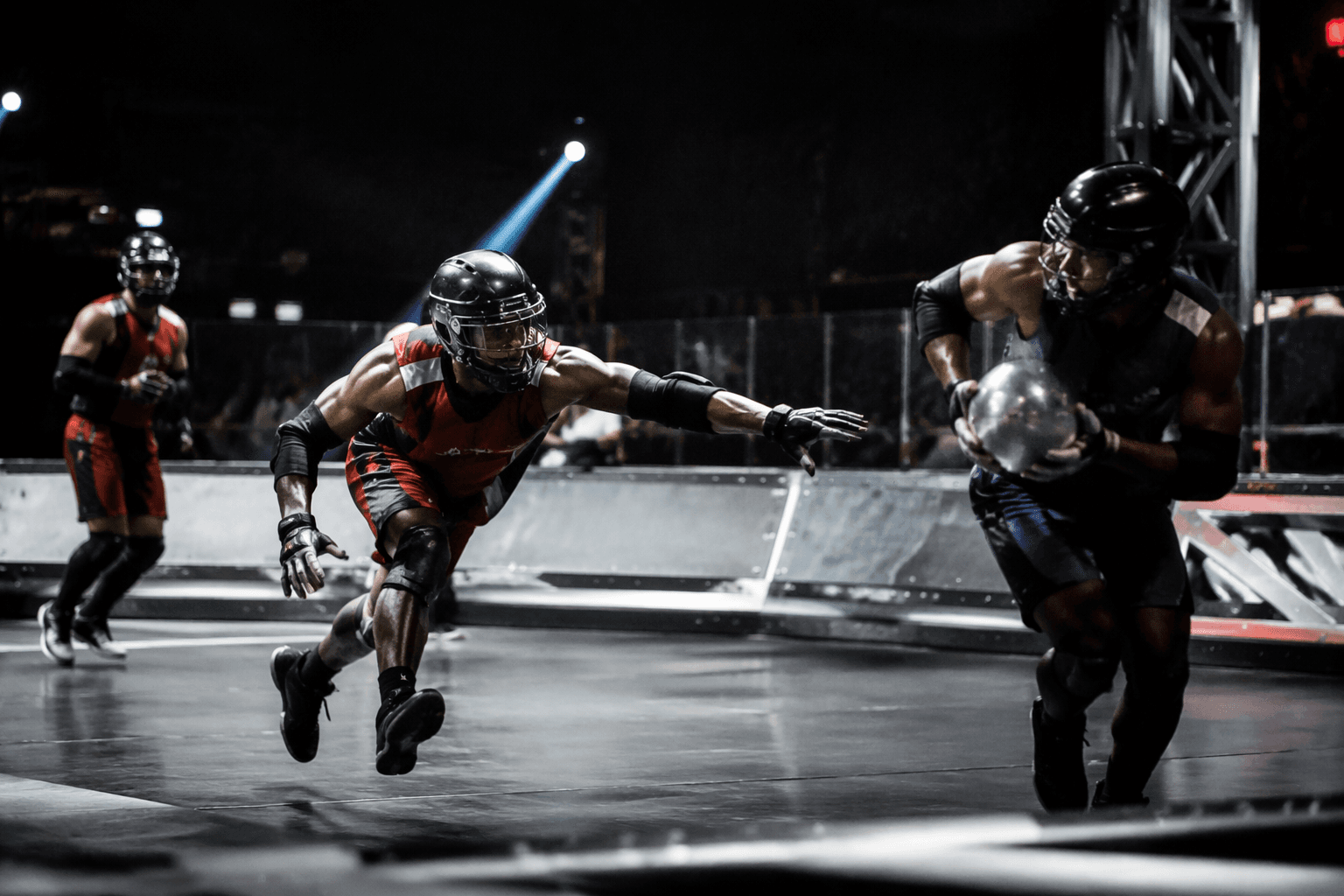
SlamBall’s official slang is not decoration. It is shorthand for a court where players are moving through a space that ordinary basketball never has to describe: four springbeds, a no-contact Island, and bodies launched high enough that possession changes, protection, and transfer all need their own names. Terms like alley-oop, back bailout, backdrop, ball trap, bounce opposite, BTB, BTL, burner, cadence, certification, and chaser map movement, risk, and timing, not just catchy nicknames.
That is what makes the language useful to a viewer watching for the first time. A ball trap tells you a player has recovered a loose ball near the glass or in the springbed, which means the play is still alive in a very specific part of the court. A bounce down tells you the ball has been pushed ahead and recollected between bounces in a legal transfer, which signals both speed and control.
The Island is where the sport changes rules, not just pace
If one word explains why SlamBall needs its own rulebook, it is Island. The rules define it as the horizontal padded area between the four springbeds, and that is where a player may momentarily establish position to receive, redirect, or move the ball. No contact is allowed there, and more than incidental contact can trigger a face off.
It changes how you read every possession. In regular basketball, contact is part of the physical language of the game. In SlamBall, the Island creates a controlled zone in the middle of all that bounce, which means spacing, timing, and entry angles matter in a way casual viewers can feel even before they know the terms. The offense is not just trying to beat a defender. It is trying to use a legal, no-contact reset point to keep the play airborne and alive.
A player drifting toward the Island is not just moving into open space. That player may be setting up a reception, a redirect, or the kind of transfer that keeps a possession legal while the action ricochets off the springbeds around it.
SlamBall was built with this vocabulary from day one
The language sounds deliberate because the sport itself was deliberate. SlamBall was invented in 1999 by Mason Gordon and first played in Los Angeles. Gordon is still identified by the league as the creator and co-founder. The game was not adapted from basketball after the fact. It was designed from the ground up as a hybrid of basketball, football, hockey, and trampolines.
That origin explains why so many of the terms feel technical. Gordon envisioned play that could climb to twenty feet off the floor, and once you build a sport around that kind of elevation, ordinary basketball phrasing becomes too blunt. “Basket” does not tell you whether the player is transferring between springbeds, working off the glass, or setting up a legal touch on the Island. SlamBall’s language exists because the game is too specific to be described accurately with generic hoops vocabulary.
The league returned in 2023 after a 20-plus-year layoff.
The dunk directory is where SlamBall turns skill into signature
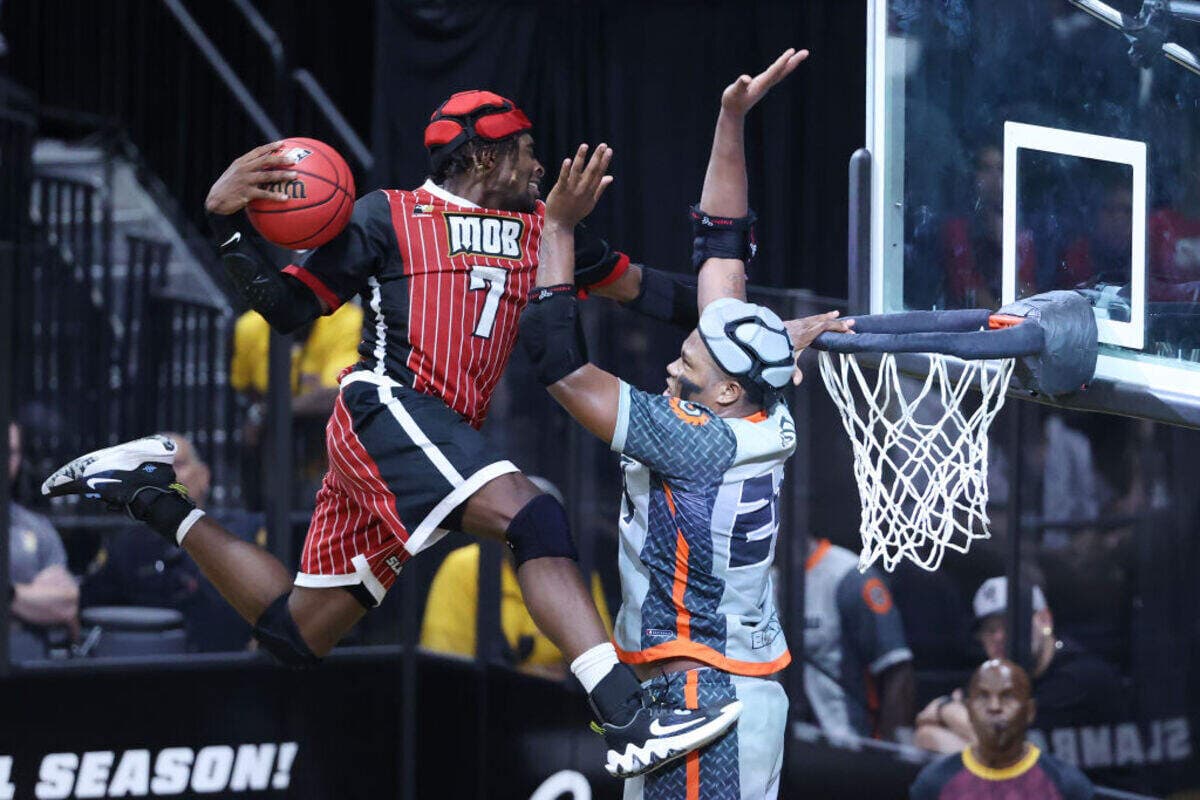
The official dunk directory is the sport’s most entertaining proof that SlamBall is not trying to imitate basketball. It names aerial moves such as 360 Stall to Windmill, Around The World, BB McNasty, Blender, Boomerang, Triple Tap, Flying Squirrel, Ghost 360, Lasso, McNasty, Reemix, Revolution, and Sh8kdown Baseline Transfer. Those labels do more than sound cool. They tell you how the dunk unfolds, how many rotations or touches are involved, and how the springbeds alter the mechanics of the finish.
Once you learn the vocabulary, you stop seeing only a dunk and start seeing the difference between one athlete’s body control and another’s. A Triple Tap suggests repeated contact in the sequence. A Ghost 360 or Revolution hints at spin and timing. A Baseline Transfer tells you the finish is tied to the unique court design, not just a straight-line attack at the rim.
The league’s return also made the language visible to a wider audience
SlamBall’s 2023 relaunch opened live from Las Vegas on July 21, 2023, at Cox Pavilion. The broadcast package included more than 30 hours of live SlamBall programming that season, and opening night featured three games. The exclusive two-year broadcast partnership covered the 2023 and 2024 seasons.
A sport’s vocabulary grows when people can hear it repeatedly in real time. With live coverage across ESPN, ESPN2, and ESPN+, the terms stopped being internal code and became part of the viewing experience. The more often a fan hears bounce down, Island, or back bailout in context, the faster the sport becomes legible.
The reboot also tied the language to identity. The 2023 season brought back three legacy teams, the Mob, Rumble, and Slashers, alongside newer franchises, and the league chose the names and logos as a nod to the sport’s history and future.
How to watch SlamBall like someone who already gets it
The simplest way to read a SlamBall game is to track three things at once:
- Where the ball is, especially near the glass and on the springbeds, where a ball trap or bounce down can decide possession.
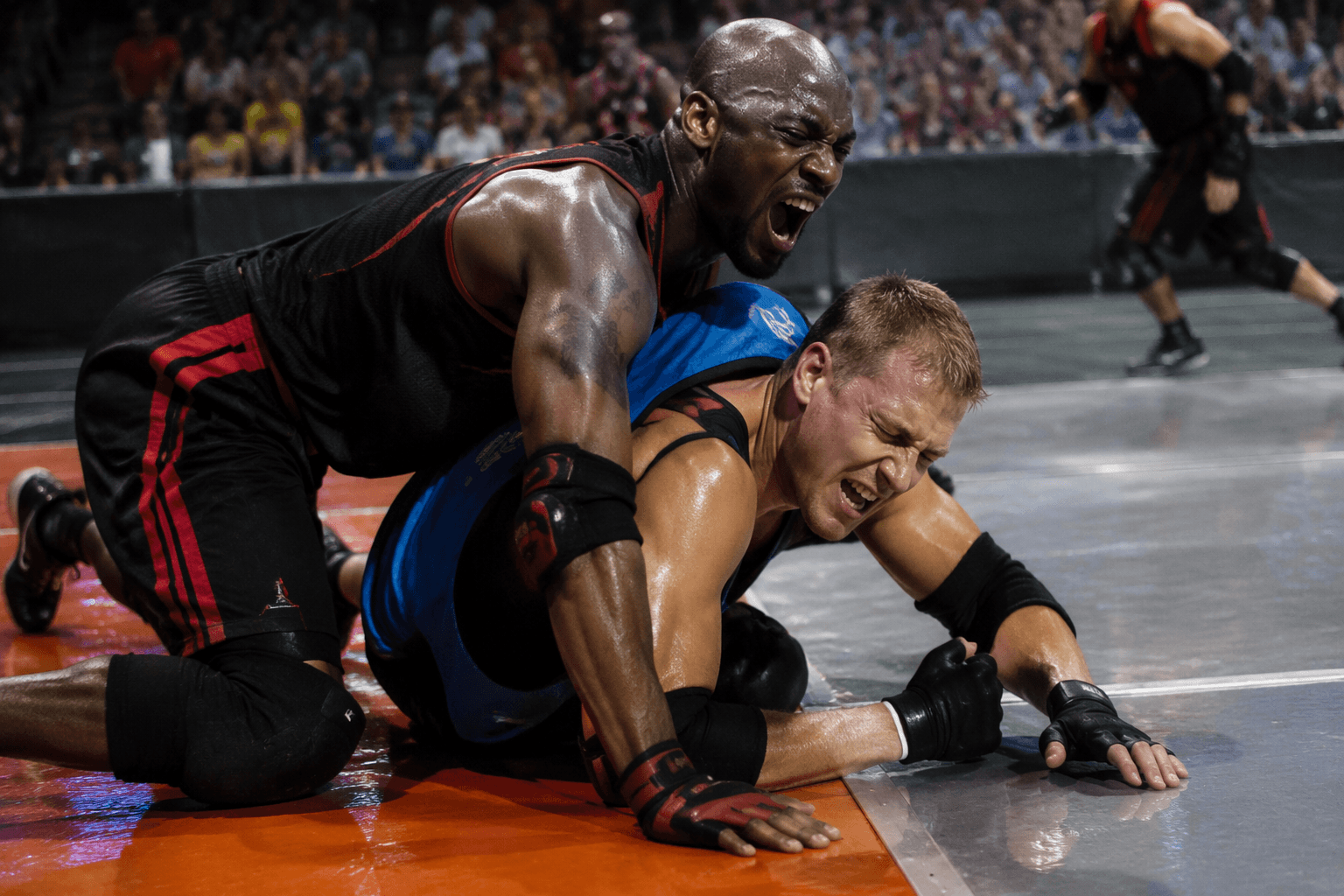
- Where the bodies are, especially on the Island, where contact changes the whistle and the flow.
- How the finish is built, because the league’s dunk names reveal whether a player is rotating, transferring, or finishing with a signature aerial move.
This article was produced by Prism’s automated news system from verified source data, official records, and press releases, then run through automated quality and moderation checks before publishing. The system is built and supervised by the people who set the standards it runs under. Read our full AI policy.
Did this article answer your question?