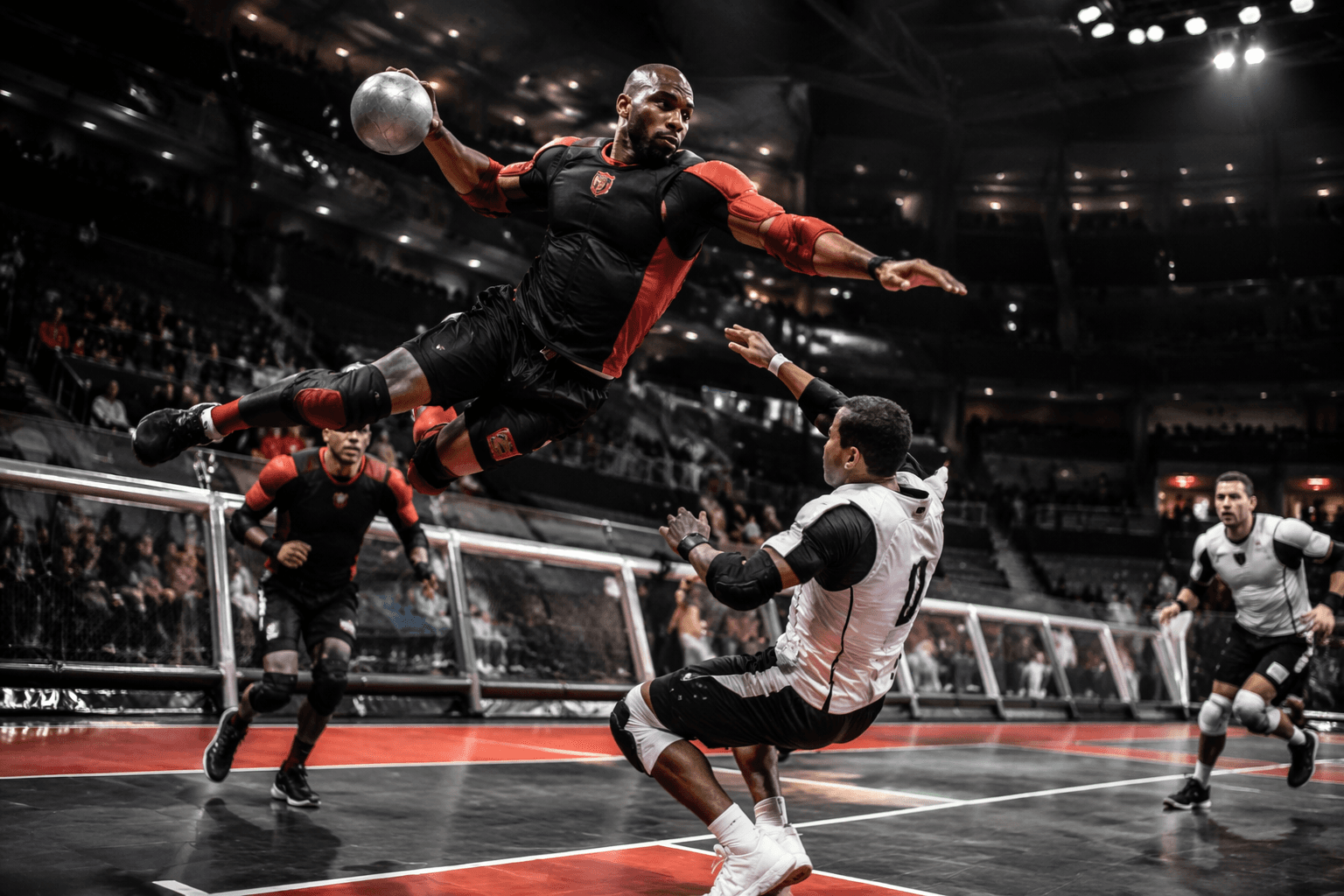
Tony Crosby II Thrills With Elite Hang Time and Relentless Playmaking
Tony Crosby II makes the impossible look routine — elite hang time and relentless court instincts make him SlamBall's most electric playmaker.
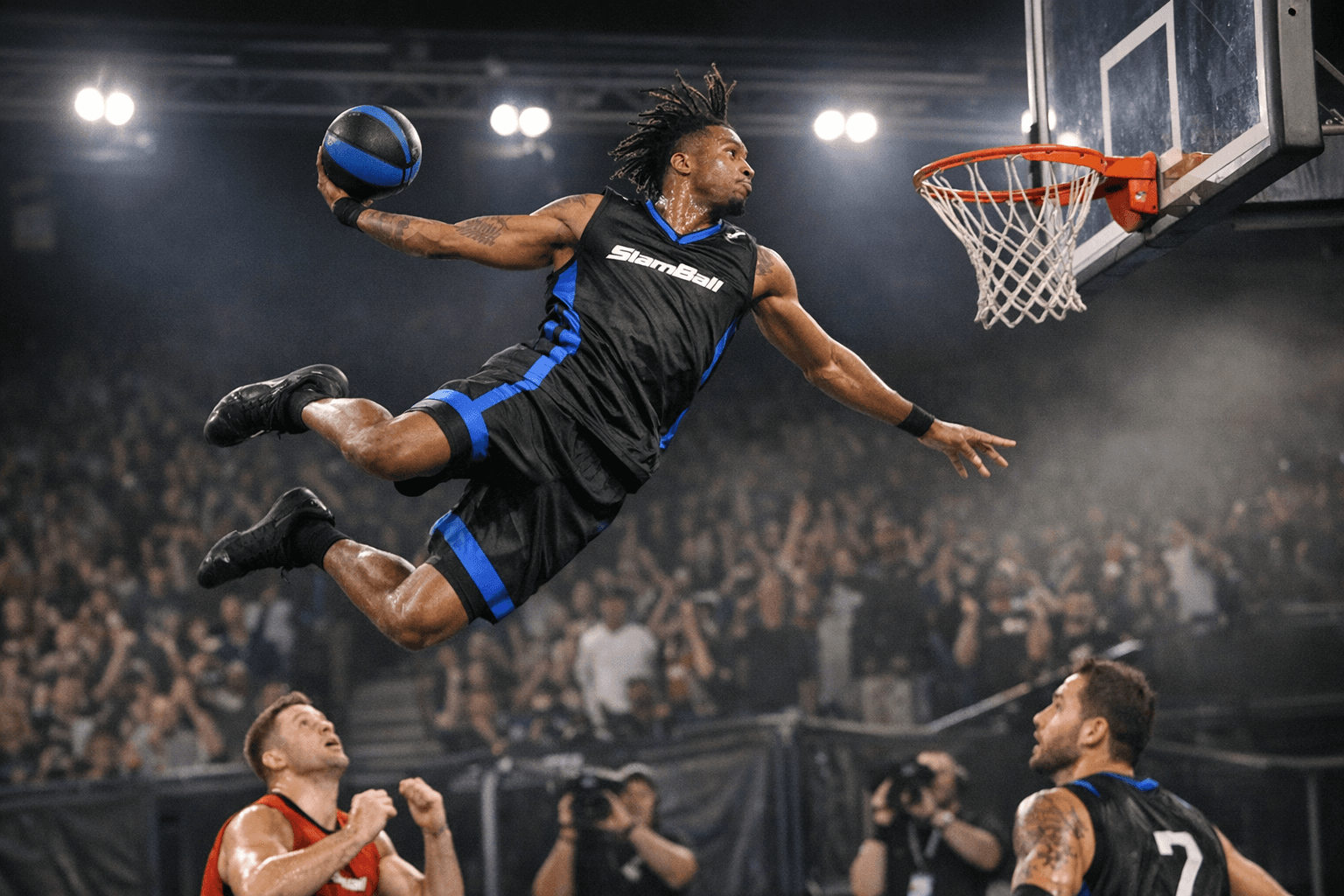
There's a moment in SlamBall that separates the athletes who can jump from the athletes who can *fly*. Tony Crosby II lives in that second category. Compact where some of his peers are towering, Crosby has built his game around a principle that anyone who watches him quickly understands: when your hang time is elite, the rim is never really out of reach.
The official SlamBall roster lists him as one of the sport's most exciting playmakers, and if anything, that framing undersells it. Crosby doesn't just reach the trampoline beds and launch skyward. He *waits* up there. He reads the defense mid-flight, adjusts his release, finds the angle that wasn't there a half-second ago. That combination of physical ceiling and in-game intelligence is what puts him in a class of his own.
What Makes His Hang Time Different
Hang time in SlamBall isn't purely about raw athleticism the way it might be in a traditional basketball context. The trampoline system amplifies every player's vertical, so the athletes who separate themselves are the ones who can *do something* with the extra airtime rather than just collect it. Crosby does plenty with it. His timing at the rim is precise enough that he can absorb contact, stay composed, and still finish. Where other players are already descending by the time a defender arrives, Crosby is still hovering, still a threat.
His compactness actually works in his favor here. A smaller frame generates less rotational drag mid-jump, and Crosby moves through his aerial adjustments with a fluidity that bigger players simply can't replicate. The highlight plays aren't accidents. They're the product of a player who has learned exactly how his body behaves at every stage of a jump and exploits that knowledge on every possession.
Playmaking as a Full-Court Weapon
What keeps Crosby from being a one-dimensional aerial showman is his playmaking instinct. SlamBall rewards players who can create opportunities in transition, and Crosby understands the geometry of the sport at game speed. He's not waiting for plays to develop around him. He is the development of the play, the axis around which a possession turns dangerous.
The official SlamBall profile frames his instinct for highlight plays as innate, and that instinct shows up on both ends of the floor. Offensively, it means knowing when to attack the trampolines for a dunk attempt and when to pull back, draw the defense out of position, and find a teammate with a cleaner look. That kind of decision-making at trampoline speed is genuinely difficult, and Crosby makes it look almost casual.
Why the Compact Athlete Thrives in SlamBall
There's a persistent assumption in high-flying sports that bigger means better, that the tallest athlete with the longest reach will dominate aerial competition. SlamBall occasionally disrupts that logic, and Crosby is Exhibit A for why. His build allows him to generate lift quickly off the trampoline beds without sacrificing control. Where a longer-limbed player might need more time to organize their body in the air, Crosby is already locked in and ready to finish before the defense can fully react.
This is a style of play that demands physical honesty from an athlete. You either have the hang time and the timing, or you're exposed the moment you leave the trampoline. Crosby has both, and he has them at a level that makes him one of the most difficult matchup problems in the sport. Defenders who give him space get dunked on. Defenders who crowd him find themselves beaten by the adjustment he makes while they're still looking for where he went.
The Highlight Instinct
Not every player in SlamBall has the instinct to turn a routine possession into a moment that blows the ceiling off the arena. Crosby has that instinct in abundance. It isn't recklessness. The plays that register as jaw-dropping to a crowd are, from his perspective, calculated. He sees the window, he knows his own capabilities, and he commits. The result looks like physical impossibility from the stands because most players, even elite ones, wouldn't attempt what he attempts, let alone convert it.
That instinct also means Crosby raises the energy level of a game simply by being on the court. Opponents know what he's capable of and adjust defensively in ways that can open up the entire offensive system around him. A player who forces that kind of attention without even touching the ball is valuable in ways that don't always show up cleanly in a box score but absolutely show up in the final outcome.
The Bigger Picture
SlamBall is a sport built for spectacle, and within that spectacle, it still separates the performers from the players. Tony Crosby II is both. His hang time is the kind that makes first-time viewers grab whoever is sitting next to them and point at the screen. His playmaking is the kind that makes coaches draw up sets specifically to put the ball in his hands at the right moment.
Compact athletes with elite timing and an innate feel for the highlight play don't come along often. When they do, the sport tends to reorganize itself around what they can do. Keep watching what Crosby does with a trampoline under his feet and open sky above him. The ceiling, in every sense, is nowhere close to being found.
This article was produced by Prism’s automated news system from verified source data, official records, and press releases, then run through automated quality and moderation checks before publishing. The system is built and supervised by the people who set the standards it runs under. Read our full AI policy.
Did this article answer your question?