90-day AI visibility playbook helps agencies win client retainers
Agencies can package AI visibility into a 90-day reset, then turn measurable gains in answer engines into a cleaner retainer pitch.
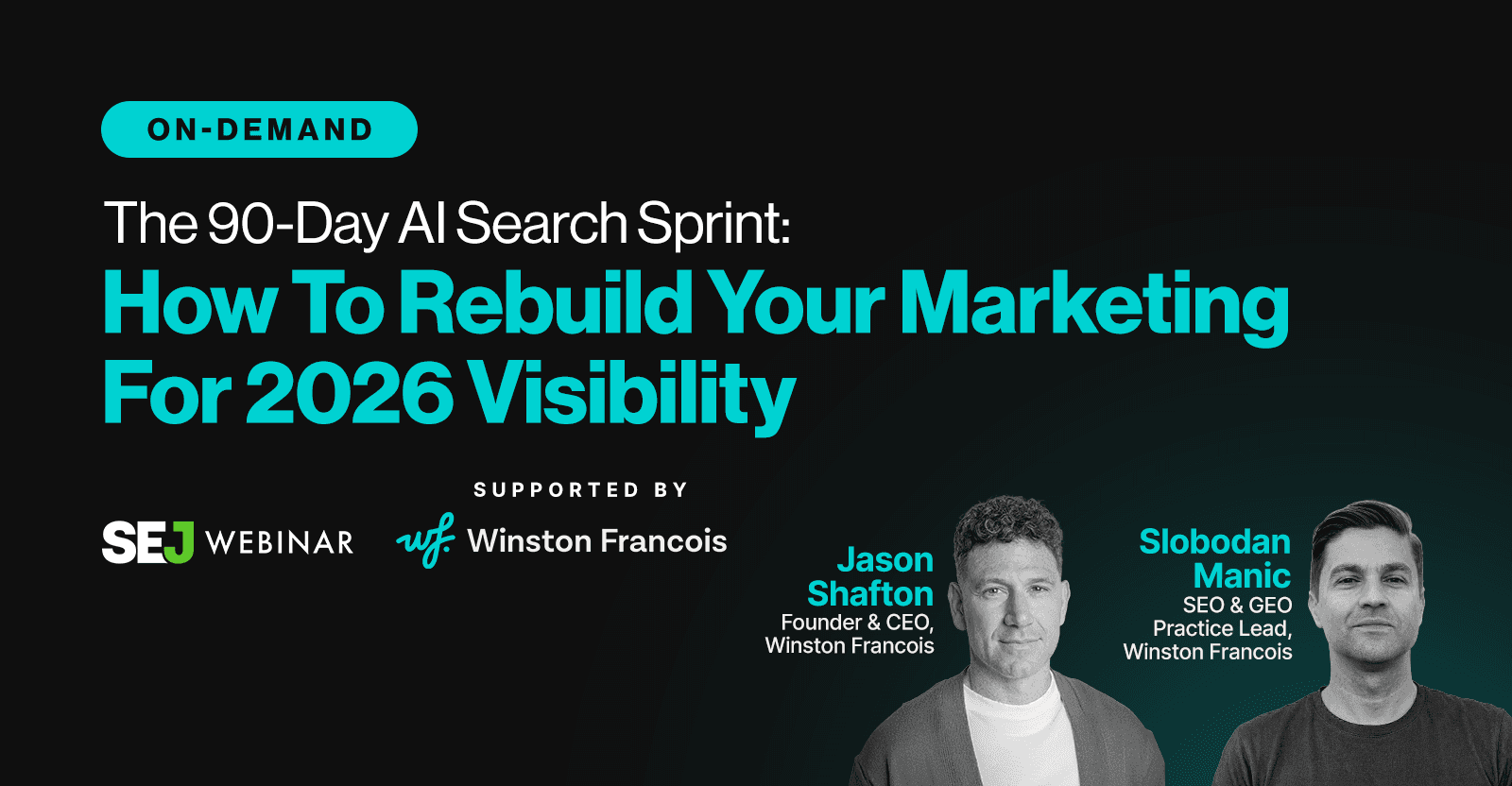
Agencies do not need another AI trend deck. They need a working operating model that shows clients where discovery is breaking, what to rebuild first, and how to prove value fast enough to earn a longer engagement.
The strongest version of that pitch starts with a simple shift in language: this is not about chasing every new acronym, it is about building a 90-day system around how people actually ask for recommendations in Gemini, Claude, ChatGPT, AI Overviews, and Perplexity. That framing matters because it turns AI visibility from a vague ambition into a client service with a beginning, a middle, and a measurable end.

Why the reset matters now
The market has already moved past classic blue-link thinking. Google rolled AI Overviews out to all users in the United States in May 2024, then said the feature had already been used billions of times in Search Labs. By October 2024, Google said AI Overviews had expanded to 100-plus countries and multiple languages and had crossed more than 1 billion monthly users. By May 2026, Google said AI Overviews were used by more than a billion people. OpenAI followed with ChatGPT search on October 31, 2024, then expanded it to all logged-in users in December 2024 and to everyone in supported regions by February 5, 2025.
That is why agencies are being forced to think differently. Search is no longer just about ranking pages, it is about being recommended when a buyer asks an AI system for help. If you can show a client how their brand shows up, or fails to show up, inside those answer engines, you are not selling a trend. You are selling access to the next layer of demand.
What the 90-day sprint rebuilds first
The most useful version of this playbook starts with a baseline audit, not a content binge. In the first month, you should map the prompts that matter, check where the brand appears in AI answers, and compare that against what still works in classic search. That means looking at technical SEO, content freshness, author credibility, internal linking, structured data, and the pages most likely to be cited when a model answers a question.
One of the most important pitfalls is assuming your own website controls the whole conversation. Semrush found that community-generated sources such as Wikipedia and Reddit can outrank official marketing content in AI citations, which means reputation and third-party corroboration matter more than a lot of agencies want to admit. If your client has a thin digital footprint outside its own domain, the first 30 days should fix that gap before anyone starts talking about scale.
Days 1 to 30: audit the current baseline
Start by identifying the product categories, problem statements, and comparison questions that buyers are already asking. Then check whether the brand appears in AI Overviews, ChatGPT search, and other answer engines for those prompts, not just for vanity terms. You are looking for a visibility map that shows where the brand is missing, where it is cited, and which competitors own the most useful answers.
The point is not to produce a beautiful spreadsheet. The point is to find the exact places where discovery breaks, whether that is a weak page title, a stale landing page, no expert proof, or an absence of trusted third-party references. If you cannot explain that gap in plain English, you are not ready to sell a retainer.
Days 31 to 60: run AI-native experiments
The next month is where the agency earns its keep. Rework pages so they answer the question fast, support the answer with evidence, and make the brand easy to cite. That usually means tighter section headings, clearer comparison copy, better product detail, stronger bios, and a more deliberate mix of owned content and earned mentions.
This is also where the numbers help the sales story. Semrush reported that AI platforms accounted for just 0.15% of global internet traffic in 2025, but Search Engine Land reported that AI discovery sessions across 19 Google Analytics 4 properties jumped from 17,076 to 107,100 when the first five months of 2025 were compared with the same period in 2024, a 527% increase. The traffic is still small, but it is growing fast enough that standing still is a bad bet.
The better pitch is that even low-volume AI traffic can be valuable. Seer Interactive said a ChatGPT traffic case study showed AI-driven visitors converted at a higher rate than traditional organic search on one client site. That is the kind of evidence that changes a client meeting, because it shifts the conversation from impressions to revenue quality.
Days 61 to 90: scale what works
By the final month, you should know which pages, topics, and source signals are pulling weight. That is when you expand the winning topics, refresh the pages that are starting to drift, and build a reporting cadence that a client can understand without decoding a wall of jargon. The agency value is not just in finding one good answer, it is in building the machine that keeps finding them.
This is also the moment to repackage the work into a retainer. A 90-day sprint is a clean entry offer because it is finite, measurable, and tied to business outcomes. Once the baseline is fixed and the first wins are visible, the next sale is not more consulting. It is ongoing visibility management.
Who owns AI visibility inside the agency
This only works if the agency stops treating AI visibility as everyone’s side hustle. Someone has to own the topic map, someone has to own the technical setup, and someone has to own the proof that the work is changing demand. Jason Shafton’s background, scaling growth at Google, Headspace, Kajabi, and other funded startups, gives this framework credibility because it reads like an operating model, not a whiteboard fantasy.
A practical team structure looks like this:
- Strategy lead: owns the priority prompts, category map, and client narrative.
- SEO lead: owns crawlability, structured data, internal linking, and page architecture.
- Content lead: rewrites the pages so answer engines can quote them cleanly.
- PR or brand lead: builds the third-party authority that models trust.
- Analytics lead: tracks AI discovery sessions, referral quality, and conversion lift.
That split matters because AI visibility is not a single-channel problem. If your SEO team is working without your PR team, and your content team is writing without analytics feedback, you will end up with pretty pages that still do not show up where buyers are asking.
How to sell the retainer without overselling the hype
The cleanest retainer pitch is built around milestones, not promises. Clients do not need a lecture about the future of search. They need a plan that says what gets rebuilt first, what gets tested next, and what proves the system is working.
- 30-day baseline audit with prompt coverage, citation tracking, and gap analysis.
A simple service stack looks like this:
- 60-day experiment phase with content rewrites, authority-building, and source improvements.
- 90-day scale plan with the winning topics, reporting dashboard, and next-quarter roadmap.
That structure gives leadership a reason to keep funding the work because it creates visible checkpoints. It also makes the agency more defensible, since the deliverable is not a pile of recommendations. It is a repeatable discovery system that can be improved quarter after quarter.
The agencies that win this shift will be the ones that treat AI visibility like an operating reset, not a campaign. They will rebuild the right pages, assign real owners, and prove that the work changes how buyers find and trust a brand. That is how a 90-day sprint turns into a retainer, and how a new search era becomes a durable service line.
Know something we missed? Have a correction or additional information?
Submit a Tip