Agencies shift focus to retention as client churn rises
Retention is now the growth lever agencies cannot ignore, as faster churn and tougher attribution force SEO firms to prove value sooner.
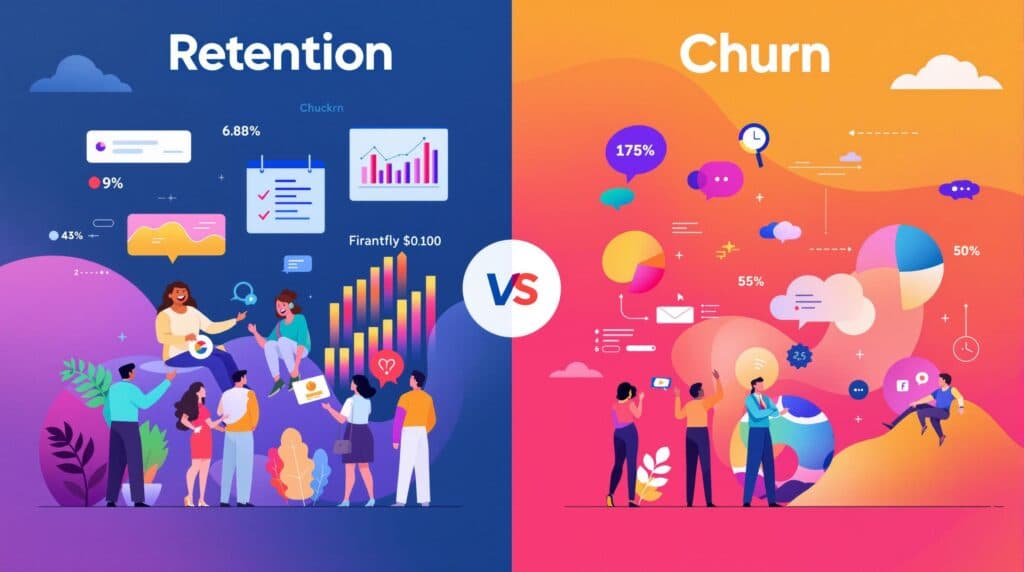
Retention replaces acquisition as the main growth engine
The clearest message from Search Engine Journal’s 2026 Outlook for Marketing Agencies is that agencies can no longer lean on new business to offset lost accounts. The report, built on insights from 100 agency leaders, points to a market with more competition, higher budgets, and faster client churn, which makes retention more valuable than acquisition in day-to-day growth planning.

That shift changes the economics of agency work. Winning a new client still matters, but it no longer solves the core problem if existing accounts are slipping away too quickly. For agency owners, the practical takeaway is simple: every service line, reporting process, and client touchpoint now has to support renewal, expansion, and longer tenure, not just lead generation.
Why SEO agencies feel the pressure first
SEO agencies sit at the center of this change because search work often takes time to show results. Rankings can move gradually, content can compound over months, and technical fixes rarely translate into instant revenue on their own. In a churn-heavy market, that delay becomes a liability unless the agency can communicate progress continuously.
The report’s framing matters because it pushes SEO leaders to think beyond classic performance narratives. A client who only hears about rankings at renewal time may not connect the work to business outcomes in time to stay engaged. The agencies that hold accounts are the ones that keep proving value throughout the engagement, not just when a contract is up for review.
That is why the report emphasizes proving value early. If the first few months of an engagement feel abstract, the agency is already at risk. Early wins, clear expectations, and visible milestones become retention tools, especially when the client is paying higher budgets and expects faster clarity on return.
Retainers are getting harder to defend, and more important to earn
The outlook also highlights increasing retainers, which signals a market where clients are willing to spend more but demand stronger justification. That creates a tension agency leaders know well: higher budgets can raise revenue, but they also raise scrutiny. Clients want to see that every additional dollar is tied to growth, not just activity.
This is where positioning matters. Agencies that still sell SEO as a bundle of tasks will struggle to defend premium retainers. Agencies that frame SEO as a revenue-supporting system, one that affects pipeline, conversion, and retention, are better equipped to justify larger monthly commitments.
Incremental budget is another important clue in the report. The question is not simply whether a client will spend more, but where they are choosing to direct that extra money. Agencies need to understand whether the next dollar is going toward content, technical fixes, analytics, automation, or broader growth support, because that reveals what the client believes will move results fastest.
Reporting is now part of the product
One of the most important developments in the report is the growing role of reporting and automation in proving ROI faster. That is a major change in agency management. Reporting is no longer a back-office function that summarizes work after the fact; it is part of the client experience and part of the value proposition itself.
The report also points to AI as a force helping agencies connect calls, forms, and conversations to revenue. That matters because it closes the loop between search activity and business outcomes. Instead of saying that a page ranked better or a keyword moved up, agencies can show how search and content efforts contributed to leads, pipeline, conversions, and retention.
That shift in measurement changes how agencies are judged. The standard is moving away from isolated SEO metrics and toward business impact. An agency that cannot connect its work to outcomes may still be doing solid work, but in this market, solid work without proof is vulnerable work.
The measurement gap is quietly driving churn
The report identifies a measurement gap that quietly fuels account loss. When attribution is weak, clients struggle to see what the agency is really contributing, and uncertainty quickly turns into doubt. Even if the underlying work is strong, sloppy reporting can make a client feel underinformed, which is often enough to trigger a search for alternatives.
That means reporting quality is not cosmetic. It is a churn control mechanism. Agencies with clean attribution, consistent dashboards, and plain-language explanations of what changed and why are more likely to keep accounts, especially when results take time to mature.
For SEO teams, this is where the margin pressure and growth opportunity collide. Better measurement requires investment in systems, but the payoff is lower churn, stronger renewals, and a more defensible retainership model. The agencies that do this well can often raise confidence without having to raise headcount at the same pace.
What agency owners should change now
The report’s practical message is not to abandon SEO fundamentals, but to package them differently. The winners will be the firms that shorten the path between delivery and proof, because clients rarely wait patiently for long feedback loops anymore. If the value is visible sooner, the engagement is safer.
A few decisions stand out for agency leaders:
- Build reporting around business outcomes, not just rankings.
- Use automation to reduce the lag between work completed and value shown.
- Identify early wins that can be surfaced in the first stages of an engagement.
- Tie content, technical SEO, and conversion work to pipeline and revenue, where possible.
- Review attribution and data quality regularly, because weak measurement can undermine strong execution.
These are not cosmetic upgrades. They affect hiring, pricing, and service mix. Agencies that can produce clearer proof may justify higher retainers, sell more confidently into growth-minded clients, and protect margins even when competition intensifies.
The new competitive edge is proof, not just performance
Taken together, the report reads less like a tactics roundup and more like a playbook for retention. More competition and faster churn are forcing agencies to rethink how they earn trust, how they price recurring work, and how they define success. For SEO agencies in particular, the challenge is to make long-horizon work feel immediate enough to keep clients committed.
The agencies that adapt will not just improve reporting. They will redesign the client relationship around continuous proof of value. In a market where acquisition alone cannot compensate for churn, that is the difference between growing and merely replacing what was lost.
This article was produced by Prism’s automated news system from verified source data, official records, and press releases, then run through automated quality and moderation checks before publishing. The system is built and supervised by the people who set the standards it runs under. Read our full AI policy.
Did this article answer your question?