Agencies should report outcomes, not raw data, to clients
Clients do not need more dashboards. They need reports that map every metric to a business outcome, a decision, and the next move.

Why most agency reports fail
The fastest way to lose a client is to hand over a wall of numbers that never connects to business results. Too many agency reports stop at activity, piling up impressions, clicks, rankings, and platform screenshots without saying what any of it means for revenue, leads, or retention. A stronger reporting model starts with a simple discipline: every metric must map to a goal, a decision, and a next step.

That shift matters because reporting is not just an analytics task. It is a client-retention system. When the report explains what happened, why it happened, and what the agency will do next, it becomes a strategic tool instead of decorative paperwork. The better that gap is bridged, the easier it is to earn stakeholder buy-in, defend budget, and show value against business objectives.
Build the report around the outcome, not the platform
Google’s own KPI guidance pushes the same logic. Metrics should be selected according to the consumer journey and the behavior the marketer wants to change. That means the report should begin with the outcome the channel is supposed to drive, then work backward to the indicators that explain progress.
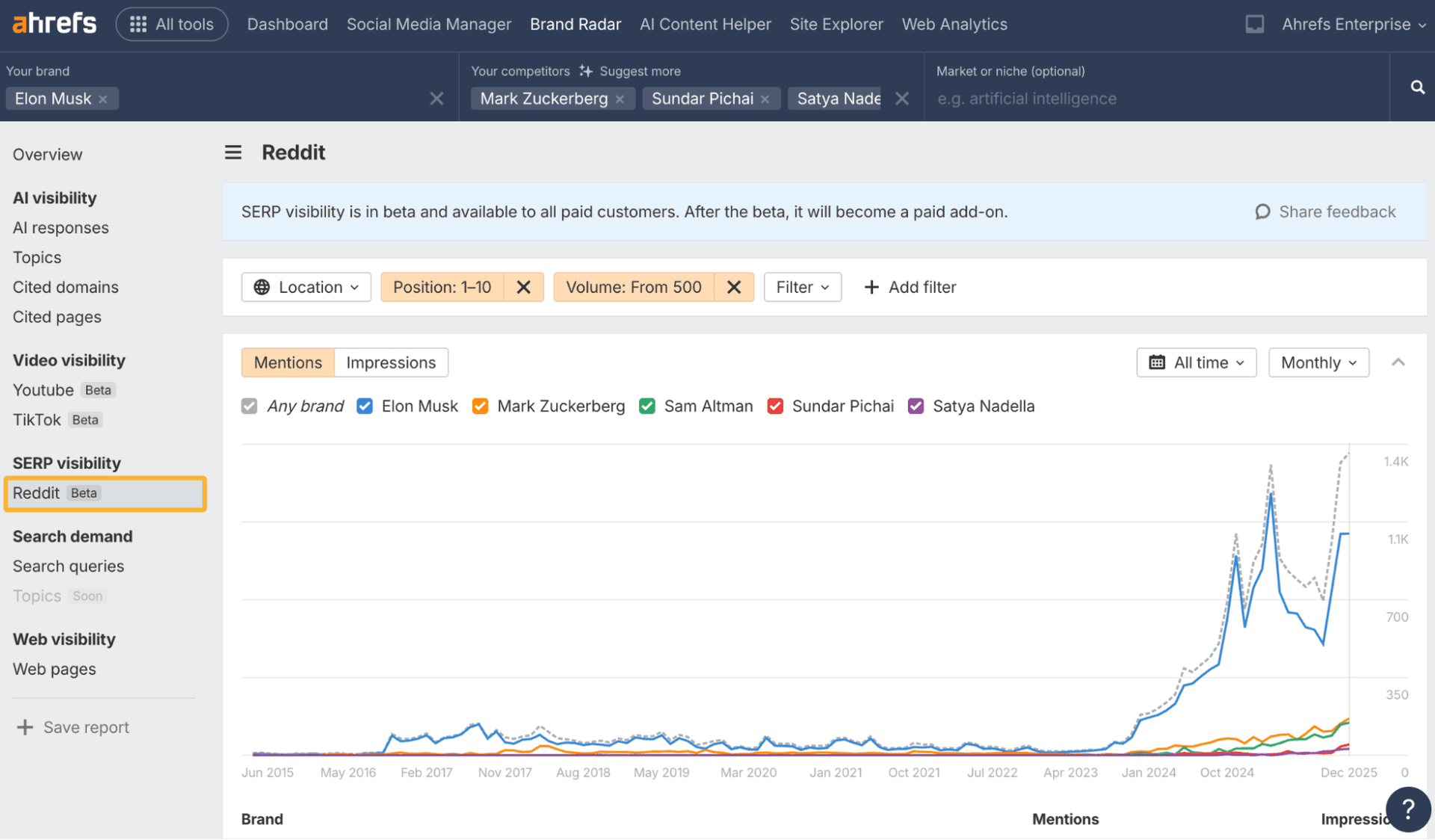
For SEO, the core outcome metric is organic traffic. Rankings, visibility, and technical health still matter, but they belong in the supporting cast. Google Search Console says its tools and reports measure search traffic and performance, help fix issues, and show queries, impressions, clicks, and average position. Its Performance report also shows how search traffic changes over time, where it comes from, and which queries are most likely to show a site.
That structure gives you a clean narrative. Organic traffic tells you whether the channel is delivering. Rankings and average position help explain movement. Technical issues show why a page may have stalled. Query and landing-page data reveal where to act next.
Use Google’s own data structure to avoid noise
Search Console is useful precisely because it already organizes SEO around meaningful signals. Its reporting centers on search traffic, clicks, impressions, and position, not vanity metrics detached from search behavior. Google Analytics adds another layer through the Google organic search traffic report, which combines Search Console and Analytics metrics for linked properties and shows landing pages in a more business-friendly view.
Two operational details matter for reporting cadence. Search Console data is available in Search Console and Google Analytics 48 hours after collection, so reporting schedules should account for that delay instead of treating yesterday’s numbers as incomplete. Search Console also retains data for the last 16 months, which gives you enough history to compare periods without losing the thread on seasonality, trend shifts, or content changes.
That makes the reporting conversation more practical. When clients understand that some data lags by 48 hours and that historical visibility extends back 16 months, they are less likely to mistake normal reporting delay for poor performance. They are also more likely to trust a report that explains the timing and context behind the numbers.
Treat SEO reporting as the bridge between execution and trust
Search Engine Land describes SEO reporting as the bridge between SEO execution, website performance, and stakeholder understanding. That is exactly where the best agencies create value. When the bridge is strong, stakeholders can see not only that work was done, but that the work changed performance in a way that connects to business goals such as revenue.
Moz frames the same job in slightly different language: effective SEO reporting is essential to explaining results, showing value, and exploring opportunities and recommendations. That is the standard agencies should aim for. A report should not only describe the past, it should identify where momentum is building and where the next round of optimization belongs.
A useful SEO report therefore keeps the headline simple and the explanation layered:
- Start with organic traffic and the business result it supports.
- Use Search Console query, impression, click, and average-position data to explain changes.
- Use landing pages to show where performance is concentrated.
- Use technical health to explain friction that may suppress growth.
- End with specific recommendations, not generic observations.
That structure keeps the report readable for clients while still giving your team enough depth to make decisions.
Make paid-channel reporting show actual business impact
The same principle applies to paid media, where platform activity can look healthy while business impact stays flat. A proper ROAS methodology matters because it ties spend to return, not just to impressions or clicks. If a campaign drives traffic but not profitable outcomes, the report should say so clearly and point to the next test, bid change, audience refinement, or landing-page adjustment.
This is where channel-specific benchmarks become essential. A paid search account, a social campaign, and a local promotion do not deserve the same KPI stack. Reusing one dashboard across every client may save time, but it often hides the metrics that actually govern success in each environment.
The stronger approach is to match the report to the channel’s role in the journey. If the goal is acquisition, the report should emphasize the cost and quality of that acquisition. If the goal is retention or repeat demand, the report should show whether the channel is contributing to durable value, not just first-touch activity.
Why this is really a retention strategy
Agencies often assume clients leave because performance is weak. In practice, they often leave because performance is hard to see, hard to interpret, or hard to connect to business goals. That is a communication failure as much as a delivery failure.
Broader customer-retention thinking from firms such as Gartner and Forrester points in the same direction: recurring business reviews and post-sale engagement should focus on business value and retention, not just historical performance. In other words, the report itself is part of the relationship. If it consistently shows value in business terms, it becomes easier to justify retainers and easier to renew trust when results fluctuate.
HubSpot has highlighted the need for agency reporting tools that aggregate multiple data sources into a high-level client view, and Databox has described its agency reporting work as shaped by the challenge of helping agencies accelerate client growth with more meaningful metrics. Those ideas line up with the same practical truth: clients do not need more raw data. They need a clearer synthesis.
A report should answer three questions every time
The strongest agency reports do not simply dump metrics into a dashboard. They answer three questions in sequence: what happened, why it happened, and what happens next. If any one of those is missing, the report feels incomplete.
That sequence turns reporting into a decision-making tool. What happened gives the result. Why it happened gives the context. What happens next gives the agency’s value. When those three pieces are present, the conversation moves from reporting activity to steering outcomes.
That is the real advantage of an outcome-first KPI framework. It reduces noise, sharpens accountability, and gives clients a reason to keep trusting the team that is managing their growth. Agencies that learn to report results in business language will spend less time defending dashboards and more time driving the next win.
This article was produced by Prism’s automated news system from verified source data, official records, and press releases, then run through automated quality and moderation checks before publishing. The system is built and supervised by the people who set the standards it runs under. Read our full AI policy.
Did this article answer your question?