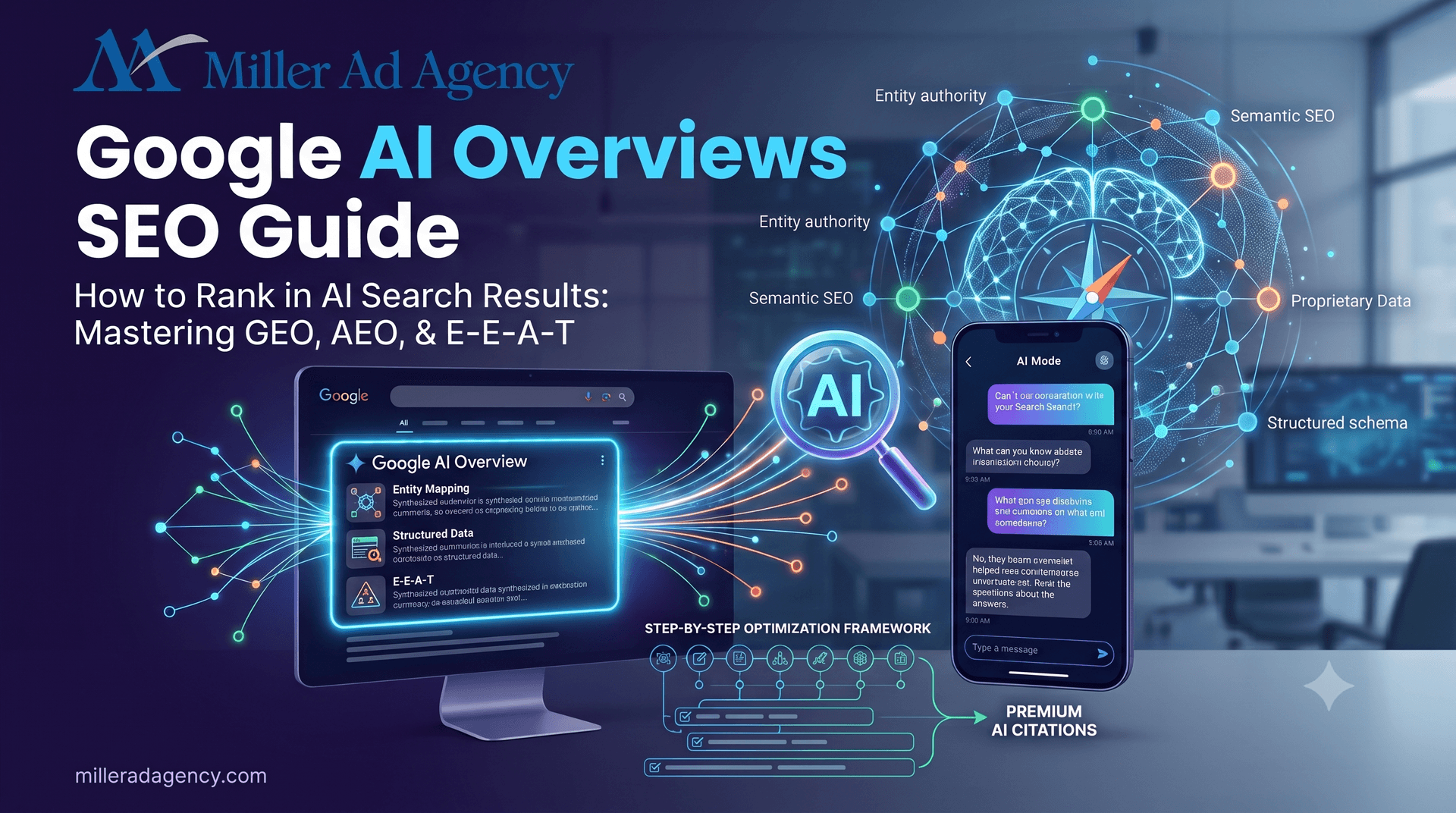
AI agents help SEO agencies scale content and win search visibility
AI agents can turn competitor sitemaps into content maps, bulk pages, and monthly refreshes. The edge is not imitation, but QA, originality, and Search Console feedback.
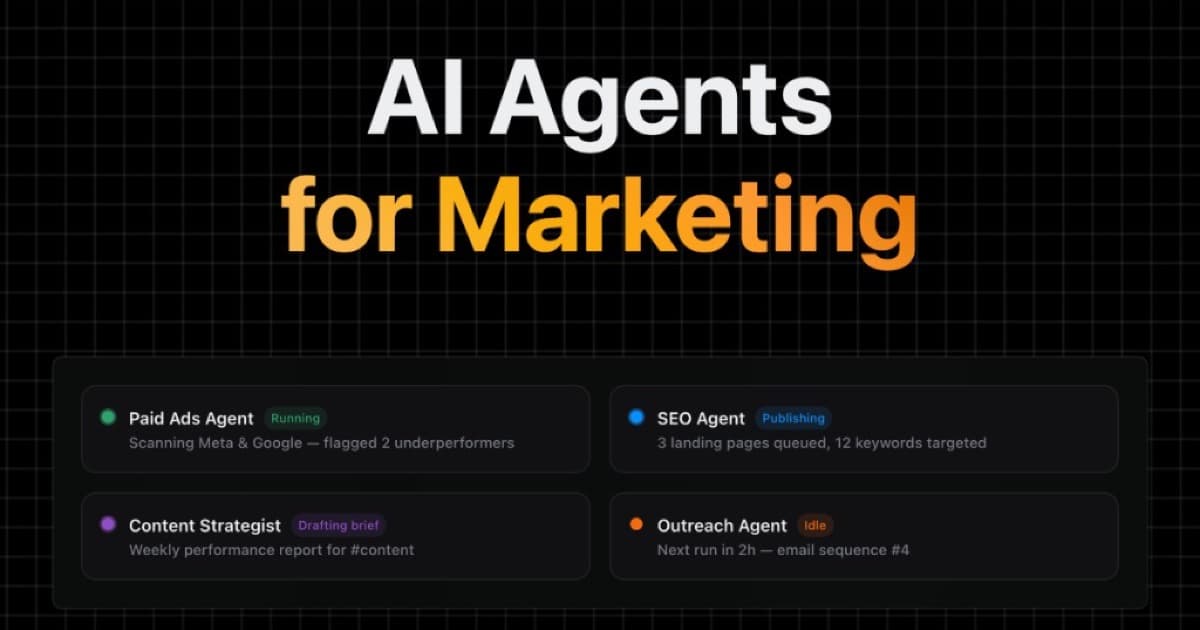
On June 3, 2026, Google Search Central announced new Search Generative AI performance reports in Search Console, including separate reports for Search and Discover. SEO agencies are using AI agents less like chatbots and more like production operators. The workflow starts with competitor sitemap analysis, moves into keyword and topic mapping, and ends with bulk page publishing followed by monthly refreshes tied to Search Console data. Google’s guidance now makes that workflow harder to fake and easier to measure, especially as AI Overviews, AI Mode, and generative AI reports become part of the search stack.
How the agency workflow works
1. Start with competitor sitemaps, not keyword lists alone.
AI agents can crawl a rival’s sitemap, extract URL patterns, and group pages by intent, topic, and format. That gives an agency a content map that is closer to how competitors actually win traffic than a spreadsheet of isolated keywords.
2. Turn the sitemap into a topical map with entity coverage.
The point is not to mirror the competitor’s page count. It is to identify missing subtopics, entities, and supporting pages, then build a structure that covers the subject with more information gain. TEAM LEWIS laid out the same order of operations in its January 24, 2024 guide on building an SEO content strategy: strategy first, production second.
3. Use AI to draft at scale, then publish through a controlled workflow.
OTTO SEO can run technical fixes, on-page improvements, and content automatically, and Search Atlas says more than 3,000 agencies use the platform. Launchmind takes the publishing model further, offering AI SEO content published directly to a site, with plans starting at €425 per month and a first article live within 48 hours.
4. Refresh pages monthly with performance data.
Agencies can use Search Console’s Search Generative AI performance reports to update pages that are losing visibility, add missing entities, and tune pages for both traditional rankings and AI-generated surfaces.
What Google changed for AI-era SEO
Google has moved from broad reassurance to more explicit operating guidance. In February 2023, it said it rewards high-quality content even when it is AI-generated, which gave agencies room to use automation without treating machine drafting as disqualifying by itself. On May 21, 2025, Google Search Central published “Top ways to ensure your content performs well in Google’s AI experiences on Search,” and it framed AI features such as AI Overviews and AI Mode as part of how Search works from a site owner’s perspective.
The job shifts from “Can AI write this?” to “Can this page satisfy helpful-content standards, surface the right entities, and earn visibility in both classic search and AI experiences?” Agencies can automate drafting without handing over editorial judgment. Agencies that skip those constraints tend to publish fast and then spend the next month fixing thin pages.
Where the platform stack fits
| Platform | Best fit in an agency workflow | Architecture and deployment | Trade-offs | Time-to-value |
|---|---|---|---|---|
| Search Atlas with OTTO SEO and Content Genius | End-to-end automation across technical SEO, on-page updates, and content production | SaaS platform with automated execution across managed sites | Broad automation is useful, but it still needs agency QA to avoid repetitive pages and weak differentiation | Fast if the team wants one operating layer for fixes and content |
| Launchmind | Direct-to-site AI content production for agencies focused on scale | Hosted content engine that connects to a blog and publishes automatically | Strong on publishing speed, narrower on technical SEO and auditing than a full stack | Launchmind says the first article can go live within 48 hours |
| PageOptimizer Pro | On-page competitive intelligence and content structure tuning | On-page optimization tool suite | Stronger for page-level analysis than for full publication workflows | Useful when a team wants to tighten pages already in production |
| Sitebulb | Audit, crawl, and refresh planning | Desktop crawling on Windows or Mac plus browser-based cloud crawling | Better for diagnostics and refresh plans than autonomous publishing | Fits quickly into technical audit and content refresh cycles |
Search Atlas is the broadest automation play in this group. OTTO SEO and Content Genius sit closer to an agency operating system than a point tool, and Search Atlas says more than 3,000 agencies use the platform. Broad automation is useful, but agency QA still has to catch repetitive pages and weak differentiation.
Launchmind is narrower and more explicit about throughput. Its model, connect the blog, set keywords, generate and publish, is attractive when the bottleneck is content volume and not crawling or technical remediation. A direct-to-site writer can accelerate production, but it does not replace the audit layer that finds broken structure, indexation issues, or page-level gaps.
PageOptimizer Pro is closer to the quality-control end of the stack. Kyle Roof and the company say they analyzed 10,937 SEO’d pages and found 99 percent were missing the same 7 things. Even pages that are “optimized” often lack the structure, entities, or topical coverage needed to rank and be cited. It is useful for page-level competitive intelligence, not full-funnel automation.
Sitebulb belongs in the refresh loop. Its October 20, 2025 “Content Refresh Guide: How to Improve Your Search & AI Visibility” is a signal that refreshes now sit at the center of content operations, not at the edge. Sitebulb’s desktop crawling, cloud crawling, and training resources make it useful for agencies that want to audit what is already live before they generate another hundred pages.
The QA controls that separate smart execution from imitation
AI is most useful when it turns competitor structures into a stronger map with better information gain. That means every bulk-production workflow should include:
- Originality checks so pages do not repeat the same intro, H2 pattern, or conclusion across clusters.
- Entity coverage review so pages answer the subject in full, not just around a target phrase.
- Content structure controls so supporting sections, headings, and internal links are deliberate rather than auto-pasted.
- Search Console review every month, now that Google has added Search Generative AI performance reports for Search and Discover.
- Refresh triggers based on declines in impressions, clicks, or AI visibility rather than arbitrary calendar dates.
The buying choice inside an agency stack
The decision is not whether to use AI. It is whether to use it for drafting only, or for a full loop that includes research, publishing, audit, and refresh. Search Atlas is strongest when an agency wants a broad automation layer. Launchmind fits teams chasing rapid publish velocity. PageOptimizer Pro is useful where page-level precision matters. Sitebulb is the refresh and crawl backbone.
This article was produced by Prism’s automated news system from verified source data, official records, and press releases, then run through automated quality and moderation checks before publishing. The system is built and supervised by the people who set the standards it runs under. Read our full AI policy.
Did this article answer your question?