Five SEO frameworks agencies need for AI search growth
AI search has split SEO into five product lines, from entity work to visibility scoring. Agencies now need to match each one to client risk, speed, and scale.
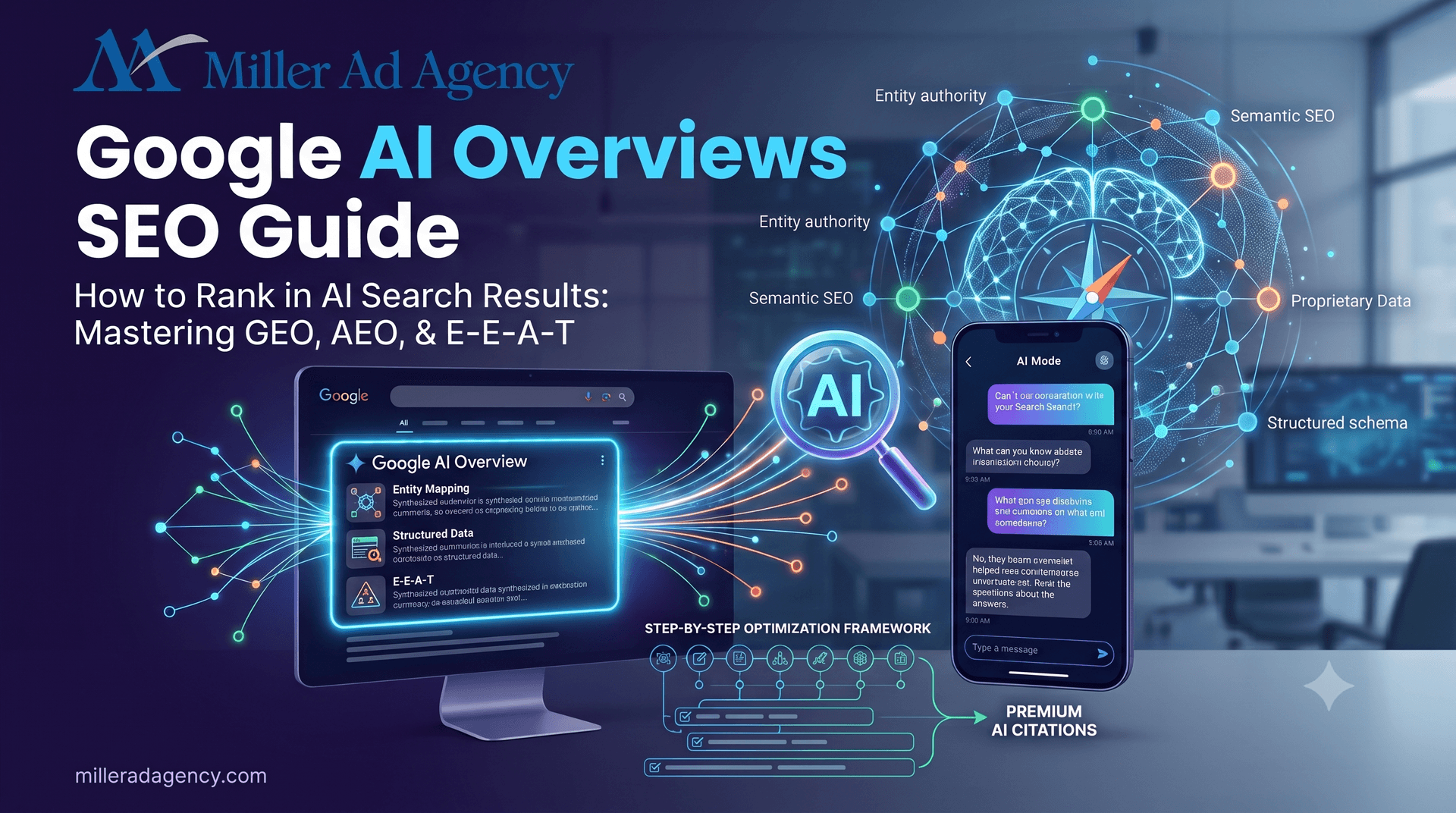
Google rolled AI Overviews to all U.S. users in May 2024, then told site owners on May 21, 2025 to keep building helpful, reliable, people-first content for AI Overviews and AI Mode. Firms are now packaging AI visibility as a separate line alongside traditional SEO retainers.
Entity stacking as the foundation for citation-ready brands
Entity stacking belongs in the accounts that need durable structure: B2B, mid-market, and international brands with many products, regions, or subject areas. Google introduced the Knowledge Graph in 2012, and entity relationships now matter more in AI-driven search than simple keyword repetition. Entity stacking is a link-building approach that helps B2B brands earn citations across ChatGPT, Perplexity, Gemini, and Google AI Overviews.
The risk level is relatively low because the work is about clarifying relationships, not gaming a result page, but the speed is moderate because entity signals take time to propagate through content, links, and structured data. Its scalability is high once an agency has a repeatable mapping process for products, people, locations, and topics.
Reverse engineering SERPs as the fastest diagnostic layer
Reverse engineering SERPs gives fast answers for a competitive Tier-1 account. Search Engine Journal’s “We Reverse-Engineered AI Overviews: What You Need To Do Next,” Go Fish Digital’s “AI Overviews SEO: Get Visibility in 2025” on 2025-09-03, and SE Ranking’s research on AI Overviews add another data point to the pattern-mining work agencies are already doing with AI-generated results.
This framework fits client work where the first question is, “What is Google surfacing right now?” rather than “How do we rebuild the whole content model?” It is fast to produce because the analysis starts with public outputs, and the risk is low because the method observes rather than manipulates. The limitation is scalability: pattern-matching is useful for briefs, schema, and content gaps, but it still needs a larger content and authority strategy behind it if the goal is to hold visibility across many pages or markets.
Consensus plus information gain for premium content programs
Consensus plus information gain fits brands that can add something new to the index. Search results now show multiple firms using the term “information gain,” including Semantec SEO’s information-gain cluster and other AI SEO pages that emphasize experience-led content signals, direct review, direct observation, and first-hand workflow knowledge. That aligns closely with Google Search Central guidance to focus on helpful, reliable, people-first content for AI search experiences.
It belongs in premium retainers where the client has proprietary data, product usage insight, subject matter experts, or original research that competitors cannot easily copy. Speed to results is slower than SERP reverse-engineering because the content has to be genuinely additive, but the payoff is stronger differentiation in AI summaries and answer engines that reward synthesis. Scalability is good when agencies build editorial systems around interviews, demos, customer logs, and recurring research, instead of asking writers to paraphrase the same sources every month.
Parasite SEO as the high-risk, tightly bounded experiment
Google updated its site reputation abuse policy on November 19, 2024 to clarify that third-party content published mainly to exploit host-domain ranking power violates its rules, and Google later published “Defending Search users from ‘Parasite SEO’ spam” on November 13, 2025 as part of its anti-spam effort.
If it appears in an agency workflow at all, it belongs in a lab setting with narrow scope, strict legal and brand review, and a clear exit plan. The appeal is speed, because borrowed authority can move fast, but the risk is high and the scalability is fragile because policy enforcement can erase gains without warning.
AI visibility as the reporting layer agencies can sell repeatedly
SearchScore’s SAVI Q1 2026 report audited 850,000+ websites, found 71% invisible to AI engines, only 0.12% AI-ready, and recorded an average visibility score of 41.4 out of 100. AVSEO measures citations in ChatGPT, Perplexity, AI Overviews, and Gemini using a 40-point scoring model.
It fits cloud-first and mid-market accounts that already buy dashboards, and it gives agency teams a way to show whether entity work, content upgrades, or SERP analysis are moving visibility in the places buyers now ask questions. The risk is low, the speed to insight is high, and the scale is strong because one measurement model can be rolled across many accounts, languages, and markets.
This article was produced by Prism’s automated news system from verified source data, official records, and press releases, then run through automated quality and moderation checks before publishing. The system is built and supervised by the people who set the standards it runs under. Read our full AI policy.
Did this article answer your question?