AI Overviews reshape B2B search, cited brands win more clicks
AI Overviews are cutting clicks, but cited brands are gaining better-fit demand. Agencies now need pipeline-quality metrics, not traffic-only reporting.
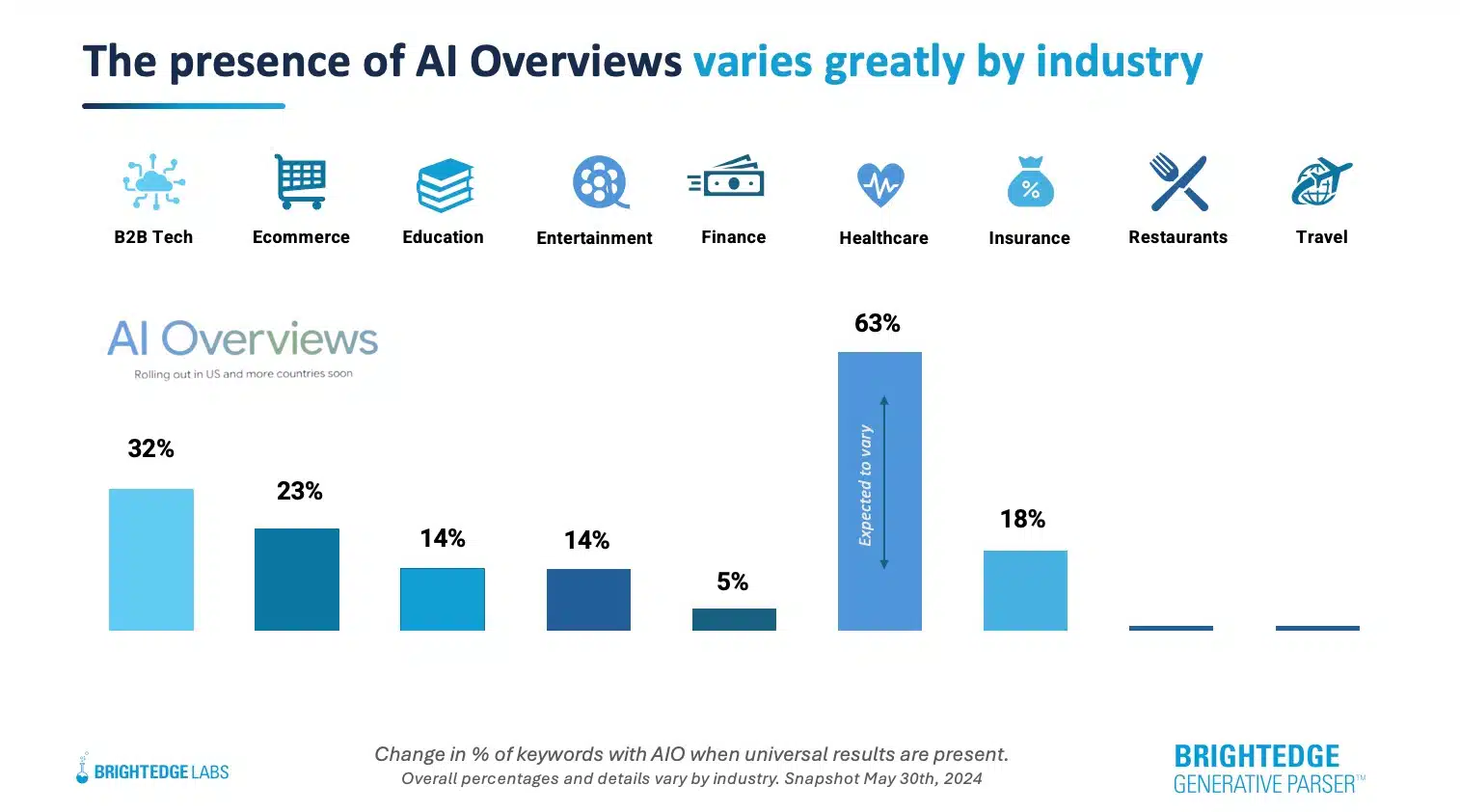
AI Overviews are forcing a B2B measurement reset: fewer clicks can now signal better-fit leads, and cited brands are capturing the upside. The old assumption that more traffic automatically means more pipeline is breaking down as generative AI answers more early-stage questions before buyers ever reach a vendor site.
The KPI reset is already here
The practical shift for agencies is simple, but uncomfortable: stop selling traffic volume as the main proof of SEO success. In an AI search environment, a drop in sessions can coexist with stronger lead quality, shorter sales cycles, and more buyers who already understand the problem, the options, and the brand before they click.
That matters because Google says AI Overviews are designed to support information journeys in Search, and the company rolled them out to all users in the U.S. on May 14, 2024. Google has also said it is continuing to improve how links are shown in AI Search features so people can find the sources, brands, and websites they value. The message to B2B marketers is clear: visibility is no longer just about blue-link rankings, it is about being surfaced and cited inside the answer layer itself.
Why fewer clicks can mean better leads
The strongest argument for this new model is that the top of the funnel has compressed. Buyers are using AI summaries to do the early research work that once lived on blogs, comparison pages, and vendor resource hubs. By the time they click through, they are often further along, more opinionated, and more likely to convert.
That lines up with the broader buying journey data. Forrester has said that 80% of the B2B buying journey now happens without vendor involvement, which means prospects are forming preferences long before sales ever hears from them. More recent Forrester research in 2025 found that 68% of B2B buyers already have a front-runner vendor in mind at the start of the purchasing process, and that front-runner wins 80% of the time. Separately, 6sense’s 2024 Buyer Experience Report found that 81% of buyers already have a preferred vendor at first contact, and 85% had largely established purchase requirements before reaching out.
That is the strategic opening for SEO. If AI search is helping buyers self-qualify earlier, then the value of a visit rises even when the total number of visits falls. The goal is not to pull in every casual searcher. The goal is to attract the people already moving toward a shortlist.
Citations are now a growth lever
Seer Interactive’s 2026 AIO study gives the clearest signal yet that AI Overviews are changing click behavior at the brand level. The analysis covered 5.47 million queries, 2.43 billion organic impressions, and 53 brands. Its most important finding was the gap between cited and uncited brands on the same AI Overview-present search results page.
Brands that appeared on AI Overview-present SERPs but were not cited in the AI Overview saw organic CTR fall 67% over 2025. By contrast, cited brands earned 120% more organic clicks per impression than their uncited competitors on the same SERP. That is not a small optimization tweak, it is a structural advantage. If the AI answer names your brand as a source, the searcher is far more likely to choose you when they do click.
Seer’s earlier September 2025 update pointed in the same direction, finding that organic CTR on AI Overview queries had fallen 61% since mid-2024. Taken together, the two studies suggest this is not a one-off fluctuation. The search page itself is changing the economics of discovery, and brands that show up inside the answer experience are taking the share that still remains.
What agencies should report instead of raw traffic
This is where client conversations have to change. Agencies serving B2B brands need to move from traffic-volume reporting to pipeline-quality reporting, because AI search is reshaping both how discovery happens and which visitors are worth counting.
A practical framework should focus on the metrics that show whether SEO is influencing revenue, not just visits:
- Qualified conversions: form fills, demo requests, booked meetings, and other actions that map to sales-ready intent.
- Sales velocity: how quickly SEO-sourced or SEO-assisted leads move from first touch to opportunity, and from opportunity to closed-won.
- Revenue influence: the share of pipeline or closed revenue that includes organic search somewhere in the journey, even if SEO was not the last click.
- Shortlist penetration: how often a brand is named, cited, or surfaced in AI-generated answers and comparison-style moments.
- Conversion efficiency: fewer total sessions with a higher rate of qualified conversions can be a win if the traffic is more aligned to buying intent.
That reporting model gives agencies a better story for clients who are anxious about declining click counts. It reframes organic search as a demand-quality engine, not just a volume channel.
How to win in an AI search funnel
The tactical response is to optimize for citation, shortlist inclusion, and higher-intent entry points. That means building content that is easy for search systems to extract, easy for buyers to trust, and strong enough to justify the brand being named in an AI Overview.
- Clear, authoritative explanations of core category questions
- Comparison and evaluation content that helps buyers narrow choices
- Proof points, case studies, and differentiated positioning that are easy to cite
- Strong internal linking that reinforces topical authority
- Content that answers the next question, not just the first one
The best-performing teams will focus on:
Google’s own framing reinforces this approach. If AI experiences are meant to help people explore the web and connect with authentic voices, then the brands most likely to benefit are the ones that can be recognized as credible sources, not just frequent publishers.
The new B2B SEO win is closer to revenue
The real takeaway from this shift is not that traffic is dead. It is that traffic is no longer the cleanest headline metric for B2B search success. AI Overviews can compress the funnel, reduce casual clicks, and still improve the quality of the prospects who arrive.
For agencies, that makes the KPI reset unavoidable. The brands that win will be the ones that measure organic search by qualified conversions, sales velocity, and revenue influence, then optimize for citation and shortlist inclusion accordingly. In the AI search era, a smaller audience can be a stronger one, and that is the change worth reporting.
This article was produced by Prism’s automated news system from verified source data, official records, and press releases, then run through automated quality and moderation checks before publishing. The system is built and supervised by the people who set the standards it runs under. Read our full AI policy.
Did this article answer your question?