AI Search Reshapes PR, Earned Media Drives Brand Visibility
AI search is turning earned media into a discoverability engine, pushing agencies to package PR, expert sourcing, and SEO together.
PR is now a search signal
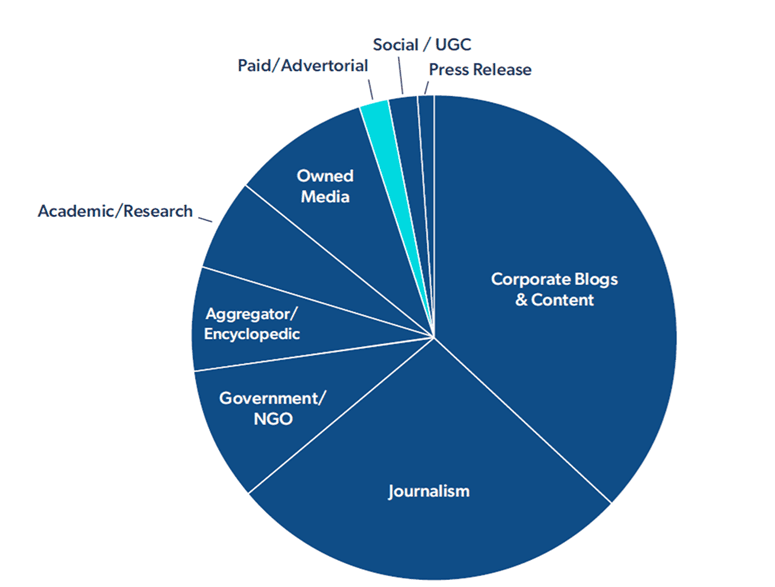
AI search is changing the job description for public relations. Trade press coverage, expert quotes, and even review-site visibility are no longer just nice-to-have brand signals, they are inputs that can help determine whether a brand is cited inside AI-generated answers or left out entirely. That makes PR a direct visibility channel, not only an awareness channel, and it changes how you should think about every media mention you earn.

Google’s guidance points in the same direction. It tells site owners to focus on helpful, reliable, people-first content, and it says AI features can help users find websites. Google also says AI Overviews are being expanded to more users, languages, and regions, which means the surface area where your brand can appear is still growing. The result is a very practical shift: inclusion in AI-driven answers matters more, and traditional rankings are only part of the picture.
Why the old retainer split is breaking
The old line between PR retainers and SEO retainers is getting harder to defend. If an agency is polishing pages on-site but ignoring earned media, expert positioning, and review footprints, it is leaving out a large share of the signals AI systems now appear to weigh. Search has moved from a single website problem to a broader web problem, and authority now gets built across editorial coverage, knowledge signals, and reputation trails.
That is why agencies need to stop treating digital PR as a separate brand function and start treating it as part of search strategy. The logic is simple: if AI tools synthesize what the wider web says about a brand, then the strongest SEO programs will be the ones that connect on-site content to off-site credibility. A page that is technically sound but isolated from trusted mentions has a weaker case for inclusion than a page supported by evidence, expert validation, and press coverage.
The PR side of AI-era visibility is already moving
The shift is not theoretical. Muck Rack’s 2025 State of AI in PR report says three out of four PR professionals now use generative AI at work, nearly triple the level reported in March 2023. The same research says 93% of PR pros say AI speeds up their work and 78% say it improves quality, which helps explain why AI is becoming part of core communications operations rather than a side experiment.
Muck Rack also says 59% of PR pros expect AI and automation to grow in importance over the next five years, ahead of media relations and strategic planning. That matters for agencies because it shows the profession is already adapting to an environment where speed, scale, and credibility all have to coexist. The teams that win will not be the ones that simply produce more content. They will be the ones that turn authority into a repeatable system.
What agencies should package together now
A useful service bundle now looks less like siloed PR and SEO offerings and more like one visibility framework. Search Engine Land’s recent coverage points to media mentions across trusted publications, schema-enriched pages, first-party research, and expert quotes as key building blocks for generative engine optimization. It also argues that brand mentions are becoming mission-critical for AI Overviews visibility.
That translates into a practical agency menu:
- Digital PR that earns coverage in trusted publications, not just link placement.
- Expert sourcing that places spokespeople, analysts, and subject-matter specialists where AI systems can see consistent authority signals.
- First-party research that gives journalists, editors, and answer engines something concrete to cite.
- Schema-enriched pages that make on-site content easier to interpret and connect.
- Review visibility work that strengthens the brand footprint across the places users and AI systems already consult.
When these pieces are planned together, the campaign does more than generate awareness. It creates a web of evidence that can help a brand show up in AI-driven summaries and answer experiences.
How to measure visibility when answers replace clicks
This is where reporting gets more complicated. Search Engine Land defines AI citations as mentions of a brand, content, or website inside AI-generated answers, and that means old standalone metrics like rankings and click-through rates do not tell the full story anymore. If your client is cited in an answer but gets fewer traditional clicks, the campaign may still be doing important work for authority, trust, and discovery.
Agencies will need to build measurement around a broader set of signals. That includes how often a brand appears in AI-generated answers, which publications are being reused as sources, whether expert commentary is being surfaced, and how review visibility supports the overall footprint. Google has also added more links to AI search surfaces, which makes source exposure more explicit even as the answers themselves become more synthesized.
The reporting conversation should therefore move beyond “Did the ranking improve?” and toward “Did the brand become easier to find, cite, and trust across AI surfaces?” That is a more demanding question, but it is also a more accurate one.
The new operating model for agencies
This moment looks a lot like the way SEO grew beyond keywords and into authority, entity building, and content strategy. The difference is that AI can compress the whole web into a summary in seconds, which raises the stakes for every earned mention. A brand with weak reputation signals may never get its best page in front of the user, because the answer itself may be built from the surrounding web before a click ever happens.
For agencies, the takeaway is clear. PR is no longer the department that supports search from the sidelines. It is part of the search product itself, and the smartest service packages will reflect that by uniting digital PR, expert sourcing, technical SEO, and measurement around a single goal: making the brand visible, credible, and usable inside AI-driven discovery.
This article was produced by Prism’s automated news system from verified source data, official records, and press releases, then run through automated quality and moderation checks before publishing. The system is built and supervised by the people who set the standards it runs under. Read our full AI policy.
Did this article answer your question?


