AI Search Testing Shifts SEO From Guesswork to Measurable Visibility
Prompt testing turns AI search into a measurable discipline, giving agencies a repeatable way to prove visibility instead of guessing at it.
The shift from rankings to inclusion
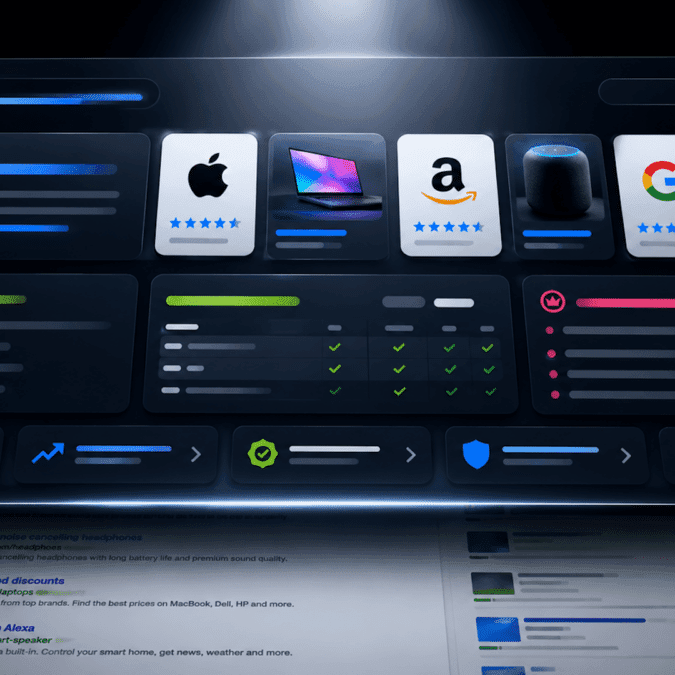
AI search changes the question from “Where do I rank?” to “Am I included?” That sounds subtle, but it is the difference between traditional SEO reporting and a measurement model built for generated answers. Search Engine Land’s latest guide pushes that distinction hard, arguing that prompt-level SEO only becomes useful when teams treat it like an experiment with defined variables, not a loose set of best practices.

That matters because brands are no longer asking for theory. They want proof that their content shows up when people ask ChatGPT, AI Overviews, and similar systems for answers. A rank tracker cannot fully explain that environment, because prompt-based systems do not behave like a search results page. The useful metric is inclusion, and the useful habit is repeatable testing.
Why agencies need a test program, not a one-off audit
For agencies, the real opportunity is not just learning whether a page appears in an AI answer. It is building a method that shows which topics, formats, and content attributes increase the odds of being included. That gives teams something far more valuable than broad commentary: a defensible process for proving progress to clients.
The pressure here is practical. Clients increasingly want evidence that AI search work is producing results, and vague reporting does not survive those conversations for long. A prompt-level framework lets agencies compare one prompt against another, or one content change against another, so the work can be documented, repeated, and improved over time. That is the foundation of a scalable service, not a one-time diagnostic.
How prompt-level experiments should be structured
The most useful AI search programs begin with a baseline. Before changing content, prompts, or presentation, teams need a clear starting point for how often a brand appears, how it is described, and what kinds of questions trigger inclusion. Once that baseline is set, every test should isolate one variable at a time so the results can be trusted.
A practical experiment loop
1. Establish a baseline set of prompts that reflect real user intent.
2. Test one change at a time, such as prompt wording, topic framing, content format, or entity signals.
3. Record whether the brand is included in the generated response and how that inclusion changes.
4. Compare the response patterns against the baseline, not against a vague sense of progress.
5. Repeat the test set so the pattern becomes stable enough to guide client recommendations.
That is the discipline Search Engine Land is pointing toward. The point is not to chase a single vanity metric. The point is to observe inclusion patterns under controlled conditions, then refine the signals that matter most.
What agencies should track inside each test
A strong AI visibility workflow tracks much more than a yes-or-no mention. It should capture the prompt that was used, the topic being asked about, the format of the answer, and the way the brand appears inside it. That makes it possible to see whether a certain content style consistently performs better, or whether some entity signals are more likely to surface in generated responses.
The article’s framing also makes it clear that agencies need to think in terms of repeatability. If a prompt produces a useful inclusion pattern once, that is interesting. If it produces the same result across multiple tests, that becomes a client-ready insight. That is where AI search work stops being experimental in the informal sense and becomes an operational service.
The market is already moving in this direction
This shift is not happening in a vacuum. Google launched AI Overviews in the United States in May 2024, expanded them to more than 100 countries by October 2024, and said they had reached more than 1 billion global users per month. Google also said its testing of inline links in AI Overviews increased traffic to supporting websites compared with earlier designs, which underlines why visibility inside AI answers now has real traffic consequences.
OpenAI’s study on how people are using ChatGPT adds another layer. The company said consumer adoption had broadened beyond early-user groups and that many conversations focus on everyday tasks like seeking information and practical guidance. That is exactly the kind of behavior that makes inclusion in AI answers commercially important. If users are turning to AI systems for information and help, brands need to know whether their expertise is being surfaced when those questions are asked.
Semrush has moved the measurement conversation further with its AI Visibility Index, which it says is built on more than 2,500 real-world prompts across ChatGPT and Google AI Mode. That approach reinforces the same lesson: prompt research reveals what people actually ask AI, which is often more useful than relying only on traditional keyword research. The market is converging on the same conclusion from different directions, measurable visibility starts with real prompts.
How to turn testing into a client offering
Agencies that want to operationalize AI search should package the work as an ongoing program. One-off audits may expose a snapshot, but they do not create the repeatable learning loop that clients need. A durable offering should include baseline measurement, monthly or quarterly prompt tests, inclusion tracking, and a clear readout of which content attributes or entity signals are gaining traction.
Search Engine Land’s broader AI SEO archive reflects that same measurement-first mindset, with coverage focused on how to measure and maximize visibility in AI search and how to better measure LLM visibility and its impact. That framing is useful because it treats AI visibility as a business problem, not a content novelty. Agencies that adopt that model can move beyond generic SEO reporting and sell something sharper: a disciplined system for proving presence inside AI-generated answers.
The agencies that win here will not be the ones making the loudest claims about AI. They will be the ones running controlled tests, tracking inclusion carefully, and turning every result into a repeatable lesson. That is how prompt-level SEO becomes measurable visibility.
This article was produced by Prism’s automated news system from verified source data, official records, and press releases, then run through automated quality and moderation checks before publishing. The system is built and supervised by the people who set the standards it runs under. Read our full AI policy.
Did this article answer your question?