Airbnb and Shopify say AI search traffic converts better than Google
Airbnb and Shopify say AI-sourced shoppers convert better than Google, and agencies are already chasing the premium as GEO jobs and salaries climb.

Chatbots may still send a sliver of total traffic, but the buyers they deliver are looking far more serious. Airbnb chief executive Brian Chesky said on the company’s Q4 2025 earnings call that traffic from chatbots converts at a higher rate than traffic from Google, turning a once-experimental channel into a clear commercial signal.
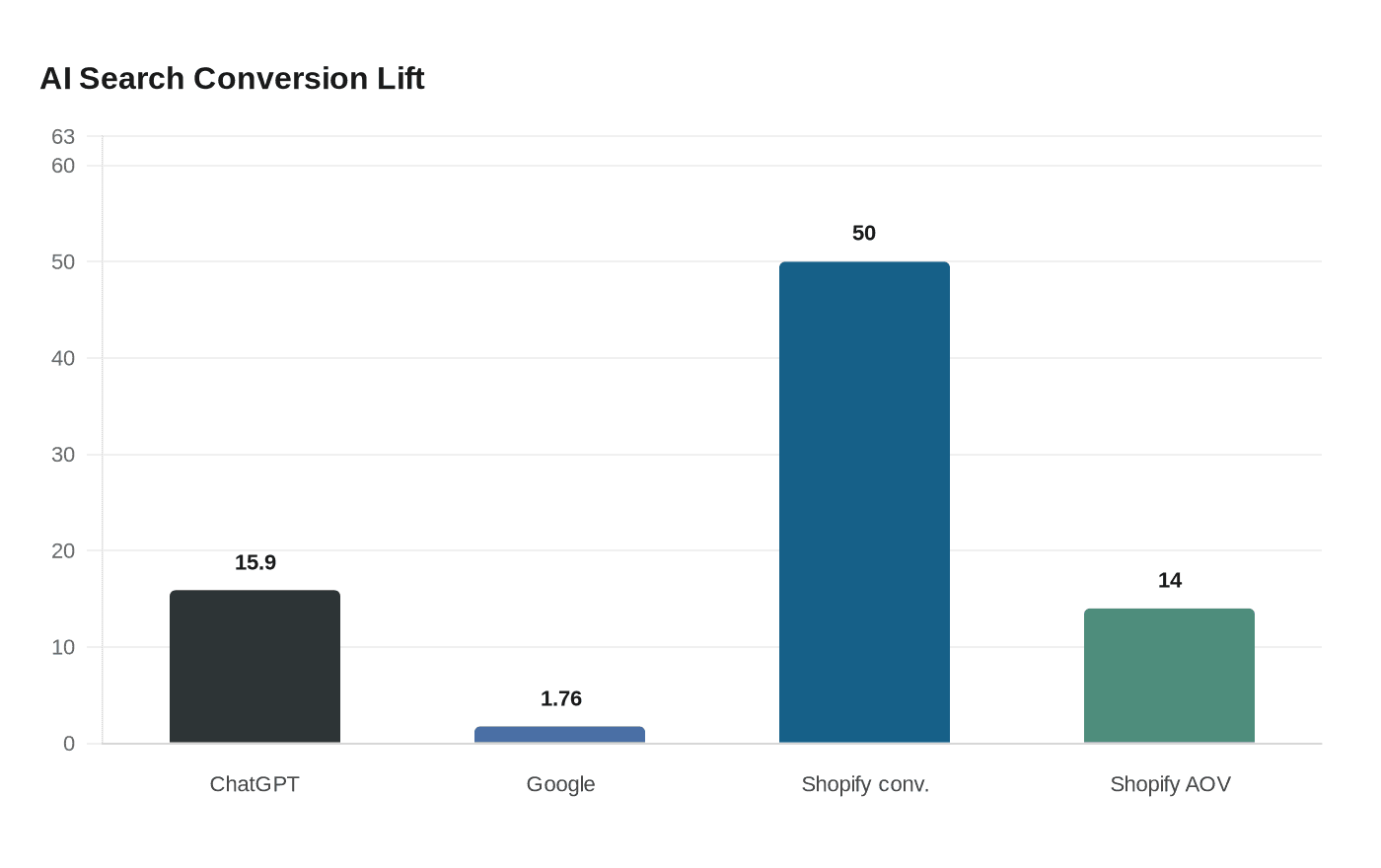
Airbnb put that call on February 12, 2026, alongside its fourth-quarter results and audio webcast, and the message landed in a market already seeing similar numbers elsewhere. Seer Interactive’s case study found ChatGPT traffic converted at 15.9% versus 1.76% for Google organic. Semrush said AI search visitors were 4.4 times as valuable as traditional organic search visitors. WebFX, after analyzing 2.3 billion sessions, said generative AI traffic grew 796% over two years, converted about 1.2 times higher than organic search, and still made up just 0.18% of sessions.
Shopify added another layer to the argument in early 2026, saying AI-referred shoppers converted at nearly 50% higher rates and produced 14% higher average order values than organic search. That matters because it reframes AI search from a traffic-replacement story into a revenue-efficiency story. Fewer clicks may be coming out of AI answers, but the clicks that do arrive appear to carry more intent.
That is why the talent market is moving fast. The salary signal is already there, with SEO specialists tied to Claude, Meta and ChatGPT roles reportedly drawing $200,000 to $320,000. Anthropic has said Claude is already used in hiring workflows, including drafting job descriptions and sourcing candidates, while OpenAI has pushed deeper into commercial and workplace use cases through ChatGPT Business and related initiatives. For agencies, that means the capability gap is no longer theoretical. Clients are asking who can help them show up inside AI answers, and the answer is becoming part of the pitch deck.
The discipline around that work has a name now: generative engine optimization, or GEO. Search Engine Land and Ahrefs describe it as optimizing brands to be retrieved, cited and recommended inside AI-generated answers, not just ranked in blue links. Detailed.com’s public-company tracker, which now logs 121 quotes from 77 companies and was updated most recently on February 25, 2026, suggests the optimism around SEO and AI search is spreading well beyond a handful of loud believers. The agencies that build AI search expertise now will not just be selling a new service line; they will be protecting revenue, retaining clients and hiring into a market that is already pricing in the shift.
This article was produced by Prism’s automated news system from verified source data, official records, and press releases, then run through automated quality and moderation checks before publishing. The system is built and supervised by the people who set the standards it runs under. Read our full AI policy.
Did this article answer your question?