Bill Hunt says schema audits miss the entity relationships AI needs
Bill Hunt’s warning is blunt: schema validation is not enough. Agencies need an AI visibility audit that maps entity relationships, trust signals, and cross-site consistency.

Bill Hunt is making a point a lot of agencies still resist: page-level schema is not the same thing as brand understanding. A site can pass validation for Organization, product, service, and branch markup and still leave AI systems with a muddled picture of who the company is, what it sells, and how its pieces connect. That gap is where a modern AI visibility audit has to start.
Why schema completeness is not the finish line
The old audit model treats structured data like a checklist. Is Organization present? Are products marked up? Do the pages validate? That work still matters, but it only proves that individual pages can describe themselves. Bill Hunt’s argument is that AI systems need something deeper: a coherent entity model that holds together across the site, across subdomains, and across third-party references.
That matters most in regulated and complex categories, where the surface schema can look polished while the underlying relationships are weak. Banking sites are the clearest example in the research: the markup may appear mature, but when you examine the links between products, locations, pages, and organizational entities, the structure can fall apart. For an agency, that is not a cosmetic issue. It is the difference between a brand that can be synthesized confidently and one that looks fragmented to an answer engine.
What an AI visibility audit should actually include
Common Crawl’s AI Visibility Audit is useful because it shifts the conversation away from “did we mark up the page” and toward “can crawlers actually reach the site that feeds AI systems.” The guide is free, it can be run with free tools, and Common Crawl says the process takes about 90 minutes. That framing is important: visibility begins at crawlability, not at the final layer of optimization.
A serious audit now needs three layers:
- Crawl access: confirm that the site can be reached by crawlers that feed training and retrieval systems. If discovery fails, nothing downstream matters.
- Entity validation: check whether the brand, its products, services, locations, and parent or subsidiary entities are described consistently and completely.
- Relationship mapping: inspect how those entities connect, not just whether they exist on isolated pages.
That is the playbook upgrade. Agencies that stop at validation are checking the paint. Agencies that understand AI visibility are checking the framing, the wiring, and the load-bearing joints.
The integrity graph is the missing layer
Hunt’s most useful idea here is the integrity graph. It is a simple phrase for a hard problem: if a brand is described one way on its homepage, another way on a product page, another way in a directory listing, and a slightly different way in a third-party mention, an AI system may not trust the whole structure. The issue is not just inconsistency. It is that the relationships among those descriptions do not line up well enough to form a reliable model.
Schema.org supports this way of thinking. Its vocabulary is not only about entities, but also about relationships between entities and actions. That matters because structured data was never meant to be a pile of disconnected labels. It was built to describe how things fit together. Schema.org also uses sameAs to identify a thing through an authoritative reference URL, such as an official website, a Wikipedia page, or a Wikidata entry, which gives brands a practical way to reinforce identity across the web.
This is where the audit gets more strategic. You are not just asking whether a page contains markup. You are asking whether the markup points to the same entity everywhere, whether the business hierarchy is consistent, and whether the brand’s digital footprint can survive comparison across sources.
Trust-signal mapping across the full brand footprint
Google’s structured-data guidance makes the same point from another angle. Organization markup can help Google understand administrative details like address, contact information, and business identifiers, and some properties are used behind the scenes to disambiguate one organization from another. Google also recommends adding as many relevant properties as apply to the page. In practice, that means structured data is not only for snippets. It is a machine-readable trust layer.
An AI visibility audit should therefore map trust signals beyond the page itself. The most important signals are often the ones agencies treat as peripheral:
- official organization details that stay consistent across properties
- location and branch data that match the real business structure
- product and service names that do not drift between pages
- authoritative references that support sameAs relationships
- third-party mentions that either reinforce or confuse the brand entity
Google Search Central also says structured data helps Google understand the content of a page and information about the people, books, or companies included in markup. That is the practical target: help the system understand the business well enough that it does not have to guess. Guessing is where inconsistency becomes expensive.
Why this changes the agency sales model
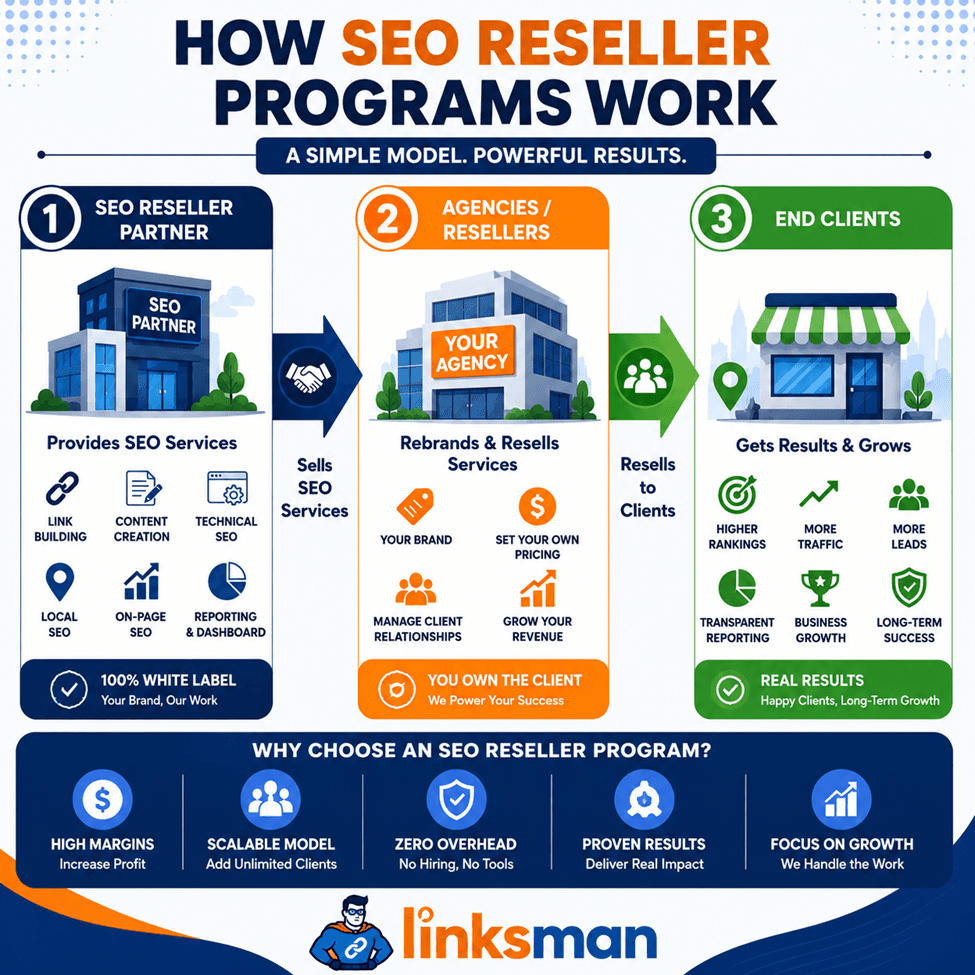
This is where the revenue argument gets real. Agencies that keep selling old-style schema audits will miss the bigger budget conversation, because technical SEO is no longer just an implementation service. It is becoming structural diagnosis. The brands that care most about this are enterprise, financial services, healthcare, and other complex clients where authority and consistency matter as much as keywords.
That opens a better offer. Instead of selling a one-off markup cleanup, agencies can sell a broader AI visibility program built around entity strategy, relationship design, and evidence alignment. That is a stronger retainer story because the work does not end when the validator turns green. It continues as the site, subdomains, directories, and public references evolve.
Microsoft’s NLWeb project pushes this even further. Microsoft says NLWeb uses semi-structured data such as Schema.org and RSS to create conversational interfaces usable by both humans and AI agents. That is the signal agencies should not miss: schema is moving closer to agent-facing infrastructure, not farther away. The brands that organize their entity layer cleanly today will be easier for both search engines and AI systems to interpret tomorrow.
The practical audit sequence
If you are rebuilding your service around this model, the workflow is straightforward:
1. Confirm crawlability, because AI visibility begins with reachability.
2. Inventory the major brand entities, including organization, products, services, locations, and subdivisions.
3. Compare how each entity is described on the site, in schema, and in external references.
4. Trace the relationships between those entities, not just the existence of markup.
5. Fix inconsistencies that break trust, especially across pages, subdomains, directories, and third-party mentions.
6. Recheck disambiguation signals, including sameAs, administrative details, and identifiers.
That sequence turns schema work into a diagnostic system instead of a validation chore. It is the difference between asking, “Is the page marked up?” and asking, “Can an AI system understand this business well enough to rely on it?”
The agencies that learn that difference first will have a much stronger story to sell. The ones that stay with page-by-page audits will keep delivering checklists in a market that now rewards entity clarity.
This article was produced by Prism’s automated news system from verified source data, official records, and press releases, then run through automated quality and moderation checks before publishing. The system is built and supervised by the people who set the standards it runs under. Read our full AI policy.
Know something we missed? Have a correction or additional information?
Submit a Tip