ChatGPT recommendations drive higher-intent visits, Similarweb study finds
ChatGPT-recommended brands drew 2.5 times more visits than rivals, and those visitors spent nearly twice as long on site.

ChatGPT recommendations are turning into a real referral channel, not just a visibility play. Similarweb found that users who saw a brand recommended by ChatGPT were 2.5 times more likely, on average, to visit that brand’s website than a direct competitor within a week, which gives agencies a new reason to measure recommendation share alongside rankings and clicks.
The study tracked opted-in U.S. desktop users from July through December 2025, then added a supplemental survey in January 2026. It focused on finance, travel and beauty, using competitive pairs that agency teams know well: American Express versus Capital One, Skyscanner versus Kayak, and Sephora versus Ulta. Similarweb called it the first study to connect AI visibility with downstream business impact, and the numbers backed that up.
AI-influenced visitors did more than bounce in and out. Across the categories, they viewed 12 pages and spent 11.8 minutes on site, compared with 6.5 pages and 5.6 minutes for other visitors. That is the kind of gap media buyers and SEO leads should care about, because it points to users who are deeper in the comparison stage and closer to a decision. For agencies, the pitch is no longer just about getting into an AI answer. It is about becoming the brand ChatGPT chooses when a buyer is already narrowing the field.

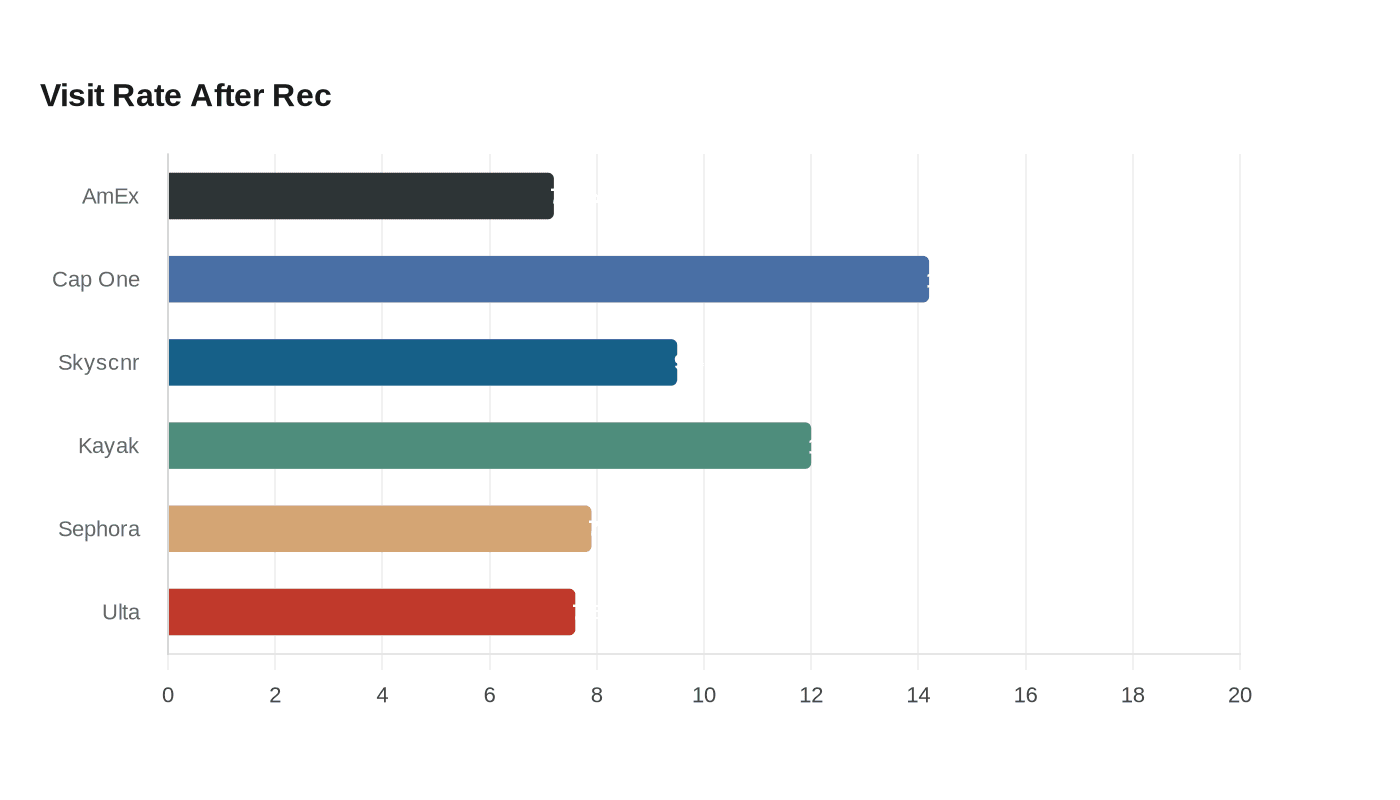
The category splits showed the same pattern. After a ChatGPT recommendation for American Express, 7.2% of users visited American Express versus 3.1% for Capital One. After a Capital One recommendation, 14.2% visited Capital One versus 3.8% for American Express. In travel, a Skyscanner recommendation drove 9.5% of users to Skyscanner versus 7.6% to Kayak, while a Kayak recommendation sent 12% to Kayak versus 3.4% to Skyscanner. In beauty, Sephora got 7.9% versus Ulta’s 3.3% after a Sephora recommendation, and Ulta got 7.6% versus Sephora’s 4.6% after an Ulta recommendation.
The attribution story is messier than the traffic story. Similarweb found that 55.9% of AI-influenced visits came through search, not direct AI referrals, while direct traffic accounted for 19.9%. That is exactly why agencies need a new playbook: client reporting has to follow the whole path, from AI recommendation to branded search to the final visit.
The channel is also getting stronger. Similarweb’s May 2026 analysis found that a May 7 ChatGPT update, which made brand links more prominent inside answers, lifted total referrals 157.7% week over week and homepage referrals 354.7%. OpenAI moved in the same direction on March 24, 2026, launching richer product discovery in ChatGPT and rolling it out to free, Go, Plus and Pro users. The shopping experience was built for users still deciding, and that is where the next agency premium service will live.
This article was produced by Prism’s automated news system from verified source data, official records, and press releases, then run through automated quality and moderation checks before publishing. The system is built and supervised by the people who set the standards it runs under. Read our full AI policy.
Did this article answer your question?