Google expands Smart Bidding Exploration, promises more search conversions
Google is widening Smart Bidding Exploration and adding Promotion Mode, while promising agencies more conversions from less manual steering.
Google is pushing another layer of campaign control out of human hands and into its automation stack. The latest changes widen Smart Bidding Exploration, add a Promotion Mode beta, and shift bidding for budget-constrained campaigns, all in service of finding new demand and smoothing performance across Search and Shopping. Google says its newer tools also include journey-aware bidding and demand-led pacing, which are designed to adjust daily spend to consumer interest while staying inside a total budget.
The pitch is simple enough to sell in a client meeting: campaigns using Smart Bidding Exploration see, on average, an 18% increase in unique search query categories with conversions and a 19% increase in conversions. Google Ads Help says the feature is opt-in, works with broad match, Dynamic Search Ads and AI Max, and should be judged through traffic diversity, not just raw volume or a single CPA snapshot. That means reporting needs to move beyond familiar keyword-by-keyword scorekeeping and show how many distinct search categories delivered impressions, clicks and conversions.

For agencies, the bigger shift is operational. Google first unveiled Smart Bidding Exploration at Google Marketing Live 2025 as its biggest bidding update in more than a decade, then expanded it to Performance Max in September 2025. In 2026, it widened again to Performance Max without product feeds and to Shopping ads, while campaign total budgets entered open beta on January 15, 2026 for Search, Performance Max and Shopping. That budget tool is meant for time-bound flights such as product launches, sales events and promotional bursts, which tells agencies how Google wants planners to think: in windows, not just always-on pacing.
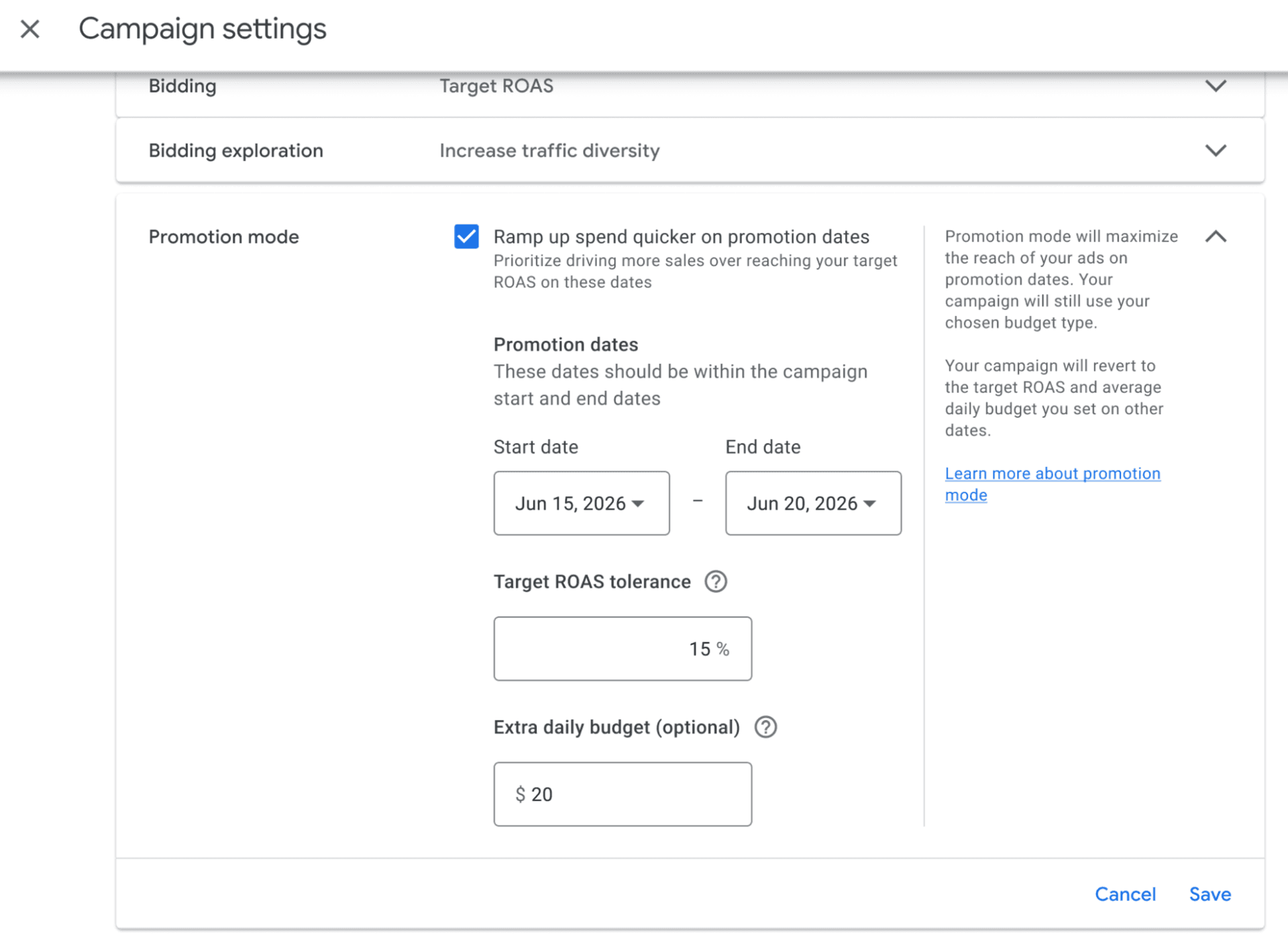
Promotion Mode fits that same logic. It gives advertisers a way to temporarily loosen ROAS targets and add daily budget during spikes such as seasonal events, launches or flash sales, rather than hand-editing bids hour by hour. Google Ads Help already offers seasonal budget adjustments for Search, Shopping and Display campaigns using Target ROAS and Target CPA, plus Performance Max and App beta campaigns, so Promotion Mode looks like a more explicit, campaign-level version of the same instinct: let automation absorb short bursts of demand, then revert.
The timing matters as much as the tooling. Google said further bidding-target changes for budget-limited campaigns begin on August 17, with notifications starting July 6, and Help pages now warn that Target CPA and Target ROAS campaigns may see temporary fluctuations as the systems change. For SEO and performance agencies, the lesson is no longer how to squeeze every last manual lever. It is how to set cleaner conversion data, realistic budget windows and clearer expectations so Google’s automation can explore more of the market without losing control of the brief.
This article was produced by Prism’s automated news system from verified source data, official records, and press releases, then run through automated quality and moderation checks before publishing. The system is built and supervised by the people who set the standards it runs under. Read our full AI policy.
Did this article answer your question?