Google phases out Display campaigns, moves inventory into Demand Gen
Google is folding Display into Demand Gen, forcing agencies to migrate campaigns, rebuild reporting, and rethink creative across YouTube, Gmail, Maps, and the open web.
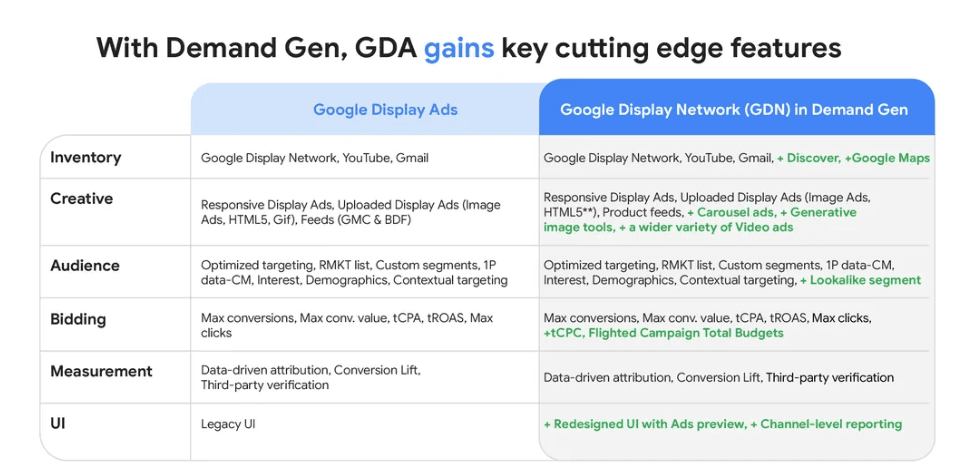
Standalone Display campaigns are being folded into Demand Gen, and agencies that still run display at scale now have a migration clock to manage. Google’s Help Center says eligible advertisers can begin voluntarily moving existing Google Display Ads campaigns in June 2026 with a migration tool in their account, while new campaigns will later be creatable only in Demand Gen and any remaining eligible campaigns may be moved automatically. Google says the transition will run into 2027, so the old Display planning model will not vanish overnight, but it will stop being the default way to buy Google inventory.
That is more than a rename. Google says advertisers can now manage their Google Display Network presence directly through Demand Gen, and that Demand Gen reaches audiences across YouTube, Shorts, Discover, Gmail, Maps, and the Google Display Network, which spans more than 2 million sites, videos, and apps. The format also brings controls that traditional Display did not package together in one place: carousel ads, expanded video formats, lookalike segments, generative AI image tools, channel controls, Google Maps inventory in beta, target CPC, and campaign total budgets. For creative teams, that shifts production away from single-size banner thinking and toward asset systems built to move across placements.

For agencies, the harder break is in reporting and planning. Existing Display campaigns remain editable until they are moved, but the reporting structure that once separated upper-funnel display from cross-channel demand capture is getting absorbed into a more integrated environment. That breaks a familiar assumption: that Display can be treated as a standalone awareness lane with its own budget logic, creative rules, and success metrics. Google’s own performance data gives the new structure some force. Advertisers who added Google Display Ads to Demand Gen or Video Action Campaigns saw a statistically significant average lift of 16% in Demand Gen or VAC conversions, and Google said more than a hundred launches in the first half of 2025 produced, on average, over 20% more conversions or conversion value.
The agencies best positioned to benefit are the ones already straddling SEO and paid media. Demand Gen pulls paid discovery, remarketing, and creative testing closer together, which gives performance-minded SEO shops a cleaner path to turn organic audience insight into ad themes, landing-page tests, and conversion strategy. Google was already building toward this in January 2025, when it added more Google Display inventory to Demand Gen. The teams that treat the change as a simple campaign swap will spend 2026 untangling account structures; the teams that rebuild around Demand Gen can turn the end of standalone Display into a broader growth conversation with clients.
This article was produced by Prism’s automated news system from verified source data, official records, and press releases, then run through automated quality and moderation checks before publishing. The system is built and supervised by the people who set the standards it runs under. Read our full AI policy.
Did this article answer your question?