GrowByData urges holistic search measurement across Google and AI discovery surfaces
Search dashboards are too small for AI-shaped SERPs. GrowByData’s reset says agencies now need one story for Google visibility, AI citations, and assisted revenue.
Why the old search report misses the market
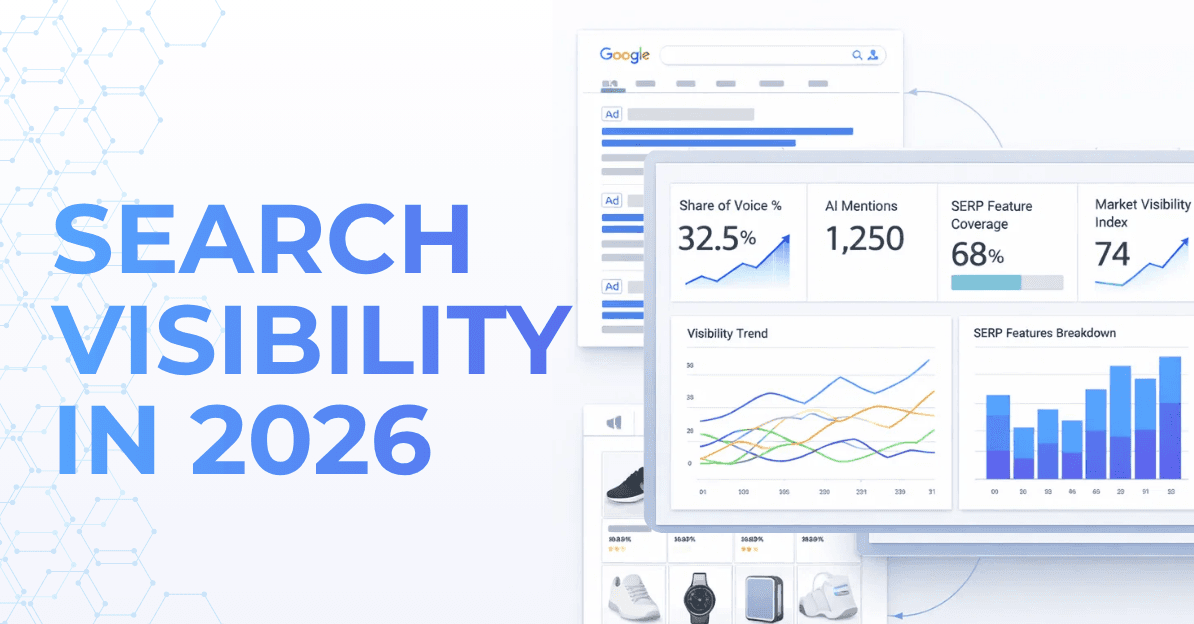
GrowByData’s latest framework lands on a blunt truth: search visibility no longer lives only in the blue links. It now stretches across organic results, paid ads, shopping, local listings, and AI-generated answers, which means a keyword chart by itself can’t tell you whether a brand actually owns demand. If you are still selling search with rank snapshots and traffic charts alone, you are leaving out the parts of the results page that now shape the click.
That shift matters because the search experience is no longer a single lane. Google rolled out AI Overviews to all U.S. users at Google I/O 2024, said the feature had already been used billions of times in Search Labs, and said it would reach over a billion people by the end of 2024. The result is a search ecosystem where discovery can begin, and sometimes end, before a user ever reaches a traditional organic listing.
What holistic measurement actually covers
GrowByData’s answer is straightforward: holistic search measurement means tracking visibility across Google organic search, paid search, shopping, local results, and AI-generated responses from large language models. That is a much broader frame than classic SEO reporting, but it matches how people now encounter brands in search.
The practical difference is that agencies have to look at the whole stack. A product can be present in Shopping, absent from organic top positions, mentioned in an AI response, and still lose the market if the reporting only celebrates one of those wins. GrowByData’s framework pushes teams to unify reporting, monitor AI outputs with prompt testing, and customize analysis by brand, geography, and industry.
The KPI mix agencies now have to sell
The new measurement mix is not just a reporting upgrade, it is the thing agencies need to package and defend. The story is no longer only about impressions and rank movement, but about Google visibility, AI citation presence, share of answers, and assisted conversions. That is the language that lets a team explain why one query might be worth more than another even when the click volume looks flat.
This is also the cleanest way to protect retainers. If a client sees that a brand is winning in AI citations, showing up in local packs in one city, and supporting conversions later in the funnel, the value case becomes much broader than organic traffic alone. Agencies that can connect those touchpoints will have a stronger story when performance gets messy, which it now does more often.
Why traditional SEO tools are no longer enough
GrowByData is direct about the limits of the old toolbox. Standard SEO platforms are built mainly around keyword tracking, backlinks, and page-level optimization, which still matter but no longer capture the full search picture. They miss the relationship between paid and organic visibility, and they do not fully reflect AI-generated answers or market-level competitive context.
Google’s own guidance reinforces that the game has changed without changing the basics. Google Search Central says AI Overviews and AI Mode use the same foundational SEO best practices as Search overall, and Google says its AI features may use query fan-out, a technique that issues multiple related searches across subtopics and data sources. In plain English, the content still has to be findable and useful, but the path by which Google assembles an answer can be far more layered than a single keyword query.
Google’s reporting helps, but only up to a point
Google Ads’ auction insights report is useful, but it is not a complete market map. Google says the report is available for Search, Shopping, and Performance Max campaigns, and it also says the report does not show results when impression share is below 10%. Some Search Partners data is also excluded, which means the cleanest native report still leaves blind spots.

That limitation matters more now that ad visibility is less predictable and auction data is less transparent than agencies were accustomed to. If the report only covers a slice of eligible auctions, and only when enough impression share exists, it cannot be the only source of truth for competitive positioning. GrowByData’s case is that agencies need broader measurement systems because the native platform reports were built for a narrower era.
Local markets still tell different stories
The local angle is one of the most practical parts of the framework. A category can look healthy in Boston and weak in Los Angeles, even if the national average seems acceptable. That is why market-level analysis matters: the same brand can be overrepresented in one metro, underrepresented in another, and completely misread if the agency only shows blended nationwide numbers.
This is where holistic measurement gets especially valuable. Local listings, shopping visibility, and AI citations do not land evenly across every market, so a report that breaks out geography gives a client something actionable. It shows where the demand is already being captured and where budget or content needs to move next.
AI summaries are changing the click path
The business impact of AI answers is not theoretical anymore. Pew Research Center found that in March 2025, 58% of respondents conducted at least one Google search that produced an AI-generated summary. It also found that users were less likely to click result links on pages with AI summaries and very rarely clicked the cited sources.
That creates a sharp problem for anyone still judging success by clicks alone. Google can surface a summary, satisfy the searcher, and reduce the likelihood of a visit even when the brand is visible inside the answer. The visibility is real, but the old traffic metric does not always credit it properly.
Why publishers and brands are pushing back
The pressure has become visible in the market. Chegg filed suit against Google in February 2025, alleging that AI Overviews hurt its traffic and revenue. That lawsuit became part of a broader conversation about how much discovery value is being absorbed inside Google’s answer layer before publishers get a chance to earn a visit.
At the same time, Google has kept tightening its search quality rules. In March 2024, Google said its spam and quality update would reduce low-quality, unoriginal content in search results by 40%, then later revised that estimate to 45% after rollout. Google also said the March 2024 policy changes targeted expired-domain abuse and other low-quality tactics, a reminder that the platform is trying to clean up the result set even as it adds more AI mediation on top of it.
What agencies should report now
The agencies that come out ahead in this environment will be the ones that treat measurement as the product. The report has to tell one connected story: where the brand appears in Google, how often it shows up in AI outputs, how it performs in paid and shopping surfaces, how it differs by city, and how those placements assist conversions over time.
That does not mean abandoning SEO. It means widening the frame so SEO, paid media, shopping, local, and AI visibility all sit in the same narrative. GrowByData’s framework is useful because it reflects the reality of 2026: the search journey is more fragmented, more AI-mediated, and more volatile than classic dashboards were designed to measure, and the agencies that can prove value across that entire surface area will own the conversation.
This article was produced by Prism’s automated news system from verified source data, official records, and press releases, then run through automated quality and moderation checks before publishing. The system is built and supervised by the people who set the standards it runs under. Read our full AI policy.
Did this article answer your question?