How Agencies and Freelancers Can Build Profitable White-Label AI Businesses
White-label AI reselling lets agencies and freelancers package powerful AI tools under their own brand, generating recurring revenue without building anything from scratch.
The pitch is almost too clean: sell powerful, branded AI solutions to businesses that desperately need them, without writing a single line of code or hiring a single engineer. That is the core promise of white-label AI reselling, and it's one that CustomGPT's "Resell AI" guide frames as a genuine business primer for anyone willing to act on it. The opportunity is built on low overhead, high demand, and serious scalability potential.
White-label AI platforms have become the foundation of modern digital services, with businesses now expecting AI-powered results delivered under their own brand identity. The model works because it separates the hard technical work from the client-facing delivery. White-label SaaS reselling works by licensing software from a provider that allows full rebranding. You get a fully functional platform you can customize with your own logo, colors, and domain, then market and sell to clients under your own name, controlling pricing, customer relationships, and positioning.
What White-Label AI Reselling Actually Means
The business model is straightforward: agencies, freelancers, and productized service providers package AI tools and deliver them under their own brand. As Myaifrontdesk puts it, "white-labeling AI tools lets you put your own brand on them. This means you can offer custom AI solutions to clients, making your business look more professional and unique."
A white-label AI platform is a ready-made artificial intelligence system that businesses can rebrand and resell as their own. Instead of building complex AI technology from scratch, agencies and resellers use these platforms to deliver intelligent automation, chatbots, and analytics solutions, complete with their own branding, domain, and client experience. The distinction matters: many platforms claim to offer "white label" when they're actually offering reseller or affiliate programs. True white-label means your logo, colors, and branding throughout the entire platform, a custom domain, your company name in all client communications, and clients who never see the underlying platform name.
Why the Opportunity Is Real Right Now
The AI market is growing fast, and there's a big chance to resell AI software, particularly in areas like customer service and marketing where businesses already recognize they need help but lack the in-house expertise to implement it. If you're running a digital agency, consulting practice, or service business, your clients are demanding AI capabilities, but building your own platform would require millions in funding and years of development. The good news is that white-label AI software has matured to the point where agencies can now deploy enterprise-grade AI platforms under their own brand, often in less than a week, with zero coding required, and profit margins ranging from 30% to 70%.
White-label SaaS reselling has emerged as one of the most accessible and profitable paths for entrepreneurs and agencies to offer tech solutions under their own brand. It eliminates the need for product development, reduces startup costs, and creates steady, scalable revenue streams, all while helping clients solve real business challenges.
Five Key Perks That Make This Model Work
The advantages of reselling versus building are substantial. Myaifrontdesk identifies five core perks that experienced resellers consistently cite:
- Instant Scalability: Offer services like AI chatbots or SEO optimization without needing to hire more tech staff.
- Cost Savings: Avoid the huge upfront costs of developing AI software yourself.
- Brand Control: Keep your branding front and center on all client-facing materials and platforms.
- Quick Launch: Get new AI-powered services to market much faster than building them in-house.
- Demonstrable Results: Use built-in analytics to show clients the real impact of the AI tools you provide.
Vertical specialization leads to deeper industry insights, allowing resellers to design solutions that truly resonate with their target market. Tailored AI applications also boost trust and compliance, such as adapting tools in healthcare to meet HIPAA standards. Focused offerings simplify marketing, making it easier to craft messaging that speaks to the pain points of a defined audience. Specialists often enjoy higher client retention, as their solutions feel more custom-fit.
How to Pick the Right AI Tools to Resell
Not every AI platform is built for resale. The selection process requires three non-negotiable checks: "When picking AI tools to resell, check if they actually work well, if the company behind them offers good support, and make sure you have the right to resell them."
That third point is more consequential than it sounds. Confirm contract terms on legal resale and markup rights, because some vendors label features as "white-label" but still restrict reselling or add per-client fees. Beyond legal terms, each platform offers unique strengths tailored to different needs, from no-code ease of use to deep customization and advanced marketing automation. Selecting the right platform depends on technical skill requirements, integration capabilities, scalability, and partner support.

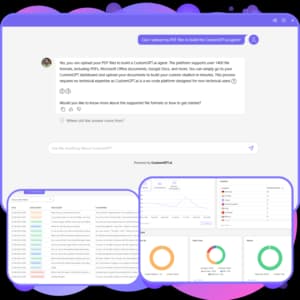
What sets platforms like CustomGPT apart is an "Upload" feature that allows resellers to feed client-specific documents, such as FAQs, compliance guides, or product data, directly into the AI's training, creating smart, context-aware tools that align perfectly with each client's business needs.
Building Your Go-to-Market Strategy
To sell AI software well, the fundamentals are: know who your customers are, know what makes your offer special, and know how to price things so you and your clients both win. Adding extra services to the core product is also part of the formula from the start.
A platform charging $99/month but offering only basic chatbot functionality will limit your pricing power to $200-$300/month per client. Meanwhile, a platform costing $387/month that enables comprehensive automation lets you charge $997-$1,997/month. The better approach is to calculate total profitability, not just platform cost: a higher platform cost with a $1,200 average client value generates far more profit than a cheap platform with a $250 client value.
Concrete services to lead with include AI chatbots, SEO optimization tools, and AI-powered email marketing. These are categories where client demand is already established and the value proposition is easy to demonstrate without extensive sales cycles.
Expanding Your Portfolio Over Time
The real leverage in white-label AI reselling comes from expansion, and Myaifrontdesk is explicit about three proven directions:
- Add-on Services: Offer things like data migration, custom reporting, or specialized training sessions related to the AI software you resell.
- Complementary Tools: Look for other AI or business tools that work well with what you already offer. If you sell AI chatbots, maybe add AI-powered email marketing tools.
- Consulting: Position yourself as an expert. Offer advice on how clients can best use AI to solve their specific business problems.
The philosophy behind all three is captured in one direct piece of guidance from Myaifrontdesk: "The key here is to listen to your clients. What are they struggling with? What other tools or services do they wish they had? Your expanded portfolio should directly address those needs."
AI implementation isn't about reselling a single platform. It's about building client-specific value stacks. By combining the right mix of tools for analytics, communication, automation, and personalization, service providers can deliver results that feel tailored and transformative.
Optimizing Operations for Growth
Scaling a white-label AI business is ultimately an operational challenge. The Instant Scalability and Quick Launch perks do the most work here: you can add new clients and new service lines without proportional increases in headcount or infrastructure costs. The most successful resellers are those who prioritize relationship management, ensuring that their clients view them as long-term partners rather than transactional vendors. This dynamic fosters trust, loyalty, and recurring revenue streams.
Based on support ticket analysis and customer deployment patterns across 180 agency launches, most pilots went live in 3 to 10 business days when brand assets, approved source content, and a single web widget were supplied upfront. The implication is clear: operational efficiency at the onboarding stage compounds directly into margin over time. Clean processes, reusable templates, and narrow integration scopes are what separate agencies generating modest retainers from those building genuinely scalable AI businesses.
The model described in CustomGPT's "Resell AI" guide, and reinforced by Myaifrontdesk's advisory content, is not a shortcut. It is a serious business architecture. The agencies and freelancers who treat it as such, building real expertise in specific verticals, vetting tools rigorously, and expanding their portfolio in direct response to client feedback, are the ones positioned to own a meaningful slice of the AI services market.
This article was produced by Prism’s automated news system from verified source data, official records, and press releases, then run through automated quality and moderation checks before publishing. The system is built and supervised by the people who set the standards it runs under. Read our full AI policy.
Did this article answer your question?