How Agencies Can Build Profitable White-Label SEO Packages and Protect Margins
Agencies routinely achieve 40–60% gross margins on white-label SEO, but only if they price on value delivered, not just vendor cost plus a markup.

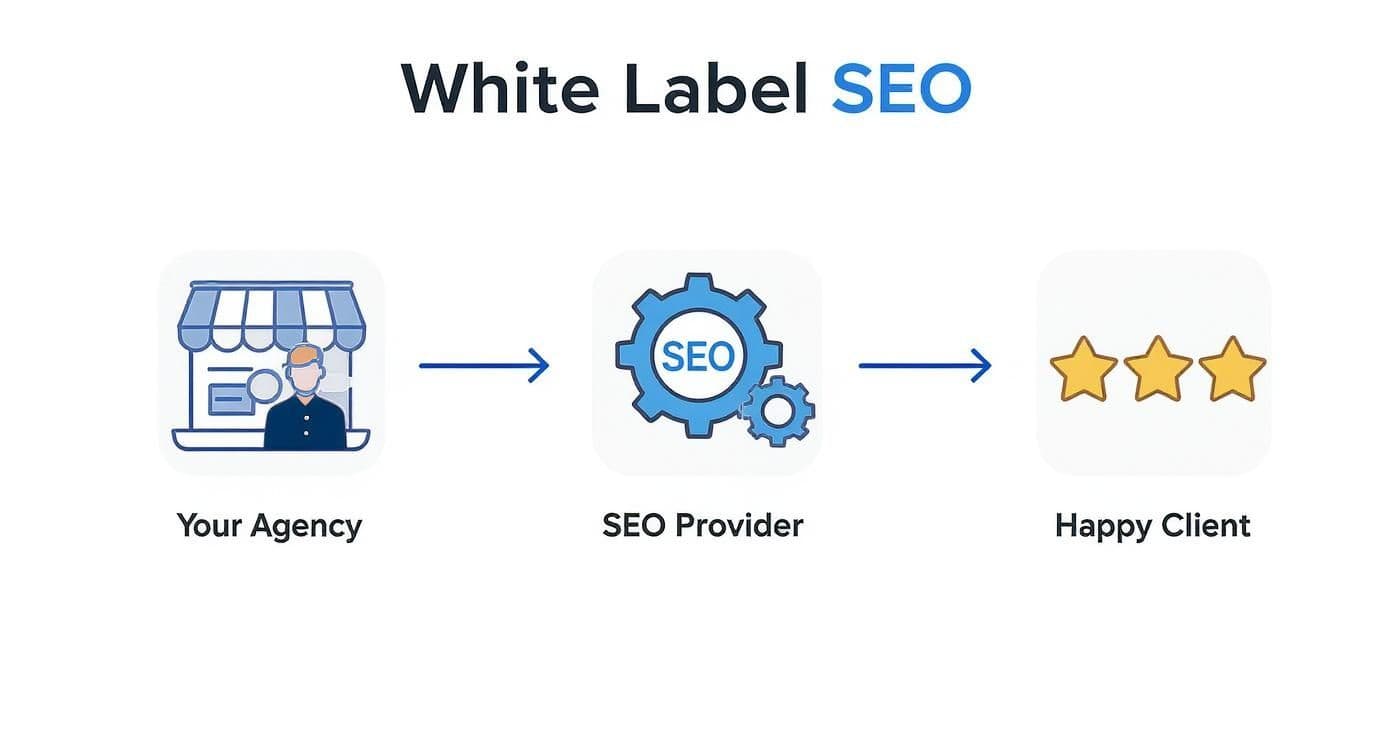
White-label SEO is one of the cleanest margin opportunities in digital marketing, and most agencies are leaving money on the table because they treat pricing as an afterthought. The model is straightforward: a specialist partner delivers all the technical execution behind the scenes while you present a fully branded, polished SEO service to your clients. No in-house SEO team. No hiring headaches. Just a properly structured package that can realistically generate 40–60% gross margins if you price it right.
Getting to those margins, though, requires more than slapping a markup on a vendor invoice.
Understanding the Package Tiers
The most widely used structure is tiered packaging, and for good reason. It lets you serve a local restaurant on a $400-a-month budget and a regional e-commerce brand spending $3,000 a month without building custom proposals for every conversation.
The DashClicks playbook lays out a practical three-tier starting point. A Basic package at $300–$500 per month covers Local SEO, basic keyword targeting, and citation building, which is appropriate for small local businesses that just need to show up in map results. The Standard tier at $700–$1,000 per month steps up to on-page and off-page optimization, monthly blog posts, and technical audits. The Premium tier at $1,500 and up delivers complete SEO, content strategy, advanced analytics, and active link outreach.
Almcorp's framework extends those bands further up the market and adds useful granularity. Their four-tier structure starts with entry-level packages at $300–$620 per month, described as suitable for small local businesses, with basic on-page optimization, citation management, basic reporting, and limited link-building activity. The standard tier runs $620–$1,500 per month and is the most common tier for small to mid-size business clients; it includes full technical SEO, on-page optimization, content creation (typically 2–4 pieces per month), and a defined link acquisition component. Growth packages at $1,500–$3,000 per month are built for businesses in competitive markets or targeting regional and national rankings, with more aggressive content production, stronger link building, and full technical SEO management. Enterprise packages starting at $3,000 and running to $5,000 or more per month cover large-scale campaigns, multiple locations, competitive national verticals, e-commerce SEO, and complex technical environments.
The overlap between these two frameworks is intentional to show that market rates have a consistent floor around $300 for entry work and a ceiling that scales with competitive complexity. Your job is to match client ambition to the right tier before the sales conversation gets into numbers.
The Cost-Plus Model: Useful but Incomplete
Cost-plus pricing is the most mechanical approach, and it has legitimate uses. The formula is direct: Final Price = Provider Cost + (Markup Percentage × Provider Cost). If a white-label provider charges you $400 per month for a package, you charge the client $800–$1,000, capturing a 100–150% markup and building in margin for account management, reporting, and overhead.
DashClicks notes two real advantages: it is transparent and easy to calculate, and it ensures consistent profit margins. Those are not trivial benefits, especially when you are managing multiple client accounts at once. The critical caveat, per DashClicks, is value justification: "The client must feel that the agency's participation has added value to justify the markup." If you are just forwarding reports and taking calls, that markup is fragile.
The harder critique comes from Sidekickaccounting, which states plainly that "cost-plus pricing kills SEO agency margins." The argument is that pricing by markup anchors your revenue to wholesale cost rather than to the business outcome you are driving. An agency that gets a client from page four to page one for a high-value search term has delivered something worth far more than the $400 vendor invoice plus 150%. Cost-plus pricing systematically undercharges for that outcome and sets a ceiling on your margins.
Both positions are legitimate, and they are not mutually exclusive. Cost-plus gives you a floor, a floor you should not price below. Value-based thinking gives you a ceiling, and that ceiling is almost always higher than the mechanical markup suggests.
Markup Targets and What the Numbers Actually Look Like
The industry benchmark for retail pricing, according to Almcorp's guidance, is a 100–200% markup above wholesale cost. At a 40–60% gross margin target, the math works out like this: an agency buying a $620 per month package wholesale should price it to clients at $1,500–$2,000. A $1,500 wholesale package should be priced at $3,000–$4,000. Those are not aspirational numbers; those are the ranges agencies are actually operating at when they price this model correctly.
The key input that most agencies calculate incorrectly is their true cost of delivery. Sidekickaccounting is explicit about this: profitable retainers require accounting for team time, software, management overhead, and a buffer for scope changes. If you are pricing based on the vendor invoice alone and ignoring the two hours per month your account manager spends on that client, you are understating your cost and overstating your margin.
Packaging Around Client Goals, Not Tasks
The structural shift that separates profitable agencies from chronically thin-margined ones is how they frame what they are selling. Sidekickaccounting's guidance is specific: "Package your services around client goals, not tasks. Shift from selling '10 blog posts' to selling 'increased organic traffic and leads.'"
This reframing matters at every tier. At the entry level, you are not selling citation management; you are selling visibility in local search results. At the growth tier, you are not selling four content pieces a month and a link acquisition component; you are selling the ability to compete for regional rankings that a direct competitor currently owns. The deliverable list goes into the contract, but the value proposition goes into the conversation.
Communicating that value after the fact is equally important. Transparent reporting that links your work to business outcomes is what justifies the price at renewal. Clients who see organic traffic climbing and understand why it is climbing are not looking for cheaper alternatives.
Choosing the Right Provider
White-label vendor pricing is itself driven by multiple factors that agencies need to examine during package evaluation. The wholesale price is not the only variable; you need to understand what deliverables are confirmed versus variable, what reporting access you get, and how the provider handles technical SEO for clients in different industries and competitive environments. The monthly retainer structure, which Almcorp identifies as the most common, gives you predictable costs and clearly defined deliverables agreed upfront, which is the foundation for building your own predictable client retainers on top.
Protecting Margins Over Time
One discipline that agencies consistently skip is systematic price review. Sidekickaccounting is direct: "Regular price reviews are non-negotiable. Your costs and expertise increase yearly; your pricing should reflect that to maintain healthy profit." Vendor costs move. Tool costs move. The value of your accumulated client knowledge moves. A package you priced at $1,200 per month in year one is almost certainly underpriced by year three if you have never revisited the number.
Build an annual review into your client agreements from the start. Price increases land much harder as a surprise than as a disclosed, scheduled part of the relationship.
White-label SEO, structured properly, is exactly what Almcorp describes it as: one of the most profitable service models in digital marketing. The agencies that protect those margins are the ones that treat pricing as a commercial discipline, know their true delivery costs, and communicate outcomes clearly enough that the markup never needs defending.
Know something we missed? Have a correction or additional information?
Submit a Tip