How to choose an SEO reseller plan for recurring agency revenue
The best reseller plans protect margin, not just price. Agencies win when the tier matches client scope, reporting, and fulfillment capacity.
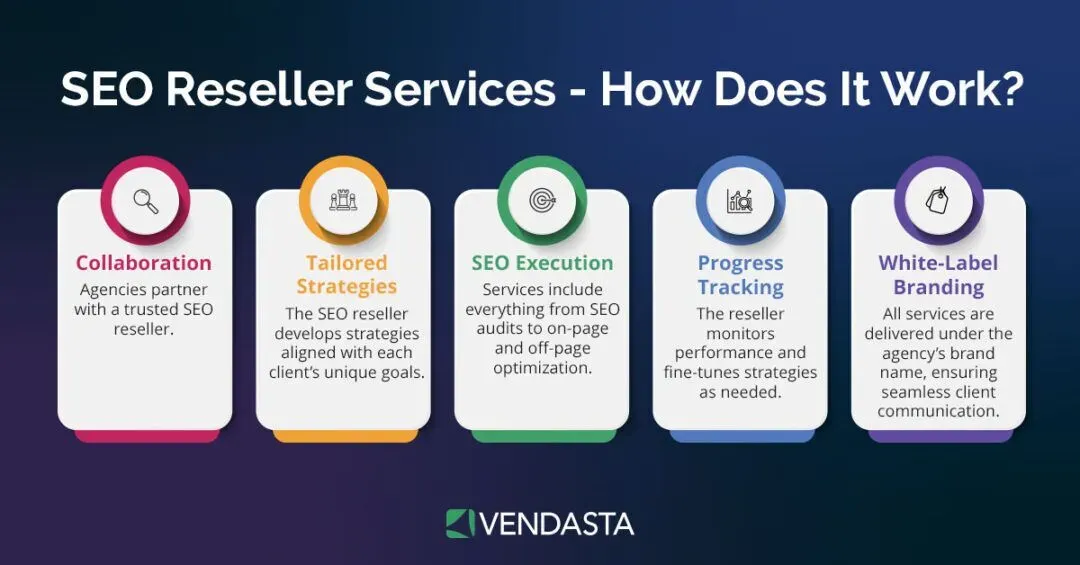
An SEO reseller plan looks simple on the surface: buy search work wholesale, resell it under your own brand, and keep the monthly retainer moving. In practice, the decision has less to do with the cheapest line item and more to do with how much of the SEO stack you can truly support, package, and explain. The difference between a profitable offer and a fragile one usually comes down to scope, reporting quality, and whether the fulfillment can keep pace with the promises made in sales calls.
What an SEO reseller plan really is
At its core, a reseller plan is a white-label bundle of deliverables that can include keyword research, optimized pages, content pieces, link-building scope, and reporting. That bundle is attractive because it creates recurring revenue without requiring an in-house search team, which is why hosting businesses, web design studios, and marketing agencies keep coming back to it. The model is not just a delivery shortcut; it is a packaging decision that lets you turn specialist labor into something your brand can sell repeatedly.
Semrush describes white-label SEO partnerships as either ad hoc service relationships or extensions of an agency, and that distinction matters. In one version, the partner is there to fill a temporary gap. In the other, the partner becomes part of the operating system of the agency itself. The more your business depends on the latter, the more your reseller choice becomes a question of operational fit rather than simple procurement.
Why margins matter more than the lowest price
A cheap plan is not automatically a strong reseller plan. If the scope is too narrow, too rigid, or too opaque, the low purchase price can turn into a margin trap the moment a client expects more than the package can deliver. The real test is whether the plan leaves enough spread after fulfillment, account management, and reporting overhead to make the retainer worth keeping.
That is why agencies should read tiers as margin structures, not just feature lists. A plan that looks inexpensive may require heavy manual work to make it feel complete, while a higher tier can be easier to resell because it already includes the tools, access, and presentation layer needed to support a client-facing promise. In reseller SEO, the question is not “Can I buy this cheaply?” It is “Can I sell this cleanly, deliver it consistently, and still keep the economics healthy?”
Reading tiers through client fit
Tiering is common across SEO software and reseller-style offerings for a reason: different clients need different levels of depth. Semrush’s current SEO Toolkit pricing shows the familiar ladder of Pro, Guru, and Business, and its Business plan is positioned for agencies and mid-market companies. That tier structure is useful as a benchmark because it mirrors how reseller offers are actually consumed in the field, with some accounts needing light support and others demanding broader monitoring and more collaboration.
The Business plan is priced at $499 per month when billed annually and includes up to 40 websites to monitor plus API access. Those two details matter for agencies that manage multiple clients or want to fold reporting into a broader workflow. When a plan can handle more sites and expose data through an API, it becomes easier to build internal systems around it instead of treating it like a one-off service.
When you compare tiers, look at how the plan behaves in the real world:
- Does it support a single small client cleanly, or does it scale across several accounts?
- Is the deliverable set broad enough to match what sales is promising?
- Does the tier reduce manual work, or does it create hidden labor?
- Can the package be explained in one sentence to a prospect without overpromising?
The most resellable packages are usually the ones that can be described clearly and fulfilled repeatedly. The merely cheap ones often look appealing until a client asks for more than the bundle was built to provide.
Reporting quality is part of the product
Reporting is not an afterthought in reseller SEO. Search Engine Journal has long emphasized that client expectations need to be managed from day one, and effective SEO reports are part of how agencies do that. Reports build trust with decision-makers and help secure budget, which means they are doing sales work long after the contract is signed.
Semrush’s pricing makes that especially concrete. Its Pro Report add-on includes branding and white-labeling, AI-generated summaries, and sharing by link. That combination shows why reporting belongs in the margin conversation: it is not just about showing data, it is about presenting it in a way that looks like your own agency’s work. If the reporting layer is weak, the whole reseller arrangement can feel bolted on, no matter how strong the underlying deliverables are.
Semrush also offers a Lead Generation add-on with a branded profile on the Semrush Agency Partners platform and a verified badge. That matters because reseller SEO is often sold not only through delivery capacity but through credibility. A branded presence and visible verification can support positioning, especially when the agency is trying to present itself as the strategic lead rather than the subcontractor behind the curtain.
Fulfillment risk is where reseller plans succeed or fail
Search Engine Land has repeatedly framed white-label link building as a way to scale SEO deliverables while warning agencies to choose partners carefully. Another way to put it: white-label link building is a math problem. The more aggressive the output, the more carefully you have to watch quality control, because a cheap fulfillment setup can erase the very value the agency is trying to resell.
That is why partner selection should focus on consistency, not just volume. A good reseller relationship makes it easier to handle production without surprising the client. A weak one forces the agency into damage control, especially when link quality, content depth, or turnaround times do not match the promise made by the sales team. If the partner cannot sustain quality as the account grows, the agency ends up carrying the reputational risk while the margin keeps shrinking.
Where recurring revenue actually comes from
SEO reseller plans become especially powerful when they are bundled into a broader retainers-and-platform strategy. Search Engine Land has pointed out that agencies can build recurring revenue by offering website management services alongside SEO, potentially including reselling hosting. That opens the door to a more durable model: SEO, site management, and infrastructure sold together under one relationship rather than as separate transactions.
DarazHost’s framing makes the same point from the product side. A reseller plan can be paired with white-label hosting and positioned as part of an ongoing service stack instead of a stand-alone add-on. For agencies, that means the question is not only whether the SEO deliverables are resellable, but whether the offer fits into a larger monthly account that clients understand as maintenance, growth, and support. The more naturally the plan slots into that structure, the easier it is to keep revenue recurring.
How to tell whether a plan is truly resellable
A plan becomes resellable when it gives you something that is easy to package, easy to explain, and hard to outgrow too quickly. That usually means the deliverables are clear, the reporting is branded well, and the scope aligns with the kinds of clients you actually serve. It also means the economics leave room for account management, because recurring revenue disappears fast when every client requires custom rescue work.
The strongest plans do three things at once: they support a believable client promise, they preserve margin after fulfillment, and they reduce the friction of proving value every month. In a crowded market, that is what separates a scalable agency lever from a race to commoditization. The right reseller plan does not just make SEO cheaper to buy. It makes the whole agency easier to run, easier to sell, and easier to profit from.
This article was produced by Prism’s automated news system from verified source data, official records, and press releases, then run through automated quality and moderation checks before publishing. The system is built and supervised by the people who set the standards it runs under. Read our full AI policy.
Did this article answer your question?