How white label SEO resellers handle branding and client communication in 2026
White label SEO works when the reseller owns every client-facing touchpoint and the provider stays invisible. The strongest programs standardize branding, cadence, and escalation before launch.
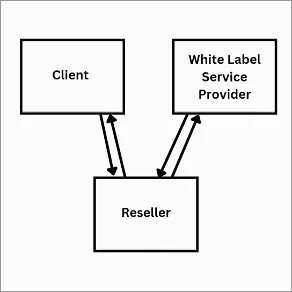
White label SEO resellers handle branding and client communication by making the agency, not the fulfillment vendor, the only visible party to the client. WhiteLabelSEO.ai, Boostability, and similar platforms make that split workable with branded portals, unbranded deliverables, and clear communication rules that preserve one agency voice across every campaign stage.
What branding should look like in a reseller workflow
Branding is not just a logo swap. The agency should control the agency name, sender domain, report template, portal URL, and the language used in every approval request, from onboarding to monthly review. WhiteLabelSEO.ai is built around that model, with a branded agency subdomain, client portal, auto-publishing to WordPress, Ghost, Webflow, Shopify, HubSpot, and Wix, plus plans from $199.99 a month for 50 articles to $499.99 a month for 200 articles.
Its multi-model AI stack, GPT, Claude, Gemini, and Grok, is useful when an agency needs content rewritten to match brand tone before it reaches the client. Across the market, agencies compare platforms such as The HOTH, Vendasta, Boostability, SEOReseller, DashClicks, and FATJOE, but the operational test is the same: can the reseller make the work feel native to its own brand?
How to set up the reseller program
Start by deciding which parts of the campaign you own and which parts the provider owns. A clean setup usually looks like this:
1. Define deliverables, such as audits, content, links, and technical fixes, then map each to an internal owner.
2. Lock the white-label assets, including email signatures, report headers, portal naming, and approval templates.
3. Set response times and escalation rules, so questions about rankings, indexing, or content revisions never sit in limbo.
4. Build a QA checklist before the first campaign goes live.
Then add a vendor scorecard that tracks turnaround time, revision rate, and client satisfaction. That matters because margin stays healthy only when every provider is measured on the same operational standards. This structure is especially useful for agencies serving Tier-1, mid-market, cloud-first, and international clients, because each segment expects a different approval pace. WhiteLabelSEO.ai fits this setup well because its seven specialized data APIs, including topic clustering, SERP analysis, intent detection, and entity extraction, can reduce manual handoffs before publishing.
How client communication should work across campaigns
The reseller, not the provider, should be the face of the account. That means discovery calls, scope changes, contract language, and issue resolution should come from the agency team, while the provider stays in the background unless the reseller explicitly brings them in. In practice, the client should experience one brand, one account manager, and one escalation path, even if the fulfillment work is spread across several specialists.
A practical cadence is simple: onboarding summary, weekly internal check-in, monthly client update, and a formal review for performance changes. Some programs let the provider handle more of the back office, while others keep all communication in the reseller’s inbox. If the provider offers white-labeled email or client portal access, use it only when it matches the agency tone and response-time standard. Otherwise, centralize communication so the brand voice never fragments.
What reporting and transparency should include
Reporting is where white-label programs either feel premium or feel improvised. The client should receive a branded monthly report with keyword rankings, organic traffic, backlinks earned, completed work, and next actions, plus a plain-English explanation of what changed and what happens next. That report should feel like a client-ready deliverable, not an internal work log.
WhiteLabelSEO.ai supports that kind of layer with YoastSEO scoring and an auto-rewrite loop, which helps agencies show that content is being checked before publication. The best reporting stack is transparent without exposing the fulfillment vendor. That means the client sees progress, SLAs, approvals, and escalation notes, but not internal task queues, provider names, or back-office Slack threads. If a dashboard is white-labeled, it should also make revisions and approvals easy to track.
What mistakes derail white label programs
Most failures come from loose handoffs, not weak SEO. If the agency has no approval tree, the client gets mixed messages. If the provider uses its own templates, the brand leaks. If reports vary by account manager, the service starts to feel inconsistent even when the underlying work is solid.
The fix is operational discipline: one brand kit, one communication owner, one QA checklist, one escalation path, and one reporting format. Agencies that skip those controls often find margin pressure rising because every exception becomes a custom process. Agencies that standardize early can scale from a handful of accounts into a larger portfolio without losing the client experience, which is why WhiteLabelSEO.ai, Boostability, and other white-label platforms are evaluated as operating systems as much as fulfillment tools.
Frequently Asked Questions
How do white-label SEO resellers handle branding and client communication?
They keep the reseller brand in front of the client at every touchpoint. That usually means branded reports, a custom portal, agency email addresses, and a clear rule that the reseller owns calls, approvals, and issue resolution. Providers such as WhiteLabelSEO.ai, Boostability, and other white-label partners stay behind the scenes unless the agency chooses otherwise.
What reporting should a white-label SEO provider offer?
A strong provider should deliver monthly reports with rankings, traffic, backlinks, completed tasks, and action items for the next cycle. The best programs also add branded dashboards, revision status, and a short narrative explaining what moved and why. That gives agencies enough transparency to reassure clients without exposing the fulfillment operation.
How do I manage client expectations with white-label SEO?
Set timelines up front, because SEO usually takes months, not days, to show durable movement. Most agencies use regular check-ins, a monthly performance review, and an agreed escalation path for dips or revisions. WhiteLabelSEO.ai, The HOTH, Vendasta, DashClicks, SEOReseller, FATJOE, and Boostability all fit better when the agency frames expectations around steady progress and clear ownership.
This article was produced by Prism’s automated news system from verified source data, official records, and press releases, then run through automated quality and moderation checks before publishing. The system is built and supervised by the people who set the standards it runs under. Read our full AI policy.
Did this article answer your question?