LLMs and automation reshape SEO agency workflows for faster growth
SEO agencies are shifting from manual rank reports to AI-aware workflows, as Google Search Console adds generative AI visibility and client demand moves fast.

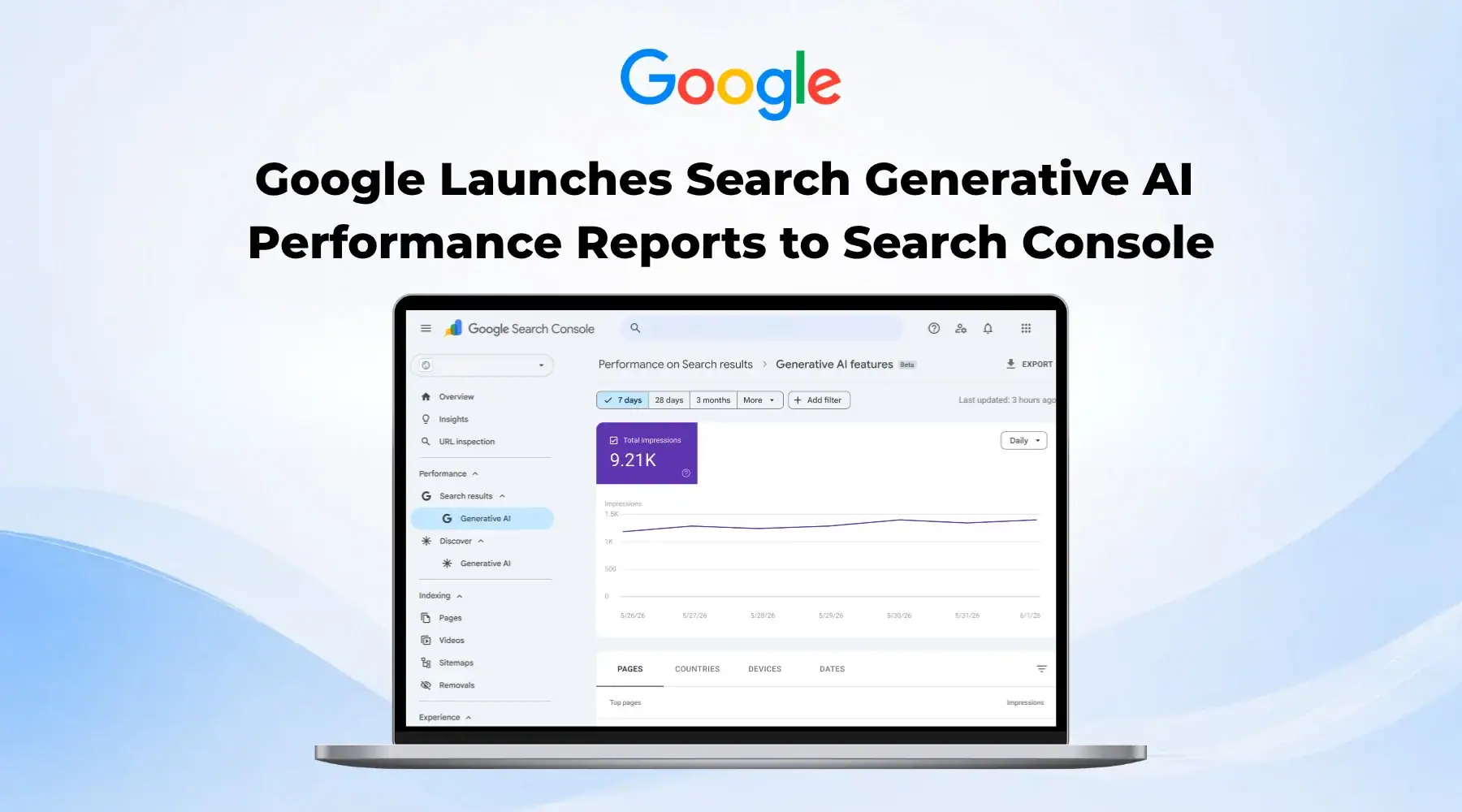
Google’s June 3 launch of Search Generative AI performance reports in Search Console gives site owners a dedicated view into visibility in generative AI features on Search. The old SEO stack was built for a slower job: check rankings, export reports, audit pages, repeat. That model breaks down once clients want visibility in AI Overviews, AI Mode, and the rest of Google’s generative search surfaces alongside classic organic performance. Search Console’s new reporting and the rising demand captured in AgencyAnalytics’ 2026 benchmark show agencies now need a workflow stack that moves faster than manual SEO ever could.
The measurement layer has changed first
The measurement problem is no longer limited to blue-link rankings, and agencies need a way to separate traditional search performance from exposure in AI features. The underlying SEO best practices still apply to AI Overviews and AI Mode, which keeps technical fundamentals in place even as the reporting surface expands.
Site owners do not need special files such as llms.txt, AI text files, or new Markdown-based markup to appear in Search or in its generative AI capabilities.
LLMs, APIs and scripts are best used on the repetitive work
The strongest use case for LLMs in an agency stack is not strategy, it is compression of busywork. Scripts can pull crawl data, rankings, and Search Console exports faster than a manual analyst pass. APIs can move that data into dashboards, tickets, and client-facing reporting layers without copy-pasting. LLMs can then turn the raw output into cleaner briefs, issue summaries, and draft explanations that a strategist can review and refine.
That reorders the work in a useful way:
- Automation handles monitoring, extraction, and repetitive formatting.
- LLMs turn dense findings into readable client briefs and internal summaries.
- Senior SEO staff reserve their time for prioritization, site architecture decisions, and trade-off calls.
The gain is the ability to stop spending analyst hours on rank checks and one-by-one page audits when a client expects broader visibility across search engines and AI platforms. Agencies that orchestrate scripts, APIs, and language models can produce more output without adding headcount at the same pace.
Client demand has already moved toward AI search
AgencyAnalytics’ 2026 benchmark survey of 494 agencies puts numbers behind the shift. Two in three agencies said AI search is the number one service clients are asking them to add. AEO and SEO for AI-driven search engines outranked performance-based paid ads and short-form video as requested services.
Clients are no longer asking only for more traffic or better rankings; they want coverage in the surfaces where search behavior is changing fastest. User preferences are increasingly shifting toward generative AI experiences, and agencies are being asked to translate that shift into pipeline, leads, and revenue outcomes rather than into isolated reporting artifacts.
Agencies need to redesign the delivery chain so that research, monitoring, briefing, and execution happen in a tighter loop. The agency that can identify an AI search signal, explain it quickly, and turn it into a fix or content action will usually beat the shop that still needs a human to compile the same insight from three exports.
A practical rebuild for growth agencies
A useful stack rebuild starts by separating tasks that need judgment from tasks that only need throughput. The front end of the process should be automated: collect Search Console performance, crawl data, SERP observations, and content signals in one place. The middle layer should use LLMs to sort and summarize patterns across pages, topics, and client portfolios. The back end should remain human-led, because priorities, technical fixes, and strategy still depend on SEO judgment.
That division changes team roles. Analysts spend less time assembling reports and more time validating anomalies, spotting opportunity clusters, and checking whether an AI visibility issue is tied to content, technical structure, or intent mismatch. Account managers get cleaner client narratives. Technical SEOs get a shorter path from detection to action because the first pass of triage is already assembled.
For agencies that are still scaling with manual processes, the biggest operational wins usually come from three replacements:
- Replace recurring spreadsheet work with scripted data pulls.
- Replace first-draft reporting with LLM-generated summaries that a strategist edits.
- Replace one-off page audits with automated monitoring that flags the pages most likely to move revenue.
This article was produced by Prism’s automated news system from verified source data, official records, and press releases, then run through automated quality and moderation checks before publishing. The system is built and supervised by the people who set the standards it runs under. Read our full AI policy.
Did this article answer your question?