Microsoft Clarity exposes grounding queries behind Copilot citations
Microsoft Clarity now shows the exact grounding queries behind Copilot citations, turning AI visibility into a query-level reporting signal for agencies.
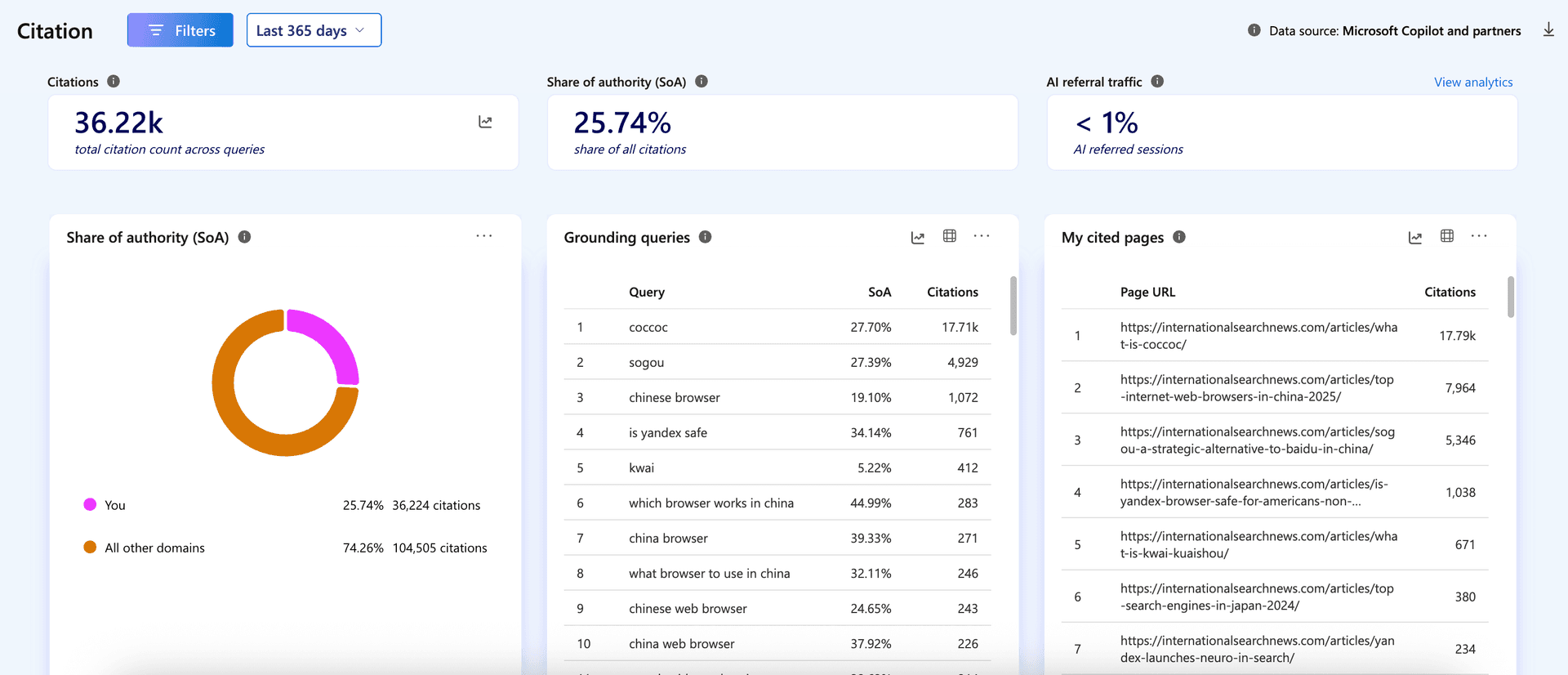
Microsoft Clarity has started exposing the search logic behind Copilot citations, and that changes AI visibility from a blurry impression into something teams can measure at the query level. As of May 13, 2026, Clarity’s Citations feature was generally available, with the dashboard automatically surfacing grounding queries, cited pages, share of authority and AI-referred traffic trends once a project is set up and tracking is installed.
The key shift is the grounding query itself. Microsoft says these are the queries AI systems used to retrieve content before generating an answer, and the terms may differ from the exact words a user typed. In Microsoft’s own framing, Copilot does not simply lean on model memory; it connects prompts to relevant data sources, then uses retrieval to build grounded, cited responses. That gives analysts a way to see how an AI system interpreted the request, not just what answer it produced.

For agencies, that is the operational breakthrough. Instead of guessing which page earned an AI citation or why a passage was selected, teams can inspect the query language that triggered retrieval and tie it back to the content on the page. That can expose content gaps, show where a page is understandable to an AI system but still fails to earn a link, and reveal where the wording on-site does not match the phrasing the model prefers when it searches.
The dashboard goes beyond a single citation count. Microsoft says it includes page citations, queries, my cited pages, share of authority and AI referral traffic, giving teams a more page-level view of how content contributes to AI-generated answers. Industry coverage of the rollout has also highlighted cited URLs and the number of times they were cited, which makes the feature useful for reporting at the landing-page level rather than only at the domain level. In some cases, Microsoft says domain verification must be completed before citation reporting appears.
Microsoft has positioned the release as an early step toward generative engine optimization tooling inside Clarity, and that matters because it gives client teams a concrete artifact to discuss. The conversation no longer has to stop at whether a brand showed up in an AI answer. It can move to which queries surfaced the page, which URLs were trusted enough to cite and how content structure can be adjusted so future retrieval lines up more cleanly with user intent.
Know something we missed? Have a correction or additional information?
Submit a Tip