Search benchmark data helps agencies compare LinkedIn and Google costs
LinkedIn looks pricey until you compare prospecting to non-branded search and downstream pipeline. For B2B agencies, that changes where the next budget dollar should go.
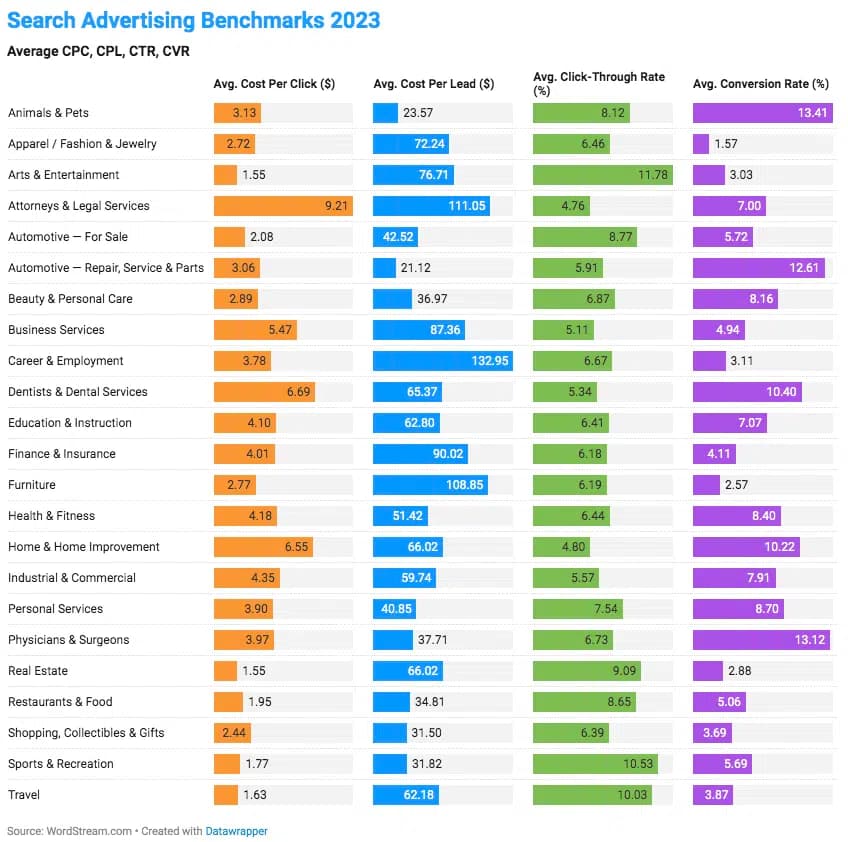
LinkedIn’s $11.12 blended CPC looks expensive beside Google Ads at $5.45, but that headline number is too blunt to guide a B2B budget. Emily Wood’s June 26, 2026 analysis for Search Engine Land shows a tighter comparison: non-branded Google Search averaged $12.48 CPC, while comparable LinkedIn prospecting campaigns averaged $13.94 across more than $700,000 in spend, 63,000-plus clicks, and 8.1 million impressions from May 2025 through May 2026.
The blended number hides the real budget fight
That distinction matters because the client mix in the study was overwhelmingly B2B SaaS, about 97% of spend, with professional services making up the balance. In other words, this was not a consumer traffic basket dressed up as enterprise research. It was the same buying motion agencies are trying to influence when they sell search, paid media, and content together.
The trap is comparing LinkedIn against Google’s blended average and calling LinkedIn overpriced. Google’s blended figure includes low-cost branded search and display, so it is not a clean proxy for high-intent acquisition. The tighter read is simple: when you compare LinkedIn prospecting against non-branded search, the gap narrows to a few dollars, and the decision stops being about platform loyalty and starts being about audience quality, deal size, and where a prospect is in the journey.
Where higher click costs are justified
That is the core budget question agencies need to answer for clients. If a LinkedIn click costs more but reaches a buyer committee earlier, the higher CPC can still make sense. If Google Search is capturing bottom-funnel intent more efficiently, it should keep the larger share of spend for that slice of demand.
Dreamdata’s 2026 LinkedIn Ads Benchmarks report makes the case even clearer. It says 81% of the B2B customer journey happens outside the sales pipeline, the average journey spans 88 touchpoints across four channels, and 10 stakeholders are involved. In that kind of buying cycle, a channel that reaches decision-makers before they are filling out forms can carry real value even when the CPC is premium-priced.
Dreamdata also says LinkedIn now commands 41% of total B2B ad budgets, while non-branded search budgets fell from 37% in 2024 to 33% in 2025. That shift says more about how teams are buying attention than about any single platform’s efficiency. B2B marketers are spreading spend across the channels that influence the committee, not just the channel that closes the last click.
What the search benchmarks say about intent
The useful comparison is not “LinkedIn versus Google” in the abstract. It is LinkedIn prospecting versus non-branded search, early influence versus high-intent capture. Wood’s numbers show that those two channels can sit much closer together than the blended averages suggest: $13.94 on LinkedIn prospecting and $12.48 on non-branded Google Search.
Dreamdata adds another layer to that story by showing how search economics are shifting. Its benchmark data says non-branded Google Search CPCs rose 29% and CTRs fell 26%, a decline it partly ties to AI Overviews reducing engagement on search ads. That is a meaningful signal for agencies that still treat search as the default efficiency channel. Search can still be the strongest intent capture engine, but it is no longer free of pressure from the SERP itself.
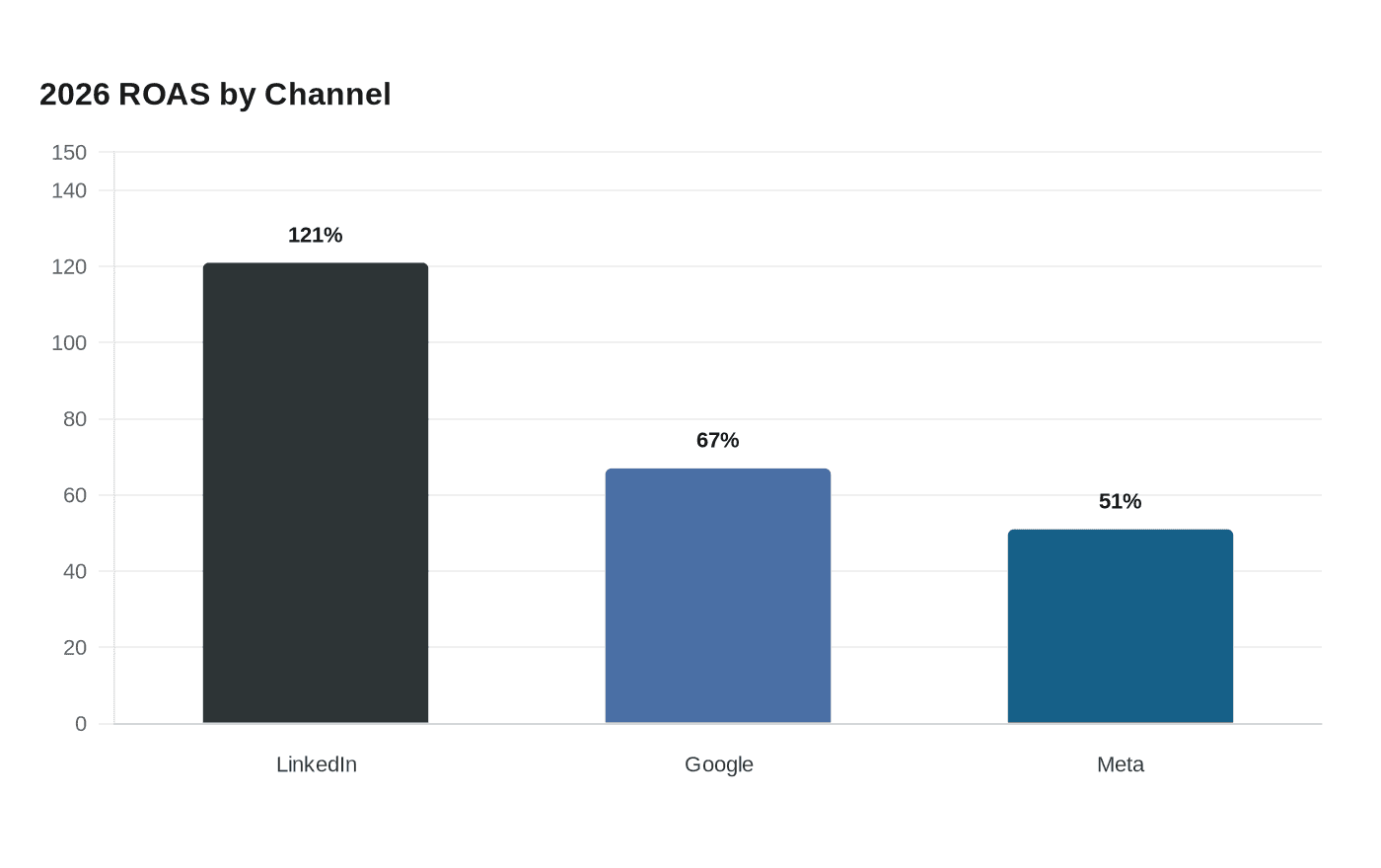
Dreamdata’s ROAS framing makes the same point from the other side of the ledger. It puts LinkedIn’s 2026 ROAS at 121%, up from 113% the prior year, while Google Search sits at 67% and Meta at 51% in the same comparison. That does not mean LinkedIn is always the better buy. It does mean the market is paying for downstream value, not just clicks.
How agencies should present the math to clients
This is where SEO agencies and integrated search teams can sharpen their pitches. The client conversation should move away from “LinkedIn is pricey” and toward “Which channel is best for this stage of demand?” If organic demand is weak, if a new category needs education, or if SEO will take quarters to build momentum, paid benchmarks can define the bridge strategy and keep pipeline moving while search visibility grows.
The most persuasive budget narrative is cross-channel and stage-specific:
- Use Google Search for established intent, branded capture, and bottom-funnel efficiency.
- Use LinkedIn for account targeting, committee reach, and earlier demand creation when the sale depends on multiple stakeholders.
- Use SEO to compound the cheapest demand source over time, then support it with paid campaigns that cover the gaps while rankings and content authority mature.
- Judge CPC against opportunity value, not against a platform’s average cost.
That last point is the one clients need to hear most often. A $14 LinkedIn click is easy to reject until the buyer is a finance leader, an IT director, or a procurement stakeholder who never would have searched the brand name in Google that day. A cheaper Google click is not automatically better if it comes from weak intent or a narrow decision-maker profile.
Why the pipeline view matters for agency growth
ZenABM’s benchmark data pushes the argument even further. Its dataset covers 211 B2B companies, 161,256 ads, and $5.5 million in spend across 29 countries, and it says the median B2B company on LinkedIn generates $5.21 in pipeline for every $1 spent. That is the kind of number that changes the tone in a client review, because it translates media cost into pipeline output instead of traffic volume.
Taken together, the benchmarks point to a different standard for agency strategy in 2026. The strongest teams are not defending one channel over another. They are showing when LinkedIn’s premium pricing is justified, when Google Search still wins on intent, and how SEO sits in the middle as the long-term demand engine that both channels feed and amplify.
This article was produced by Prism’s automated news system from verified source data, official records, and press releases, then run through automated quality and moderation checks before publishing. The system is built and supervised by the people who set the standards it runs under. Read our full AI policy.
Did this article answer your question?