Search Engine Land guide maps AI visibility to SEO fundamentals
AI visibility now depends on SEO basics done well. The workable playbook is crawlability, structured content, brand mentions, and authority, not gimmicks.
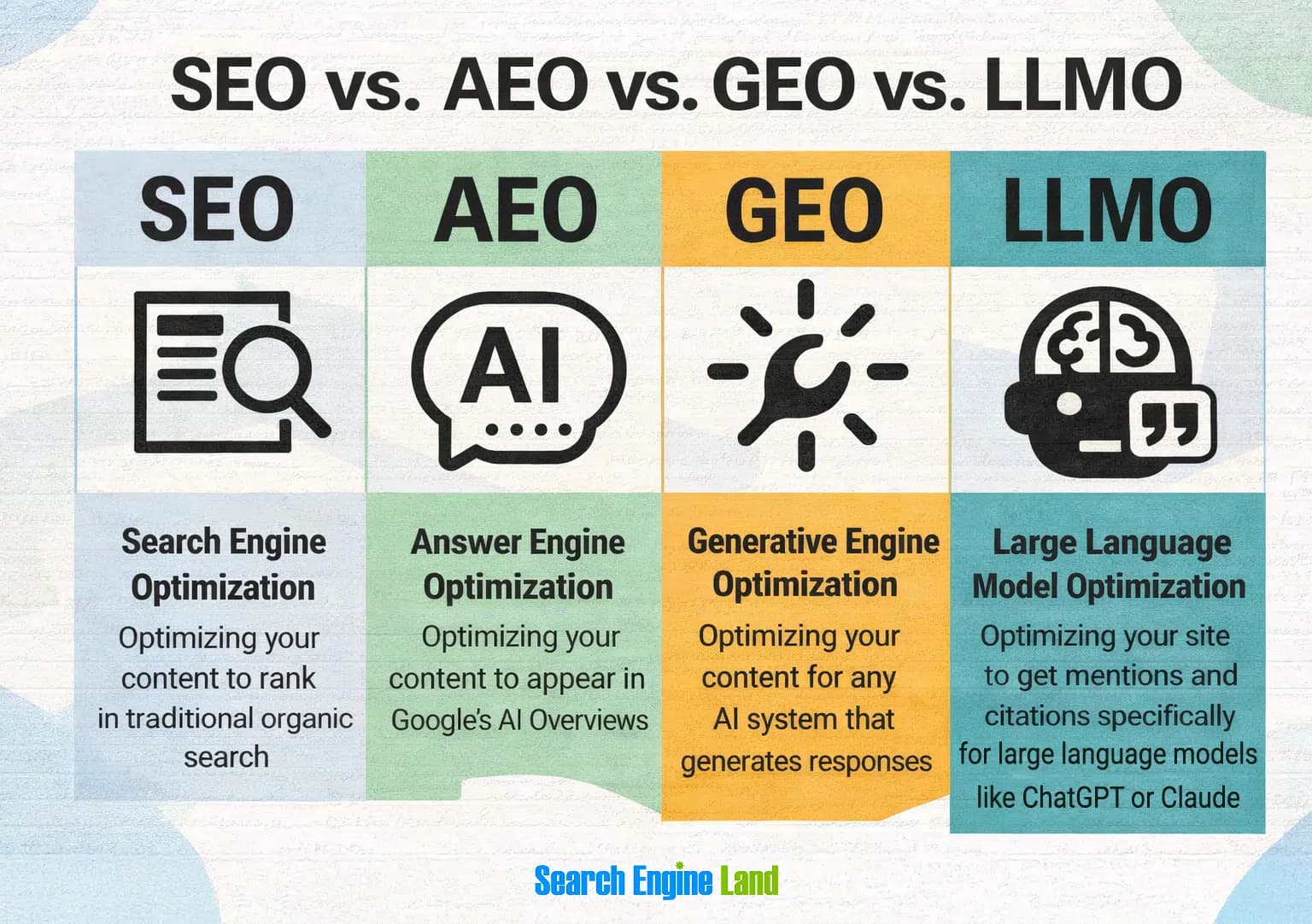
Google said at I/O 2024 that AI Overviews would begin rolling out to everyone in the United States in May 2024. AI visibility is now a practical SEO assignment, not a speculative side project. Search Engine Land’s guide centers crawlability, structured content, brand mentions, and authority, making the work legible for agencies that need deliverables clients can approve and measure. If a site is hard to crawl, hard to parse, or weakly connected to the broader web, it is less likely to surface in AI-generated answers.
What the guide turns into for agency teams
The strongest part of the framework is that it maps directly to services agencies already sell. Crawlability sits in the technical SEO stack, structure belongs to content architecture, brand mentions fall into digital PR and reputation work, and authority depends on the broader signal mix around the brand. AI visibility does not require a separate service line built on vague promises, but a tighter integration of technical audits, editorial planning, and external authority building.
A site audit can now flag whether key pages are indexed cleanly, whether headings and entities are organized in a way machines can parse, and whether the brand is referenced in places that reinforce its relevance. Content teams can then rewrite pages so the subject, products, and company names are stated consistently, while PR teams work to earn mentions that strengthen the entity profile outside the site itself. The work is modular enough to package, scope, and repeat across accounts.
The difference between credible optimization and empty “LLM hacks” is also easy to define from this model. Thin pages, prompt tricks, and one-off experiments do not create durable visibility if the site’s architecture is weak. Agencies that want repeatable results need to focus on the assets that AI systems can actually consume: pages that load cleanly, information that is structured around clear entities, and external references that confirm the brand is real, active, and relevant.
The platform shift is already here
Google later expanded AI Overviews to more than 100 countries and territories and added more prominent links to relevant websites inside the experience. AI-generated summaries are no longer a testing edge case; they are becoming part of the normal search surface agencies have to work against.
OpenAI introduced ChatGPT search in November 2024 as a way to connect people with original, high-quality web content and to give content owners new opportunities to reach a broader audience. For agencies, that means visibility is no longer defined only by blue-link rankings. Being cited, surfaced, or referenced inside an AI answer is now part of the buying conversation, especially for brands that compete on expertise rather than on broad consumer awareness.
Search teams still need rankings, but they also need content that can be extracted, summarized, and trusted by systems that assemble answers from multiple sources. Entity clarity matters because a page that clearly identifies the company, the product, the service, and the subject area gives AI systems less room for ambiguity, and ambiguity is exactly what hurts visibility in answer engines.
Why agencies need to sell this as a full-funnel service
The commercial case got stronger as user behavior changed. Pew Research Center found that in March 2025, about six-in-ten respondents had visited a Google search page with an AI-generated summary. Pew also found that users were less likely to click result links on pages with an AI summary, and very rarely clicked the sources cited in those summaries. That does not make traffic irrelevant, but it does change what agencies should promise clients: presence in the answer layer matters even when the click rate drops.
This is where a lot of traditional SEO reporting needs to be updated. If the user sees the answer before the organic results, then the brand has to win earlier in the journey. Agencies can no longer treat impressions, mentions, and citations as secondary vanity metrics. They are becoming core indicators of whether a brand is present in the discovery layer where AI systems are compressing the search experience.
- Technical SEO is now about making pages easy for machines to fetch, render, and interpret.
- Content strategy is now about writing with clearer entities, tighter topic scope, and cleaner structure.
- Digital PR is now about brand mentions that reinforce trust beyond backlinks.
- Measurement is now about tracking presence across AI surfaces, not just ranking positions.
For agencies, that changes the pitch in concrete ways:
Brand mentions are becoming a real signal, not a side effect
Search Engine Land’s January 2026 coverage of brand mentions centered a major shift in how optimization is being framed: large language models look beyond backlinks to context and co-occurrence. For agencies, that moves brand work out of the “nice to have” category. If a brand is repeatedly named alongside the right products, topics, and competitors, that pattern helps define what the model thinks the brand is.
Semrush’s 2026 AI Visibility Index says it analyzed more than 126 million U.S. AI search prompts across 22 industries and four AI platforms. The market is no longer treating AI visibility as an abstract theory. Agencies now have enough surface area to build audits, compare categories, and spot where a brand is present or missing across different AI environments.
That creates a workable services stack. An agency can start with an AI visibility audit, identify where crawlability or structure is weak, then revise the core pages so they read cleanly to both users and systems. After that, the work shifts outward: earn mentions from relevant publications, strengthen brand consistency across owned channels, and keep the entity profile stable across the web.
This article was produced by Prism’s automated news system from verified source data, official records, and press releases, then run through automated quality and moderation checks before publishing. The system is built and supervised by the people who set the standards it runs under. Read our full AI policy.
Did this article answer your question?