BrandLume buyer’s guide shows what SEO clients value most
BrandLume’s guide reflects a market where SEO buyers shortlist on proof, pricing, and specialization, then reject vague scopes and spreadsheet-only reporting.
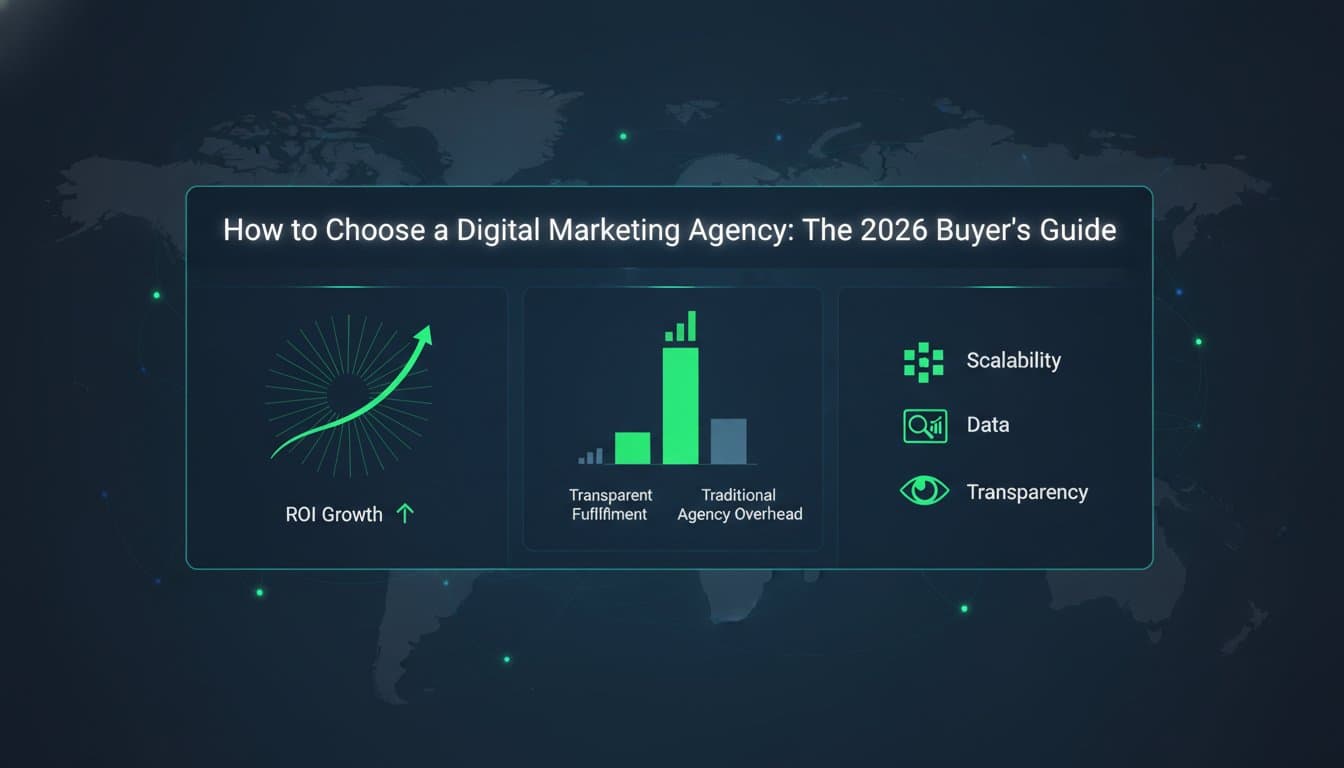
Digital Applied’s April 5, 2026 pricing guide puts agency pricing 5-10x apart by tier, from about $1,500 a month for a boutique SEO agency to $15,000 or more for an enterprise firm for similar scope. BrandLume’s buyer’s guide, titled “How to Choose a Digital Marketing Agency: The 2026 Buyer’s Guide,” captures a market where prospects read past the pitch before they ever book a call. The filter is not just SEO skill; it is whether an agency can explain scope, price, specialization, reporting, and what gets delivered after the contract is signed. Agencies now compete on trust signals as much as on rankings and traffic.
What prospects compare before they ever talk to sales
Buyers are increasingly comparing service models, not just agency names. They want to know whether a specialist SEO shop, a full-service one-stop shop, a freelancer, an in-house team, or a reseller-led model fits the problem in front of them. Positioning matters: an agency that sells local SEO, ecommerce SEO, technical cleanup, or broader growth marketing has to show why that shape is better than a generic retainer.
| Model buyers compare | What they are looking for | Strength buyers usually value | Limitation buyers worry about |
|---|---|---|---|
| Specialist SEO agency | A clear fit for local SEO, ecommerce SEO, or technical cleanup | Deeper expertise and sharper diagnosis | Narrower scope if they need multiple channels |
| Full-service agency | One partner for marketing, branding, and websites | Less vendor coordination | Risk of generic execution |
| Freelancer | One point of contact and lower overhead | Flexibility and lower cost | Limited bandwidth and backup |
| In-house team | Internal control and faster context | Direct access to the business | Hiring cost and slower capability build |
| White-label or reseller-led model | Hidden fulfillment with a packaged front end | Scale and convenience | Accountability and consistency concerns |
That comparison mindset shows up across 2026 agency-selection content. In Marketing Empire Group’s Feb. 17, 2026 guide, teams usually start the search because traffic is up but revenue is not, reporting feels like guesswork, or they have already been burned by a vendor that promised results and delivered spreadsheets. Ai Dev’s May 17, 2026 guide calls the market’s offer mix “2022-era retainers” while Google AI Overviews and ChatGPT Search are changing how search results are consumed.
Pricing clarity has become part of the qualification process
Price is no longer a late-stage negotiation point. Buyers screen for goals, competition, and scope, the variables Searchbloom’s April 5, 2026 pricing guide highlights.
Elevate Clients’ buyer guide puts SMB-focused lead generation agencies at $2,500 to $5,000 a month, while enterprise SDR firms fall in the $5,000 to $15,000 range. For SEO agencies, that spread forces a decision about what is actually included, how much strategy is bundled into execution, and whether the work is meant to support one channel or the whole pipeline.
Why buyers now expect specialization and a post-contract plan
The old “we do everything” pitch is harder to sell when buyers can see how quickly search is changing. Google AI Overviews and ChatGPT Search are changing how search results are consumed, so agencies now have to show how they adapt content strategy, technical fixes, and reporting when clicks are no longer the only signal that matters. A prospect looking for ecommerce SEO may not want the same cadence or deliverables as a company trying to clean up a site migration or recover from technical indexation issues.
Specialization is a trust signal. Local SEO, ecommerce SEO, technical cleanup, and broader growth marketing are not interchangeable offers, and buyers know it. Agencies that describe the work in specific operational terms, such as crawl issues, category page performance, or location-page management, give prospects a more concrete way to judge fit than a broad promise of “growth.”
Proof assets do more work than slogans
If reporting already feels like guesswork, the next agency has to prove it can make decisions visible, not just produce dashboards. That is where case studies, named tools, review volume, and public profiles matter more than polished copy.
BrandLume shows how buyers evaluate trust. Its LinkedIn profile calls the company a global one-stop shop for marketing, branding, and websites and says similar services are sold by resellers and other agencies at 2-7 times higher prices. Built In lists BrandLume as founded in 2011 and headquartered in Toronto, while TechBehemoths lists it as a verified company headquartered in Toronto with multiple offices and 6,400 clients and 400+ agencies globally. G2 shows BrandLume with 4.8 stars from 13 verified reviews, and DesignRush lists the company in Toronto and displays review ratings on its profile.
Buyers do not separate offer design from proof. A company that claims broad coverage but shows only thin review data will struggle against one that can point to a defined base of clients, a long operating history, and visible third-party ratings.
What agencies need to strengthen now
The agencies that win more often are the ones that reduce uncertainty before the first call ends. The practical work is straightforward:
- Publish a narrow set of service lines, such as local SEO, ecommerce SEO, or technical cleanup, instead of a catch-all list.
- Put pricing logic on the page, even if exact fees vary, and explain whether the work is built around goals, competition, or scope.
- Show what happens after the contract is signed, including reporting cadence, who owns communication, and what decisions the reporting is meant to drive.
- Use proof assets that buyers can verify, including G2 reviews, DesignRush profiles, TechBehemoths listings, and named client examples.
- Make the operating model explicit. If fulfillment is resold, white-labeled, or supported by multiple offices, say so clearly enough that buyers can judge accountability.
Disruptive Advertising identifies the same pressure point: digital advertising is highly competitive because AI is reshaping targeting, data analysis, and campaign optimization.
This article was produced by Prism’s automated news system from verified source data, official records, and press releases, then run through automated quality and moderation checks before publishing. The system is built and supervised by the people who set the standards it runs under. Read our full AI policy.
Did this article answer your question?