Semrush guide says SEO must now optimize for AI agents
SEO is becoming agent-ready: Semrush says agencies now need crawlable, structured, comparison-friendly sites that AI agents can understand and act on.
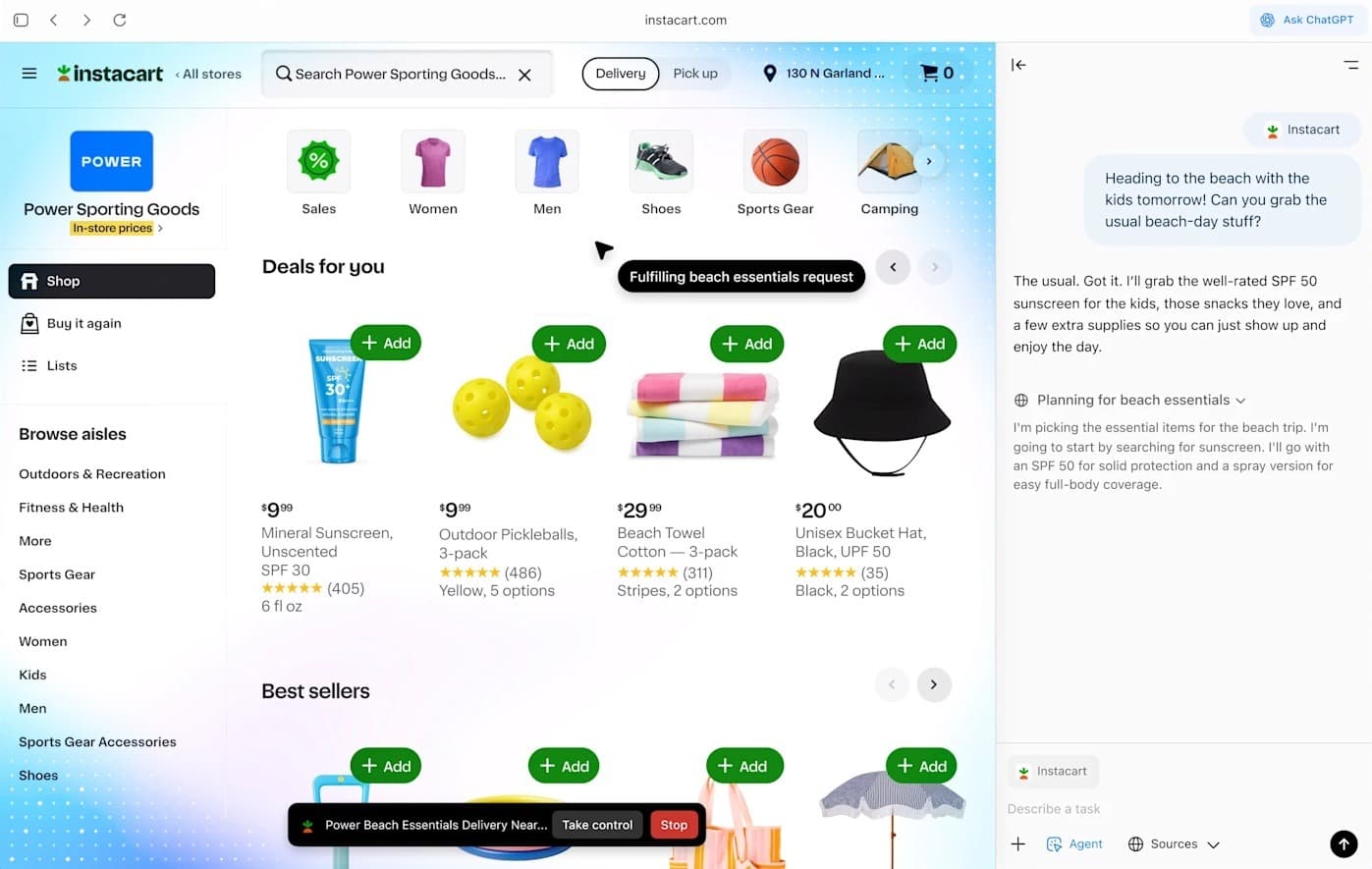
The next SEO client is not always a person clicking through a results page. Semrush’s agentic web framing says AI agents inside ChatGPT, Gemini, and Perplexity now browse, compare, and complete tasks for users, which means a site has to be understandable, trustworthy, and action-ready to software as well as people.
The second audience is already here
Semrush describes the agentic web as internet infrastructure built for AI agents that can browse websites, evaluate options, and carry out tasks ranging from quick lookups to full purchases and bookings. That changes the job of optimization in a very practical way: a page is no longer just trying to rank, it is trying to be legible to a machine that needs to decide what to do next.
For SEO agencies, that shift makes technical work more operational. Clean structure, easy-to-read content, and task-friendly pages matter because these agents are not passive readers. They are decision systems, and the better a site communicates its purpose, offerings, and next steps, the more likely it is to be used in an AI-mediated journey.
Start with crawlability, structure, and entity clarity
The first place to productize this work is the same place strong SEO always starts: crawlability. If a site is hard for search systems to fetch, render, or interpret, it is even harder for an agent to evaluate quickly and reliably.
Structured data is the next obvious lever. Google’s own documentation says structured data helps it understand page content and surface richer results, which makes schema work a natural foundation for agentic readiness. Agencies can frame this as more than markup maintenance: it is a way to make products, services, reviews, locations, pricing, availability, and other entities unambiguous to systems that are trying to compare options on a user’s behalf.
Entity clarity matters just as much. If one page calls a product by one name, another uses a shorthand, and a third buries the core offer in marketing language, an agent has to work harder to infer what the site actually sells. The cleaner the naming, hierarchy, and internal linking, the easier it becomes for software to understand the business as a set of real-world things and actions rather than a blur of content.

Content needs to help a machine compare, not just browse
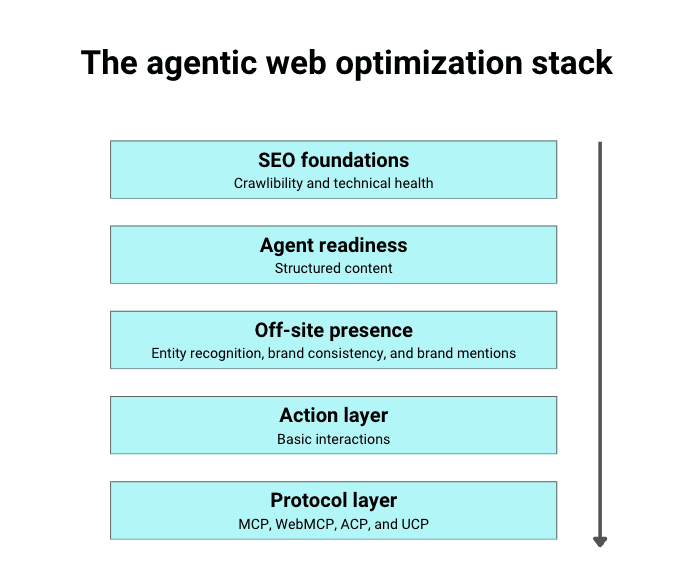
The Semrush guide points toward a layered approach to optimization that emphasizes accessibility, clarity, and machine-readable structure so agents can parse content and use it in task completion. That puts comparison pages in a much stronger position than many brands have historically given them.
- technical audits for crawlability and renderability
- schema and structured-data cleanup
- entity mapping across key pages and templates
- restructuring of comparison, product, and service pages
- fixes to page layouts that hide pricing, availability, or next-step actions
Comparison pages are where agencies can make a clear service offer fast. A strong package usually includes:
That work matters because AI agents are built to compare options and act. If a page makes it easy to see what the offer is, how it differs from alternatives, and what happens next, it becomes easier for an agent to use that page inside a recommendation or task flow.
Google, OpenAI, and Perplexity are all pointing the same way
Google’s recent moves show why this is not a theoretical shift. The company has said AI Overviews is one of the most successful launches in Search in the past decade, and it has said those overviews are driving over 10% higher usage for queries that show them in its biggest markets, including the U.S. and India. Google has also expanded AI Overviews to more than 200 countries and territories and more than 40 languages.
Google Search Central has now added guidance for optimizing websites for generative AI features in Search, which gives agencies a direct signal that this work belongs inside the core SEO stack. The point is not to chase a separate trend bucket. It is to keep sites understandable to the systems Google is already shipping and scaling.
OpenAI and Perplexity reinforce the same direction from different angles. OpenAI launched Operator on January 23, 2025 as a research preview for Pro users in the U.S., describing it as an agent that can use its own browser to perform tasks. OpenAI later said ChatGPT agent can proactively choose from a toolbox of skills and use its own computer to complete tasks, which makes site structure and actionability even more important.
Perplexity has taken a similar path with Comet, which it describes as an AI browser and personal assistant that automates tasks, researches the web, organizes email, and helps complete tasks for users. Perplexity later said Comet was released to the world for free on October 2, 2025, after first launching in limited release on July 9. The common thread across all three companies is clear: the web is being evaluated by software that does not just read, it acts.
How agencies can sell this without overselling it
The smartest way to package agentic web work is as a readiness service, not a promise of guaranteed placement inside every AI product. That means selling audits, fixes, and content restructuring that improve how a site is read, compared, and acted on, while making clear that these channels are still emerging and platform behavior can change.
A useful agency offer can be broken into three layers. First comes the audit, where the goal is to identify crawl barriers, schema gaps, weak entity signals, and pages that hide crucial information from machines. Then come technical fixes, which often mean template adjustments, structured-data deployment, internal-link cleanup, and clearer page architecture. Finally comes content restructuring, especially around comparison pages, FAQs, product detail pages, pricing, and booking or checkout pathways.
That pitch is persuasive because it is concrete. Clients do not need hype about a futuristic web; they need a site that is easier for AI systems to understand today and better prepared for a search environment where Google, OpenAI, and Perplexity are all training users to expect answers, comparisons, and transactions inside the interface itself. The agencies that move first will not be selling magic. They will be selling clarity, machine readability, and a site built to participate in the next layer of search.
This article was produced by Prism’s automated news system from verified source data, official records, and press releases, then run through automated quality and moderation checks before publishing. The system is built and supervised by the people who set the standards it runs under. Read our full AI policy.
Did this article answer your question?