Semrush guide shows Google Trends remains essential for SEO strategy
Semrush's guide shows Google Trends can flag demand shifts before keyword tools do, turning agency planning into an early-warning system.
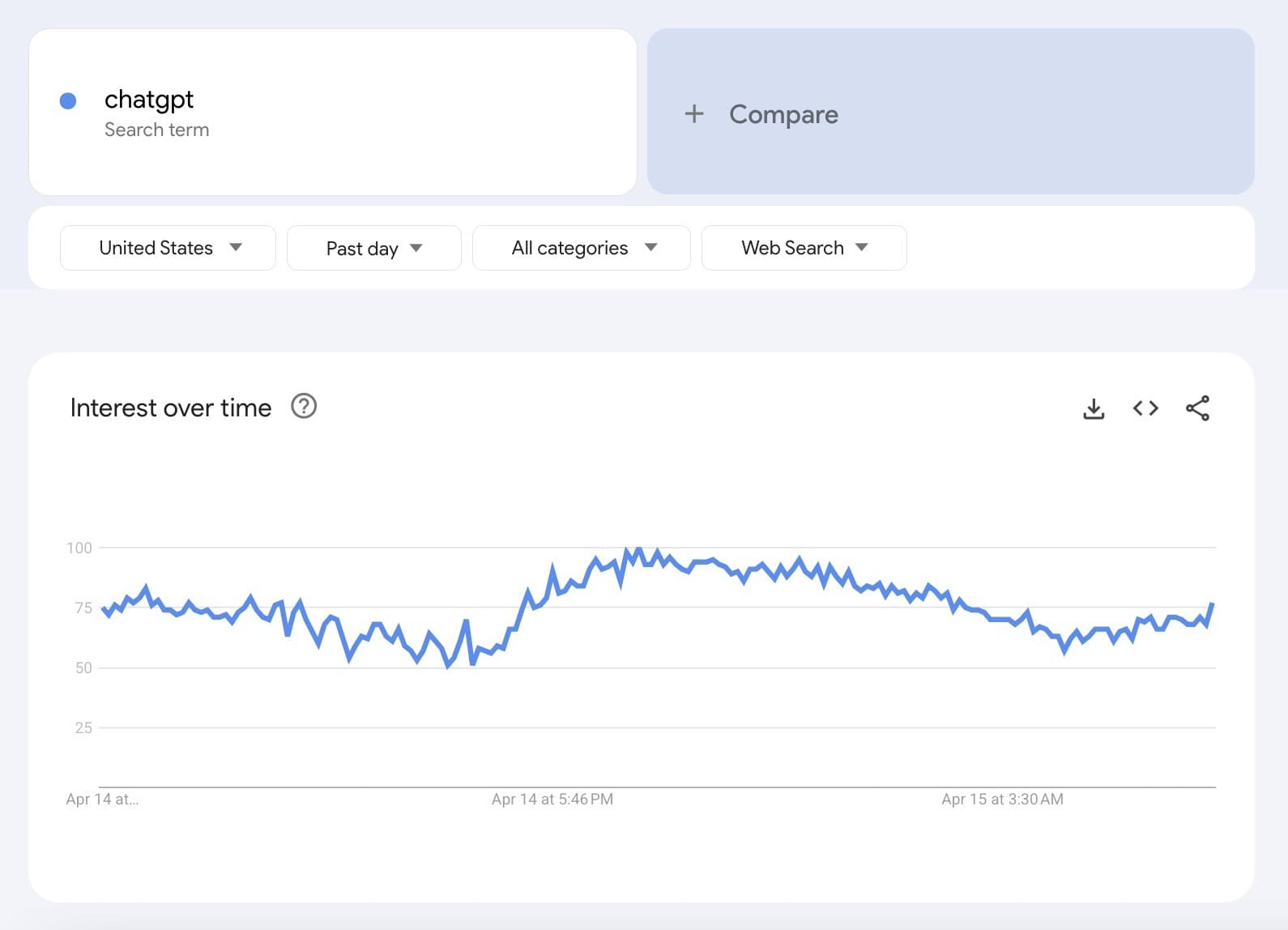
Why Google Trends still matters
The best use of Google Trends is not curiosity. It is timing. Semrush’s guide argues that the tool remains one of SEO’s sharpest signals because it shows relative search interest over time, not a static monthly average, which gives agencies a way to see whether a topic is rising, fading, or behaving like a seasonal spike before budgets are committed.

That matters because Google Trends does not measure demand the same way a keyword database does. Google normalizes search data by geography and time range, then scales the results from 0 to 100, so a term can look strong in one market and weak in another even when the absolute audience is different. Google launched Trends in the summer of 2006, but its data goes back to 2004, which helps explain why it still feels unusually useful for editorial planning, client strategy, and market readouts.
How agencies turn the signal into strategy
For agencies and in-house teams, the real value is in the direction of travel. A keyword with impressive volume can still be a bad investment if interest is declining or concentrated in a season that has already passed. A term with modest average volume can be a smarter bet if the curve is accelerating quickly, because a rising topic gives content a better chance to land before the market is saturated.
Semrush frames this as a workflow advantage. Google Trends helps teams compare terms, filter by region and time period, and surface related searches and rising queries, which means the first pass at demand discovery can happen before traditional keyword tools are fully committed to a brief. That makes the tool especially useful for agencies that need to defend why a topic belongs in this month’s calendar, not next quarter’s.
Reading the numbers the way Google intends
Google’s help center is clear about how to interpret the data. The platform shows relative interest, not raw search totals, and the numbers are scaled from 0 to 100 for the selected geography and time frame. That design is what makes Trends useful for spotting momentum, but it is also why teams need to read it as a directional tool rather than a final answer.
The related searches panel is where many of the most useful clues appear. When Google labels a rising query as “Breakout,” it means the term has grown by more than 5,000 percent. Top searches and rising searches are only available for dates at least a week in the past, while Trending Now refreshes on average every ten minutes. Those details matter in agency work because they tell you whether you are looking at a slow-building pattern, a short-lived burst, or a fast-moving topic that needs immediate attention.
The Gemini-powered Explore page changes the workflow
Google has also redesigned Explore with a Gemini-powered side panel that helps users find related trends, compare search terms, and generate follow-up prompts from the text they enter. The feature is useful because it cuts down on the manual probing that used to be required to move from a vague hunch to a usable search cluster.
The limits are more precise than many marketers realize. Google says Explore lets users compare up to 5 groups of terms at once and up to 25 terms in each group. That makes the feature valuable for agency-side competitive research, because you can structure a comparison around brand names, product lines, or issue terms without losing the wider picture. Google also warns that the AI features are experimental and may be inaccurate, so the side panel is best treated as a discovery aid, not as the final authority.
Where the playbook becomes an advantage
This is where Trends becomes an agency playbook rather than a dashboard. The first use case is the content calendar. If a topic is clearly seasonal, the goal is to publish before the crest, not after it. If a subject is climbing, the better move may be to accelerate production, refresh an older page, or build a cluster of supporting stories while interest is still expanding.
The second use case is local SEO. Because Trends can be filtered by region, it can expose demand pockets that are invisible in nationwide keyword averages. That is especially valuable for regional brands, multi-location businesses, and campaigns that need to prove there is real interest in a city, state, or broader market before a page is written or a landing page is localized.
The third use case is client-facing insight. A clear pattern in Trends is often more persuasive than a row of static keyword numbers because it shows movement. Agencies can bring a rising query, a geographic split, or a breakout term into a pitch and explain why the opportunity exists now, not later. That makes Trends a useful source of pitchable insight before competitors see the same pattern in more traditional tools.
Why it works best alongside Semrush
Semrush’s central point is that Trends should sit beside keyword data, not replace it. Trends tells you what is moving, where it is moving, and when interest is shifting. Semrush keyword data still has the job of validating search volume, difficulty, and SERP competition, which is what you need before you commit to a page or a campaign.
Used together, the two tools give agencies a stronger planning model. Trends identifies the opening, then keyword research confirms whether the opportunity is worth the investment. That combination supports faster pivots, smarter editorial bets, and a clearer story for clients who want to see that the strategy is reacting to market movement instead of chasing it.
The bigger lesson in Semrush’s guide is that SEO teams do not need more noise. They need earlier signals. Google Trends remains valuable because it lets agencies read demand before the rest of the market has fully noticed it, and that is still one of the most practical advantages in search strategy today.
This article was produced by Prism’s automated news system from verified source data, official records, and press releases, then run through automated quality and moderation checks before publishing. The system is built and supervised by the people who set the standards it runs under. Read our full AI policy.
Did this article answer your question?


