Semrush says visibility now means ranking across search, AI, social
Rankings still matter, but Semrush says the real scoreboard is visibility across search, AI answers, and social. Agencies now have to prove presence, citations, and conversions.
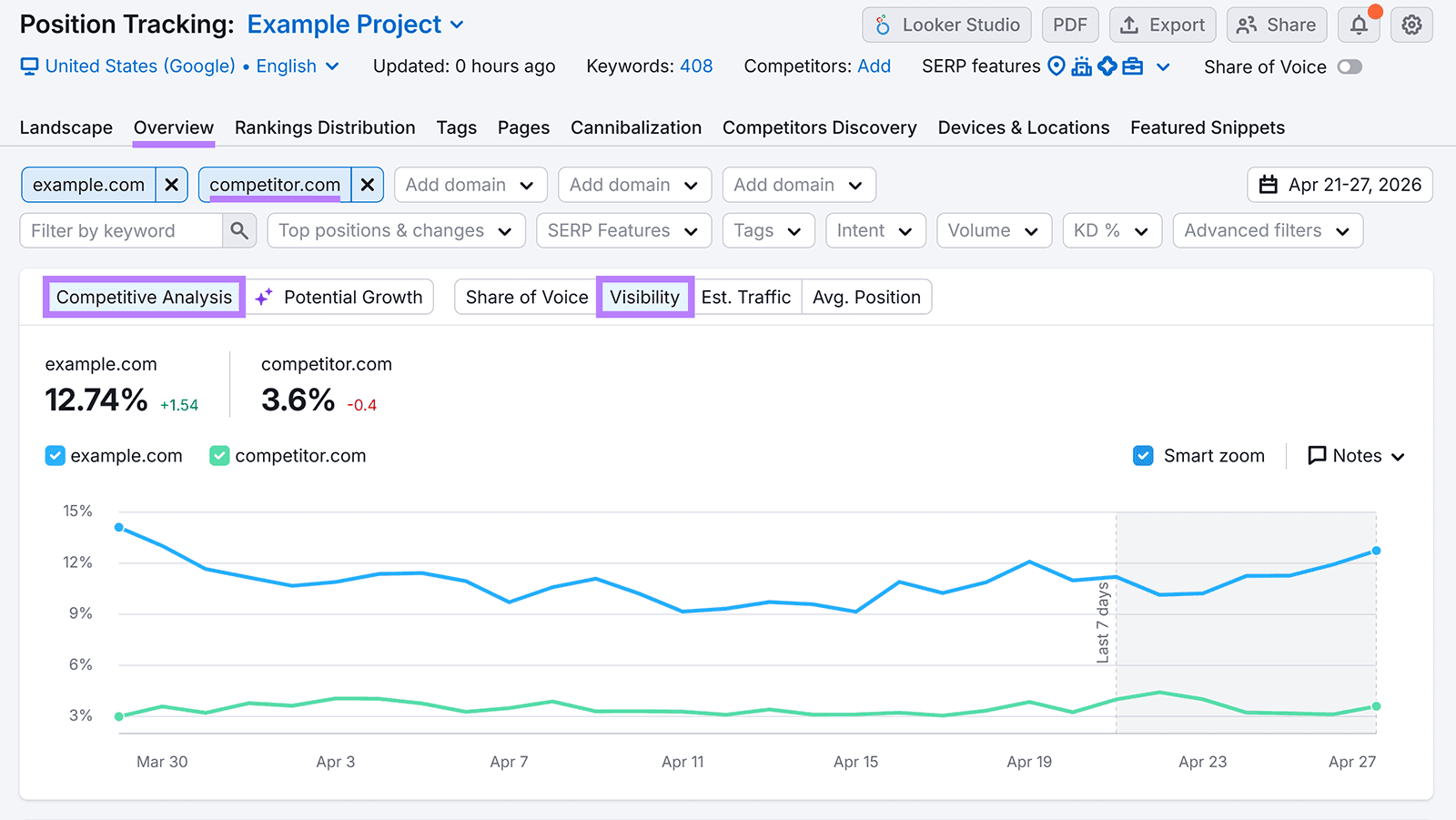
Rankings still matter, but they no longer tell the whole story. Semrush’s case is that brands can lose organic traffic even when positions hold steady, because AI Overviews and other answer engines satisfy intent before the click ever happens. In that environment, visibility has to be earned across traditional search, AI answers, community spaces, and social platforms.
Visibility is no longer just a search ranking problem
Semrush gives this broader model a name: Search Everywhere. The idea is simple, but the implications are big: winning means being retrieved, cited, and trusted across every surface where buyers go looking. That is a very different game from classic SEO reporting, where a page’s rank position and session count could stand in for success.
For agencies, the shift changes the story you tell clients. A campaign can keep a strong keyword position and still deliver less traffic if the user’s question gets answered inside Google or inside another AI surface. The right question is no longer only whether traffic is up or down, but whether the brand is appearing often enough in the moments that shape consideration.
Why Semrush separates visibility, awareness, and perception
Semrush’s framework is useful because it draws a clean line between three ideas that often get blurred together. Brand visibility is how often a brand appears relative to competitors where buyers are looking. Brand awareness is whether people recognize or remember the name. Brand perception is how people feel about the brand.
That distinction matters when you build reports and strategy. Visibility can improve without a matching lift in awareness, and awareness can exist without enough presence to win the shortlist. If you are managing client growth, the real challenge is proving that the brand is showing up in enough buying moments to stay in the consideration set, then translating that presence into stronger trust and conversion.
The new measurement stack agencies need
Semrush’s newer AI-visibility materials push this even further by treating visibility as a measurable product category. The company says brands can now track visibility, share of voice, mentions, citations, and competitor gaps across AI platforms. That turns a once fuzzy question into something agencies can operationalize, especially when the client wants more than keyword rankings and sessions.
A useful reporting stack now looks more like this:
- Share of presence versus competitors across search, AI answers, and community platforms
- Mentions and citations inside answer engines
- Competitor gaps, especially on high-intent topics
- Conversion quality from AI-originated visits
- Entity presence, so machines can identify the brand consistently
Semrush also used Adobe Summit to unveil a brand visibility framework, a sign that the company now sees this as a broader brand-visibility platform rather than a narrow SEO toolset. For agencies, that opens room to sell strategy, measurement, and authority building together instead of treating reporting as an afterthought.
Why AI search changes the traffic equation
The business case for this shift is stronger than a simple visibility argument. Semrush says AI search visitors convert 4.4 times better than traditional organic search visitors. Its AI search study also projects that AI search traffic could overtake traditional organic search traffic within two to four years, and possibly sooner if Google AI Mode becomes the default experience.
That means lower volume does not automatically mean lower value. If AI-mediated visits are more likely to convert, then agencies need to judge content by the quality of the traffic it attracts, not just the number of clicks it produces. A page that wins a citation in an AI answer may end up influencing a more qualified buyer than a page that collects casual organic traffic from a traditional SERP.
Google’s own signals reinforce why this matters. The company says AI Overviews are one of its most successful Search launches in the past decade, that they are used by more than a billion people, and that Google still sends billions of clicks to the web every day. Those claims can all be true at once: the web can still receive enormous traffic while the path to that traffic becomes more selective and more mediated.
The click is changing, not disappearing
Pew Research Center’s March 2025 analysis shows how the user journey is already shifting in the United States. In that study, about six-in-ten U.S. respondents encountered at least one Google search with an AI-generated summary, and users were less likely to click links when a summary appeared. They also very rarely clicked the sources cited inside those summaries, which makes source visibility much more valuable than source links alone.
The spread of AI Overviews makes the problem more global. Google said in May 2025 that AI Overviews were available in more than 200 countries and territories and in more than 40 languages. In other words, this is not a niche behavior or a temporary experiment. It is becoming the default environment in which a lot of discovery now happens.
Measurement firms have also been documenting the traffic shift in hard numbers. BrightEdge said AI Overviews appeared in over 11% of Google queries and that click-throughs had fallen nearly 30% since May 2024. Search Engine Land reported Seer Interactive data showing informational-query organic CTR fell 61% on pages with AI Overviews and paid CTR fell 68% on those same queries. In another report, Search Engine Land cited BrightEdge data showing Google search impressions were up 49% year over year while CTRs were down 30%.
How agencies should adapt content and reporting
The practical response is to build for both people and machines. Semrush’s agentic-search framing matters here: if AI agents can evaluate information, make recommendations, and sometimes complete purchases on a user’s behalf, then content has to be structured for machine retrieval as well as human reading. Clear entity naming, concise answers, and credible proof points matter more when an AI system is deciding what to surface, cite, or recommend.
That also changes how you brief clients. The agency story is no longer just, “We moved this keyword from page two to page one.” It is, “We increased the brand’s presence across search, AI answers, and social, improved the odds of being cited in high-intent moments, and delivered visits that convert at a higher rate.” That is a broader and stronger growth narrative than rank tracking alone.
Semrush’s message is ultimately a call to measure what buyers actually see. The agencies that adapt fastest will be the ones that can show not just that a client ranks, but that it is present, cited, and chosen wherever discovery now happens.
This article was produced by Prism’s automated news system from verified source data, official records, and press releases, then run through automated quality and moderation checks before publishing. The system is built and supervised by the people who set the standards it runs under. Read our full AI policy.
Did this article answer your question?


