SeoProfy Guide Highlights How AI SEO Agencies Are Splitting in 2026
The AI SEO market is splitting by function, and agencies that can prove visibility inside answer engines are winning the brief.
The new category is not just SEO with a new label
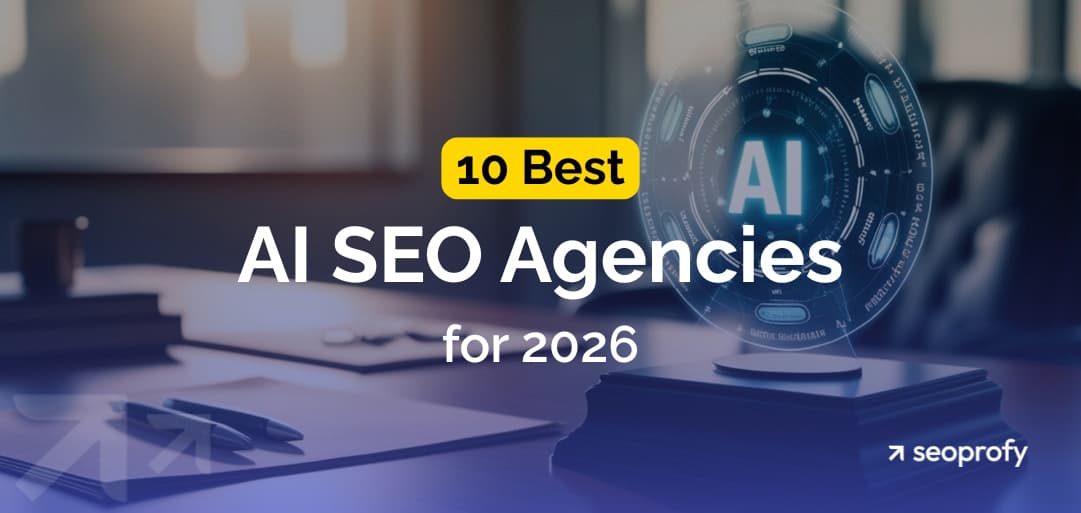
SeoProfy’s 10-agency roundup works because it treats AI SEO as a category under construction, not a single service package. The practical shift is simple but profound: clients are no longer only asking where a page ranks, they are asking how their brand shows up inside AI-generated answers on systems like ChatGPT, Gemini, and Perplexity.

That matters because discovery has moved into answer surfaces. Google said AI Overviews began rolling out broadly in the U.S. in May 2024, and Google Search Central now explains how AI features work and how sites can appear in them. OpenAI then launched ChatGPT search on October 31, 2024, explicitly framing it as a way to connect people with original, high-quality web content. Agencies are now selling into a world where visibility can happen before a click, inside the answer itself.
What the market is rewarding now
The agencies gaining attention are not all doing the same job, and that is the point. The emerging market rewards at least four distinct capabilities: AI search visibility, optimization for answer engines, workflow automation, and content intelligence. A brand may need all four, but the route to each one looks different, which is why the category is splitting so quickly.
Conductor’s 2026 AEO/GEO Benchmarks Report reinforces that this is not a passing experiment. It treats AI search as a critical new brand visibility channel and analyzes 10 industries through AI referral traffic, AI search market share, and performance in Google’s AI Overviews. In parallel, a January 2026 survey from Clutch and Conductor found that 87% of 459 content marketing professionals planned to increase content marketing budgets in 2026, and one in four said they now write primarily for LLMs. Those numbers explain why agencies are reorganizing their offers around generative discovery instead of treating it like an add-on.
SeoProfy’s list maps the field by use case, not just by name
That is where SeoProfy’s roundup becomes useful as a category guide. SeoProfy frames its own offering around AI-driven SEO, AEO, GEO, content creation, technical optimization, keyword research, and link building. In other words, it presents a broad model for agencies that want to cover both classic search and AI-generated results without pretending those two worlds have the same mechanics.
The rest of the list shows how specialized the market has become. uSERP leans into AEO and LLM citation through high-authority link building, content optimization, and off-site brand mentions. NP Digital positions its AI search optimization around content, authority signals, and technical structure for conversational and generative AI tools. Siege Media takes a content-first route, describing its work as SEO, GEO, content marketing, and PR. WebFX is cast as the automated scaling option, while Victorious is presented as a visibility and AEO integration play.
The niche models are the real tell
The most revealing part of the roundup is not the broad players. It is the narrower ones, because they show exactly how agencies are carving out defendable positions inside the new taxonomy. Flow Agency is aimed at early-stage B2B startups and service providers, which suggests a market for teams that need pragmatic AI-era positioning without building a huge internal content operation. Digital Elevator is framed around conversion and AI, which hints at demand from brands that want AI visibility tied directly to business outcomes, not vanity impressions.
Omnius emphasizes technical AI SEO and schema for LLM extraction, a reminder that the most durable AI-search wins may come from structure as much as from prose. That makes sense in a category where machines are increasingly parsing, summarizing, and citing rather than merely indexing. The agencies that can explain how schema, entity signals, citation strategy, and content architecture work together are the ones most likely to sound credible to buyers who now expect their work to survive across both search engines and answer engines.
How to decide whether to reposition
For agency leaders, the question is no longer whether AI search matters. It is whether your current delivery model matches the part of the market you want to own. If your team is strongest at editorial systems, subject-matter authority, and digital PR, the content-led GEO lane may fit best. If your edge is site architecture, structured data, and crawling logic, then technical AEO and LLM extraction is the sharper story.
A practical way to think about the choice is this:
- Reposition if you can point to measurable gains in AI search visibility, citations, or answer inclusion, not just rankings.
- Specialize if one capability already drives most of your results, such as link acquisition, schema, or content operations.
- Stay traditional if your clients still buy on classic SEO outcomes, but be ready to explain how those outcomes now intersect with AI discovery.
The agencies in SeoProfy’s list are, in effect, showing buyers the menu. That menu includes content-led visibility, link-building-led citation, technical extraction, automated scale, and conversion-aware optimization. The agencies that can name their lane clearly will have a much easier time selling into a market where the definition of search visibility is being rewritten in real time.
Why the pressure is building now
The urgency also comes from the economics of referral traffic. Recent reporting has cited Google referral declines of 60% for small publishers, 47% for medium publishers, and 22% for large publishers, a stark reminder that many sites cannot afford to wait for the old model to stabilize. If AI answers are absorbing more of the discovery journey, then the battle is no longer just for page one. It is for inclusion, citation, and trust inside the response itself.
That is why SeoProfy’s roundup lands as more than a list. It is a map of where agency demand is going, and a signal that AI SEO in 2026 is not one category so much as a set of competing definitions. The firms that understand that split, and can prove exactly which part of the split they serve, are the ones most likely to capture the next wave of budgets.
This article was produced by Prism’s automated news system from verified source data, official records, and press releases, then run through automated quality and moderation checks before publishing. The system is built and supervised by the people who set the standards it runs under. Read our full AI policy.
Did this article answer your question?