Top VC Portfolio Companies Ditch SEO as AI Search Cuts Organic Traffic 34%
Andreessen Horowitz's internal memo reveals portfolio companies are abandoning traditional SEO after AI search triggered a 34% organic traffic drop, despite stable rankings.

Andreessen Horowitz has staked out a bold position on the future of digital discovery, declaring "GEO over SEO" and signaling that its portfolio companies are actively pivoting away from traditional search engine optimization. The firm's internal memo details a concrete consequence driving that pivot: a 34% decline in organic traffic across top portfolio companies, even as their keyword rankings have held steady. That gap between ranking and traffic is the central diagnostic of the AI search era, and it is forcing a strategy overhaul at some of the best-capitalized startups in Silicon Valley.
The disconnect makes mechanical sense once you understand what is happening at the search layer. In 2025, search began shifting away from traditional browsers toward LLM platforms, accelerated by Apple's announcement that AI-native search engines like Perplexity and Claude would be built directly into Safari, putting Google's distribution chokehold in question and cracking the foundation of the $80 billion-plus SEO market. Ranking first on a results page means considerably less when users are increasingly receiving synthesized answers without ever clicking through to a website. A recent SparkToro study found that 60% of Google searches now end without a click, meaning more people are getting answers directly from AI-generated summaries and skipping websites entirely.
The Andreessen Horowitz memo identifies the framework its portfolio companies are adopting in response: Generative Engine Optimization, or GEO. GEO is focused on optimizing content so that language models can effectively find, understand, and reference it directly in generated answers, representing a shift away from traditional ranking signals toward ensuring content is so well-organized and easy for an AI to parse that it becomes a trusted source the LLM cites. In practical terms, the firms named in the memo are prioritizing three specific levers: AI-citable content, earned media, and structured schema markup.

GEO is the practice of structuring content and digital presence so that AI-powered platforms, including ChatGPT, Google AI Overviews, Perplexity, Claude, and Copilot, can retrieve, cite, and recommend a brand when answering user questions. Where traditional SEO was about earning a spot among ten blue links, GEO is about earning a place among the two to seven domains large language models typically cite in a single response.
The earned media emphasis reflects how AI systems actually build trust in sources. Reviews on platforms like G2 and Capterra are often used in AI training, user-generated content on Reddit and other forums is heavily indexed, and third-party articles, tutorials, YouTube videos, and newsletter mentions all build the multi-source consensus that gets a brand cited in AI answers. Schema, meanwhile, gives AI crawlers the structured signal they need to parse and extract content cleanly. Implementing schema markup, especially Article, Organization, FAQ, HowTo, and Breadcrumb types, helps AI engines parse content more effectively.
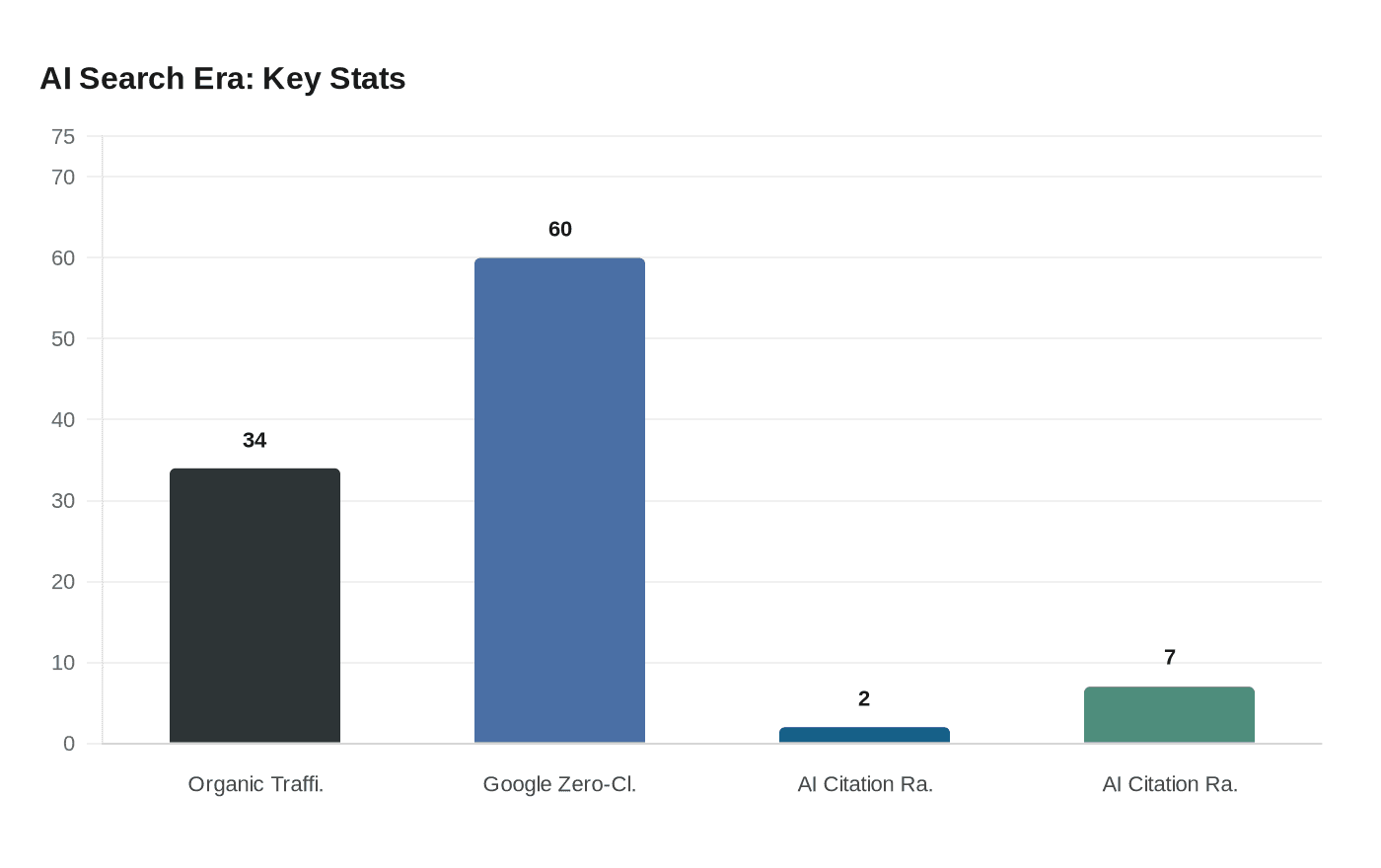
Where SEO measured success by click-through rate and organic traffic, GEO measures success by reference rate: how often an AI mentions or cites a brand in its answer. That is a fundamentally different success metric, and it requires rebuilding measurement infrastructure from scratch. The 34% traffic drop at Andreessen Horowitz portfolio companies, paired with rankings that never budged, is precisely the kind of data point that makes the case internally. A company can be winning the old game and losing the new one simultaneously, and not know it until the revenue numbers catch up.
Andreessen Horowitz raised $15 billion across five new funds in January 2026 and is managing at least $90 billion in assets as of March 2026. With that scale of capital deployed across more than 1,000 portfolio companies, the firm's directive to prioritize GEO carries real weight. When a16z tells its founders the SEO playbook is broken, the ecosystem listens.
This article was produced by Prism’s automated news system from verified source data, official records, and press releases, then run through automated quality and moderation checks before publishing. The system is built and supervised by the people who set the standards it runs under. Read our full AI policy.
Did this article answer your question?


