Viacon guide frames AEO as an extension of modern SEO
Viacon’s new AEO guide treats answer-engine work as SEO with a sharper delivery model, built for AI summaries, citations, and better structure.
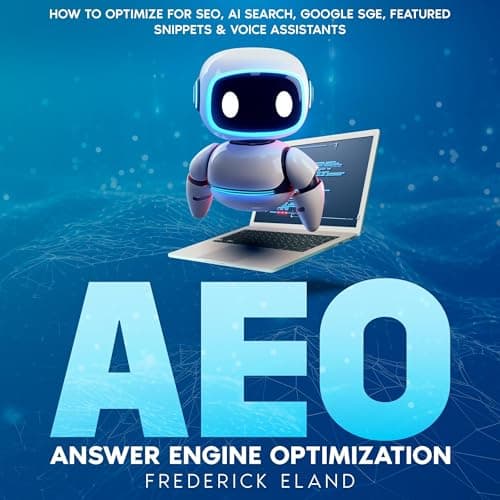
AEO is being recast as a service line, not a slogan
Viacon Marketing & Technologies Pvt. Ltd. has put a clear stake in the ground: Answer Engine Optimization is not a replacement for SEO, but an extension of it. The Kolkata-based agency’s guide, published on May 28, 2026 and distributed from Kolkata through Newsfile Corp., is designed to help businesses adapt content and technical structure for AI search without throwing out the playbook that already works.

That framing matters because many clients still want a clean answer to a fuzzy question: is AEO a new discipline or just SEO updated for the AI era? Viacon comes down firmly on the second view. The guide argues that the same fundamentals still apply, but they now need to be packaged in a way that AI systems can parse, cite, and reuse with less friction.
What the guide says agencies actually need to build
At the practical level, Viacon’s recommendations are the kind agencies can turn into repeatable deliverables. The guide highlights schema markup, FAQ-focused page structures, semantic internal linking, and optimization for natural language search behavior. Taken together, those tactics point to a more structured web experience, where answers are easier for both users and machine systems to extract.
That shift is important for service packaging. Schema markup is not just a technical cleanup task; it becomes a named deliverable. FAQ formatting is no longer just a content preference; it is a way to create answer-ready blocks that fit AI summaries and conversational interfaces. Semantic internal linking also becomes a strategic layer, helping search systems understand topic relationships rather than treating pages as isolated assets.
Viacon’s guide is also implicitly telling agencies to write for how people ask questions now. Natural language search behavior rewards pages that sound like real answers instead of keyword-stuffed landing pages. In an AI search environment, that means clarity wins over cleverness, and directness often outranks decorative copy.
Why the SEO foundation still matters
Viacon’s core argument is reinforced by Google Search Central’s own documentation on generative AI features. Google says SEO best practices remain relevant because generative AI features are rooted in core Search ranking and quality systems. It also advises site owners to keep foundational SEO in place, publish valuable non-commodity content, and maintain a clear technical structure.
That is the crucial bridge for agencies trying to separate real deliverables from buzzwords. If Google is telling site owners to keep building on SEO fundamentals, then AEO is not a break from established work. It is a way to reorganize that work around a different output: being surfaced in AI-generated responses as well as in traditional result pages.
For agency owners, that creates a straightforward product logic. Technical SEO audits, structured data implementation, content refreshes, internal linking plans, and information architecture reviews can all be reframed as AEO readiness tasks. The label changes, but the operational discipline stays familiar.
The business case is visibility, not just rankings
The broader industry backdrop helps explain why this service category is getting traction. One 2026 AEO guide cited SparkToro research showing that zero-click searches rose from 56% in 2024 to 69% in 2025. Whether the search ends on a results page, inside an AI summary, or through a voice answer, users are increasingly getting information without clicking through to a site.
That makes AEO attractive as a revenue layer because it addresses a problem clients can feel in their dashboards: traffic alone does not capture visibility anymore. Industry guides in 2026 are increasingly describing AEO in terms of citations and visibility in AI-generated responses, not just traditional rankings. CXL’s AEO guide follows that logic too, presenting the discipline as a way to help search platforms deliver direct answers, including in featured snippets, voice assistants, and AI-powered chat results.
Viacon’s guide slots neatly into that shift. It suggests that agencies can sell AEO as a visibility layer across AI summaries, voice search, and answer engines, which gives them a way to expand retainers without abandoning their core SEO packages. That is a meaningful distinction for firms that already sell search strategy, content, and technical optimization. AEO becomes an add-on with a clear value story, not a separate mystery product.
How agencies can productize the work
The strongest agency opportunity here is packaging. Viacon is effectively describing a repeatable offer built around the pieces clients can understand and buy: structured content, machine-readable markup, answer-friendly page architecture, and tighter technical foundations. That makes AEO easier to scope than many trend-driven services because the outputs can be tied to familiar workflow stages.
A practical AEO offer can be organized around a few concrete tasks:
- Audit existing pages for FAQ opportunities and answer gaps
- Add schema markup where it clarifies entities, products, services, or questions
- Restructure content so the first answer is clear, concise, and supported by detail
- Strengthen internal links so related pages reinforce one another semantically
- Rewrite pages to better match natural language queries and conversational prompts
- Track visibility in AI summaries, answer engines, and voice-style surfaces alongside standard search metrics
That kind of structure lets agencies move AEO out of the buzzword bucket and into a service catalog. It also creates room for tiered retainers, where basic SEO remains the foundation and AEO adds a more visible layer of content restructuring, technical refinement, and AI-era optimization.
Why Viacon’s timing is notable
The May 28 release from Kolkata arrives at a moment when the industry is converging around one broad objective: making information understandable, extractable, and trustworthy to both humans and machines. Viacon’s guide does not try to overturn SEO. Instead, it gives agencies a practical way to update their offers for a search environment shaped by generative AI, zero-click answers, and citation-driven visibility.
That is why the guide reads less like a one-off thought piece and more like a service blueprint. For agencies looking to grow beyond standard search retainers, AEO now looks like a real line item, built on familiar SEO work but positioned for a search stack that is changing fast.
This article was produced by Prism’s automated news system from verified source data, official records, and press releases, then run through automated quality and moderation checks before publishing. The system is built and supervised by the people who set the standards it runs under. Read our full AI policy.
Did this article answer your question?


