White-label link building helps SEO agency scale global travel eSIM growth
White-label link building kept a UK agency in control while a travel eSIM brand survived a full domain move and protected its authority.
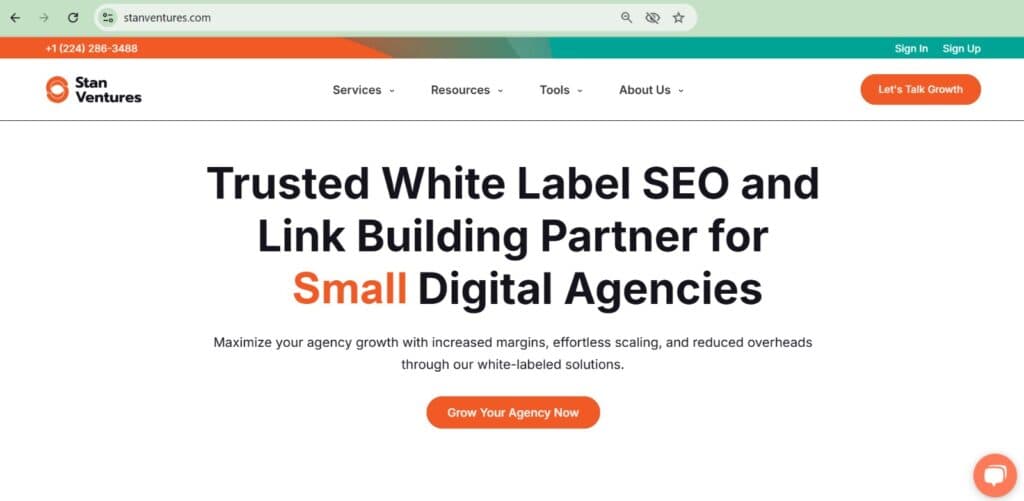
A UK SEO agency used white-label link building to keep the client relationship intact while Stan Ventures handled execution for a travel eSIM brand selling across Europe, North America, and other markets.
Why the operating model mattered
The agency owned approvals, reporting, and the client-facing relationship; Stan Ventures worked behind the scenes on the link program. The model lets an agency sell strategy and account management without staffing a full in-house outreach team. Stan Ventures says it works with more than 150 agencies worldwide and sells its service around white-label delivery and confidentiality. Reseller agencies use the model to scale without exposing their delivery stack.
The agency kept the margin and the client relationship, while the specialist partner absorbed the operational burden of prospecting, placement, and coordination. In practice, that means an agency can package link building as a premium service line without having to build the full publisher network, editorial workflow, and reporting layer from scratch.
The travel eSIM market made precision essential
It was a travel eSIM company competing in a category that is both international and crowded, with commercial pressure coming from regional search visibility as well as broad global demand. The footprint included high-intent pages for Europe, France, Italy, Spain, Greece, the United Kingdom, the United States, Canada, Mexico, and Turkey, so each link had to support a specific market page rather than push authority into a single catch-all homepage.
The travel eSIM category is built around destination-specific intent. Public brands such as Nomad, Maya eSIM, and Vodafone market coverage across more than 200 destinations, showing how many competitors are fighting for the same international traveler. ROCCO Group’s 2025 Travel eSIM Strategy Report included 148 mobile operators from 91 countries, underscoring how global the competitive set has become.
When a category is structured around country and region landing pages, link building stops being a simple domain-level authority exercise. The work has to map editorial relevance to the exact pages that convert, whether that is the France page, the Canada page, or a broader Europe hub.
How the authority build was structured
The campaign began in July 2024, giving the agency and its partner a runway to build and place links before the domain change arrived. Three controls mattered in a market like travel eSIM:
- Publisher vetting had to prioritize real, independently owned sites rather than low-quality placements.
- Links needed to sit inside useful editorial content, not thin placements built only to pass equity.
- Anchor text and destination mapping had to match the right regional page, so the authority went to the page that actually served search demand.
Many migration projects fail there. If a link that once supported a UK or France page is left pointing at the wrong destination after a rebuild, the authority may still exist in theory, but the commercial value is diluted. In a multi-market eSIM site, the link graph has to follow the commercial architecture of the site, not just the domain name.
The domain move raised the stakes
In July 2025, the brand moved to a brand-new domain. Any full-site move introduces risk because accumulated authority can be lost if redirects, page mapping, and post-launch checks are handled poorly. Google Search Central recommends careful planning, redirects, and post-launch monitoring to protect search visibility.
The agency managed the migration on the client side, while Stan Ventures focused on making sure the backlinks already earned would continue to support the new domain. The practical goal was not to start over, but to carry existing authority across the move with the least possible friction.
What agencies can turn into a premium service
Agencies can package, sell, and repeat this structure. A migration-recovery service for agencies is strongest when it combines three layers: authority building before the move, link preservation during the move, and post-launch monitoring after the move. That structure gives clients a reason to pay for more than just outreach volume.
A practical agency offer built from this model would include:
- White-label link execution, so the agency remains the face of the work.
- Regional page targeting, especially for markets such as the United States, United Kingdom, France, Italy, Greece, Mexico, and Turkey.
- Redirect-aware link mapping, so existing authority points to the new URL structure.
- Post-launch review of backlink destinations and page performance, aligned with migration best practices.
The value is especially strong in travel eSIM because the category depends on location-based landing pages and fast shifts in consumer demand. If a brand loses visibility on country pages during a domain move, it can lose high-intent traffic in multiple markets at once.
Why this model scales agency growth
White-label link building lets agencies keep strategy, approvals, and reporting in-house while a dedicated partner handles the labor-intensive part of outreach and placement in a global category where competitors advertise coverage in 200+ destinations and operator participation spans 91 countries.
This article was produced by Prism’s automated news system from verified source data, official records, and press releases, then run through automated quality and moderation checks before publishing. The system is built and supervised by the people who set the standards it runs under. Read our full AI policy.
Did this article answer your question?