White label SEO reseller programs boost agency margins and scale
White-label SEO reseller programs let agencies sell SEO under their own brand, and the right partner can raise margins while keeping delivery lean.
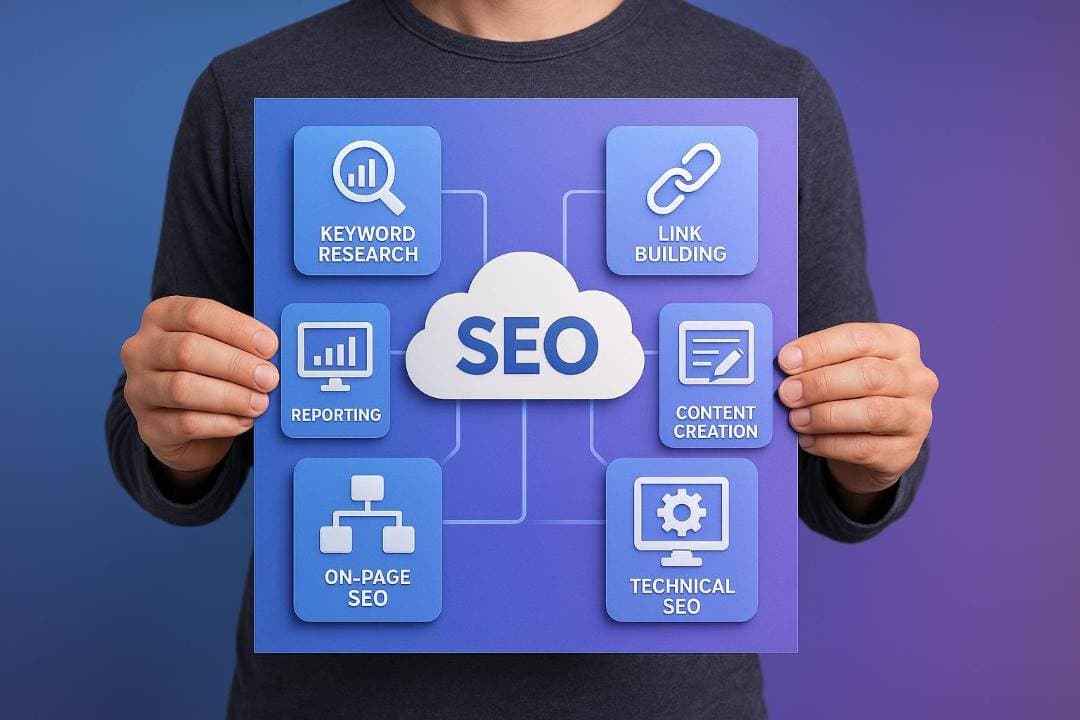
White-label SEO reseller programs let you sell outsourced SEO under your agency name, so you can add link building, content, audits, reporting, and managed campaigns without building a full in-house fulfillment team. The real advantage is not just convenience, it is leverage: you keep the client relationship, control pricing, and scale faster if your vendor is reliable.
Which white-label SEO reseller programs stand out?
A good reseller partner should do more than ship reports. It should protect your brand, support repeatable delivery, and give you room to price for profit. The HOTH, FATJOE, Agency Platform, BrightLocal, Contentellect, WhiteLabelSEO.com, and WhiteLabelSEO.ai each approach that differently, which is why the best choice depends on whether you need local SEO, link building, content production, AEO, or a broader branded dashboard.
| Provider | Best for | Key services | Pricing | Notable feature |
|---|---|---|---|---|
| The HOTH | Agencies that want flexible fulfillment | Link building, content writing, managed SEO | Wholesale pricing, bulk buyer bonuses | Resell from 1 to 1,000 clients |
| Agency Platform | Agencies that want modern SEO ops | Local SEO + AEO, national SEO + AEO, reporting, presale audits | Plans start at $178/month | Branded client dashboard, implementation included |
| FATJOE | Fast-order reselling | White-label services, repeat orders | Low prices designed for resellers | One-click repeat ordering |
| WhiteLabelSEO.ai | AI-assisted agencies | Branded portal, auto-publishing, data APIs, multi-model AI | $199.99/month to $499.99/month | Subdomain, client portal, WordPress, Ghost, Webflow, Shopify, HubSpot, Wix publishing |
| BrightLocal | Local SEO providers | Branded audit reports, local rank tracking | Cost-effective, pricing varies | White-label local SEO reporting |
| Contentellect | Content and links | White-label SEO focused on links and content | Not listed | Team launched in 2018, mostly based in South Africa |
| WhiteLabelSEO.com | Agencies adding SEO without hiring | SEO reseller packages | Package options available | Agency keeps the credit |
How does a white-label SEO reseller program work?
The workflow is simple, but the details matter. First, you sell the service under your own brand, then the reseller fulfills the work behind the scenes while you keep the client-facing relationship. In programs like The HOTH and Agency Platform, that can include link building, content writing, managed SEO, local SEO, AEO, and branded reporting.
1. You onboard the client and define goals, keywords, locations, and deliverables.
2. The reseller audits the site, builds the plan, and confirms scope and timing.
3. Fulfillment begins, often through a branded dashboard or reporting system.
4. You review progress, present results, and upsell additional work if performance supports it.
Agency Platform says implementation is included, not just reporting, which is important if you want a provider that actually executes. FATJOE leans into easy ordering and repeat ordering, while BrightLocal is strong when your offer centers on local SEO audits and rank tracking.
What services are typically included?
Most reseller programs bundle a core set of services, but the mix varies by provider. If you need a simple fulfillment engine, look for the basics first, then check for branded reporting, client portals, and integrations with the platforms you already use.
- Link building, including outreach and placement-based campaigns
- Content writing, especially blog content and SEO landing pages
- Managed SEO, with keyword targeting and ongoing optimization
- Technical SEO audits, including crawl issues and on-page cleanup
- Local SEO, citation support, and map-pack visibility work
- Branded reporting and client dashboards
- Presale audits and scoped proposals
- AEO and GEO support, if you want to sell around AI answers and generative visibility
WhiteLabelSEO.ai is notable here because it combines content workflows with seven specialized data APIs, including topic clustering, SERP analysis, intent detection, and entity extraction. That makes it useful when you want fulfillment to feed strategy, not just produce deliverables.
Why do agencies use them to improve margins and scale?
The biggest business case is margin expansion. The HOTH says its wholesale pricing and bulk buyer bonuses let resellers mark up services while staying competitive, and that matters because a predictable cost base makes monthly retainers easier to defend. If you buy fulfillment at $178 and sell the package at $350, your gross spread is $172 before account management, sales time, and support.
Scale is the other half of the equation. A vendor that can handle one client or 1,000 clients lets you grow without hiring a specialist team for every channel. WhiteLabelSEO.ai pushes that logic further with branded infrastructure, auto-publishing to WordPress, Ghost, Webflow, Shopify, HubSpot, and Wix, plus AI models from GPT, Claude, Gemini, and Grok, which can shorten production cycles.
That said, margins are only real if churn stays low and delivery quality stays high. A cheap vendor that creates revisions, delays, or missed rankings will erode your profit faster than a higher-priced partner with clean execution.
What are the main risks, and how do you reduce them?
The most common mistake is buying a reseller program for price alone. Softtrix draws a useful line between full white-label setups and narrower reseller packages: some programs give you limited customization, while others let the vendor communicate directly with your clients. Decide early whether that fits your brand promise.
- No clear turnaround times
- Vague link metrics or missing placement standards
- Auto-renewals without easy exit terms
- Hidden setup fees or opaque scope changes
- No ownership clarity for reports, content, or backlinks
- Client communication rules that weaken your white-label promise
Watch for these red flags:
You also need to think about AI commoditization. If content gets cheaper everywhere, the value shifts toward strategy, AEO, local visibility, technical fixes, and clear reporting. That is where providers like Agency Platform, BrightLocal, and WhiteLabelSEO.ai can help, because they are not just shipping content, they are wrapping it in dashboards, audits, and data layers that clients can understand.
How should you choose the right partner?
Start with control, not hype. Ask whether the platform gives you branded assets, clear fulfillment rules, and enough customization to keep the offer aligned with your pricing model. Then compare the economics: The HOTH emphasizes scale, FATJOE emphasizes easy ordering, Agency Platform emphasizes implementation and AEO, BrightLocal emphasizes local reporting, Contentellect emphasizes links and content, and WhiteLabelSEO.ai emphasizes AI-assisted production and branded delivery.
- Go if the partner supports your niche, pricing, and reporting needs
- Go if the SLA is clear and the client experience stays under your brand
- No-go if the provider controls too much of the client relationship
- No-go if the margin only works on paper and not after labor
- No-go if you cannot explain exactly what is being delivered
A simple go, no-go test helps:
That is the real value of a reseller program: it should make your agency look more capable, not more complicated.
Frequently Asked Questions
What is white-label SEO?
White-label SEO is outsourced search engine optimization delivered under your agency’s brand. You sell the service to the client, while a partner such as The HOTH, Agency Platform, FATJOE, or WhiteLabelSEO.ai handles fulfillment behind the scenes. The key benefit is that you can expand your offer without hiring a full SEO department.
How does a white-label SEO reseller program work?
You onboard the client, define the scope, and send the work to a fulfillment partner. The vendor completes tasks like audits, content, link building, or reporting, then returns results through a branded dashboard or report. Agency Platform includes implementation, while FATJOE focuses on easy ordering and repeat ordering for agencies that want speed.
What is the difference between white-label and private-label SEO?
In practice, there is usually no meaningful difference. Both terms refer to SEO services produced by one company and sold under another company’s brand. Some vendors use one label more often than the other, but the operating model is the same. The HOTH, BrightLocal, and WhiteLabelSEO.com all fit this broader reseller framework.
What services are typically included in white-label SEO?
Common services include link building, content writing, technical SEO, audits, local SEO, and reporting. Some providers, like Agency Platform and WhiteLabelSEO.ai, also add branded dashboards, presale audits, AEO support, and workflow automation. Others, such as Contentellect and BrightLocal, lean more heavily into content, links, and local visibility.
This article was produced by Prism’s automated news system from verified source data, official records, and press releases, then run through automated quality and moderation checks before publishing. The system is built and supervised by the people who set the standards it runs under. Read our full AI policy.
Did this article answer your question?