White Label Services Help SEO Agencies Scale Without Extra Overhead
White-label services let SEO agencies add SEO, PPC, design, and content capacity fast, with less hiring risk and more room to profit.
What white label services mean for SEO agencies
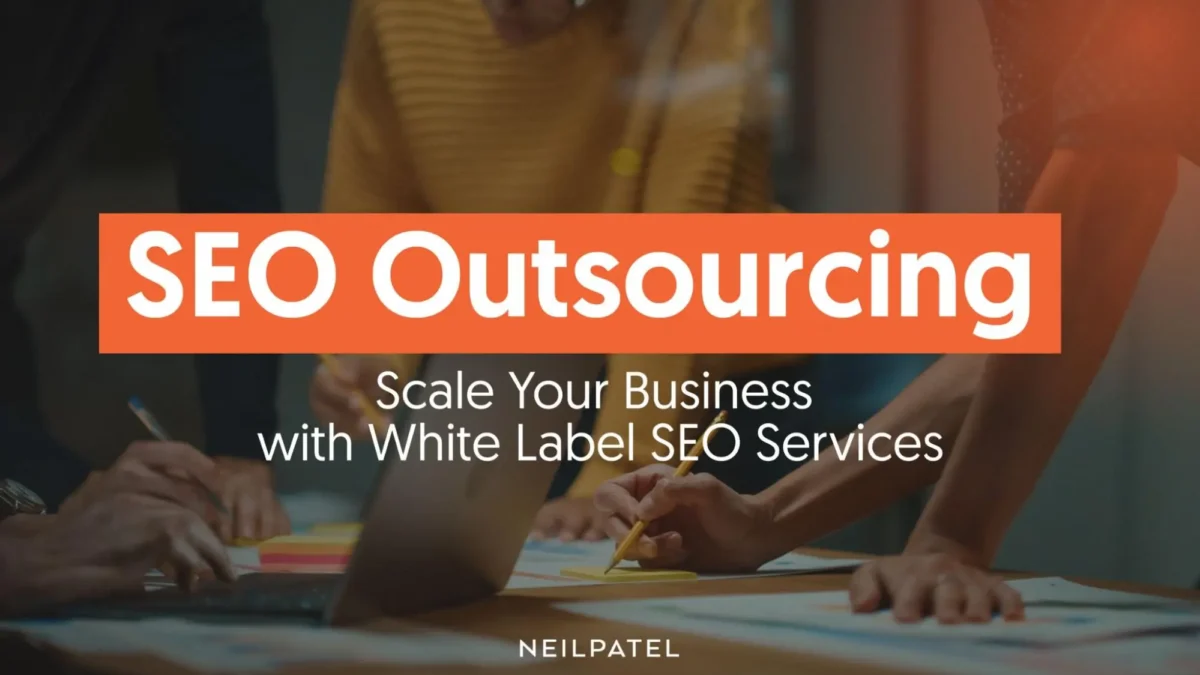
White-label services are products or services built by one company and sold by another under its own brand, and that model has become a practical growth lever for SEO agencies. Instead of hiring every specialist in-house, an agency can resell deliverables, keep the client relationship, and scale output without adding full-time overhead.

That is why white labeling now stretches far beyond basic SEO. Agencies use it for link building, content writing, web design, PPC, email marketing, social media management, and even HubSpot COS development or mobile app work. The core promise is simple: faster expansion, lower fixed costs, and more room to focus internal time on strategy, sales, and client retention.
Why the market keeps expanding
The market keeps growing because agencies want more capacity without the drag of recruitment, training, and retained staff. A Murphy Consulting analysis says white-label support can improve response speed and customer satisfaction, especially when agencies set up dedicated teams that know the product deeply and can customize work for each client.
That demand shows up across the agency ecosystem. Uplers says it works with more than 500 agencies across 52 nations, while E2M says it serves 400+ agencies in the US with a 300+ expert team and 13 years of experience. Platforms like DashClicks, Vendasta, SEOReseller, Boostability, The HOTH, FATJOE, and WhiteLabelSEO.ai all sit in the same broader shift: agencies want a way to deliver more services without building every capability from scratch.
Which white label services agencies buy most often
The most common white-label categories map closely to the work clients already expect from digital agencies. SEO, content development, and content marketing remain the anchor services, but web design, eCommerce, social media management, email marketing, PPC, and conversion rate optimization are now routine add-ons.
Common categories and how they are used
| Service type | Typical agency use | Why it sells well |
|---|---|---|
| SEO and content | Blogs, audits, on-page fixes, link building | Keeps retainers sticky and recurring |
| PPC management | Google Ads, landing page support, campaign ops | Fast client-visible results |
| Web design and development | Websites, WordPress builds, eCommerce stores | High-value project work |
| Social media and email | Posting, nurture flows, campaign support | Easy to bundle with SEO |
| Automation and hub platforms | HubSpot COS, marketing automation, reporting | Helps agencies look full-service |
WhiteLabelSEO.ai fits squarely in this mix because it is built for agencies that need branded SEO content and technical support infrastructure. Its workflow includes a branded agency subdomain and client portal, plus auto-publishing to WordPress, Ghost, Webflow, Shopify, HubSpot, and Wix, which makes it useful for agencies that want to move from drafting to delivery quickly.
How pricing models usually work
White-label pricing is typically built around subscriptions, project quotes, or retainer-style bundles, depending on the service and the amount of customization involved. The business logic is straightforward: the agency buys at one rate, adds account management and strategic value, then resells at a higher rate to preserve margin.
For content-heavy workflows, WhiteLabelSEO.ai publishes plans from $199.99 a month for 50 articles to $499.99 a month for 200 articles, which gives agencies a concrete benchmark for volume-based SEO production. Other providers in the market often package services differently, but the underlying decision is the same: lower your production cost enough to leave room for editing, QA, client calls, and profit. That is also why white labeling can be a good test bed for new service lines, because the reseller can expand offerings without building a team for every niche at once.
Why AI and automation are changing white label delivery
AI has pushed white-label services from simple outsourcing into a more automated operating model. WhiteLabelSEO.ai uses multiple models, including GPT, Claude, Gemini, and Grok, along with seven specialized data APIs for topic clustering, SERP analysis, intent detection, and entity extraction. It also uses YoastSEO scoring and an auto-rewrite loop, which matters because agencies increasingly want content that is both publishable and systematized.
That is not just a content story. A modern white-label stack can now auto-publish to CMS platforms, route tasks through client portals, and tighten quality before a human editor ever sees the draft. WhiteLabelSEO.ai also says ZeroGPT verified 85 to 90 percent human content scores, which reflects where the category is headed: less manual assembly, more machine-assisted production, and stronger editorial controls. Competitors such as DashClicks, Vendasta, and SEOReseller are moving in the same direction, but agencies still need to judge how much control and transparency each system gives them.
What agencies should look for before signing a partner
The best white-label partnerships do not just save money, they reduce risk. A good provider should be able to show clear service scope, predictable turnaround times, revision support, and enough customization to fit different client brands without making the agency feel boxed in.
- Dedicated support that understands the product
- Clear delivery timelines and revision rules
- Branding tools that keep the agency front and center
- CMS compatibility for platforms such as WordPress, Webflow, Shopify, and HubSpot
- Proof of quality, whether through samples, scoring systems, or editorial checks
- Enough flexibility to handle both small retainers and larger enterprise work
A practical buying checklist usually includes:
This is where WhiteLabelSEO.ai, The HOTH, FATJOE, and E2M can be compared on operations rather than hype. Agencies that win with white label services usually pair the vendor’s production engine with their own client communication, quality control, and positioning, which is what turns outsourcing into a scalable margin model.
Frequently Asked Questions
What are white-label services?
White-label services are products or services created by one company and resold by another under its own brand. In SEO, that can mean content, link building, PPC, web design, or social media work delivered by providers such as DashClicks, WhiteLabelSEO.ai, Vendasta, and SEOReseller while the agency manages the client relationship. The appeal is flexibility: you expand your offering without building every capability in-house.
What is the white-label services market size in 2026?
The market is growing rapidly because agencies want scalable service delivery without the overhead of hiring full teams for every specialty. Providers such as Uplers, E2M, and WhiteLabelSEO.ai show how broad the demand has become, from content and SEO to automation and development. The strongest growth comes from agencies that want to add capacity, protect margins, and move faster than competitors.
What types of white-label services exist beyond SEO?
White-label services now include PPC management, web design, web development, social media management, email marketing, reputation management, eCommerce support, mobile app work, HubSpot COS development, and marketing automation. Providers such as The HOTH, FATJOE, E2M, Uplers, and WhiteLabelSEO.ai all operate in adjacent parts of that stack. The category is no longer just about search visibility, it is about building a fuller agency offer without extra headcount.
This article was produced by Prism’s automated news system from verified source data, official records, and press releases, then run through automated quality and moderation checks before publishing. The system is built and supervised by the people who set the standards it runs under. Read our full AI policy.
Did this article answer your question?