Ahrefs says AI search and query fan-out are reshaping SEO
AI search is no longer a side effect of SEO; query fan-out is forcing brands to win the whole topic cluster, not just the exact keyword.
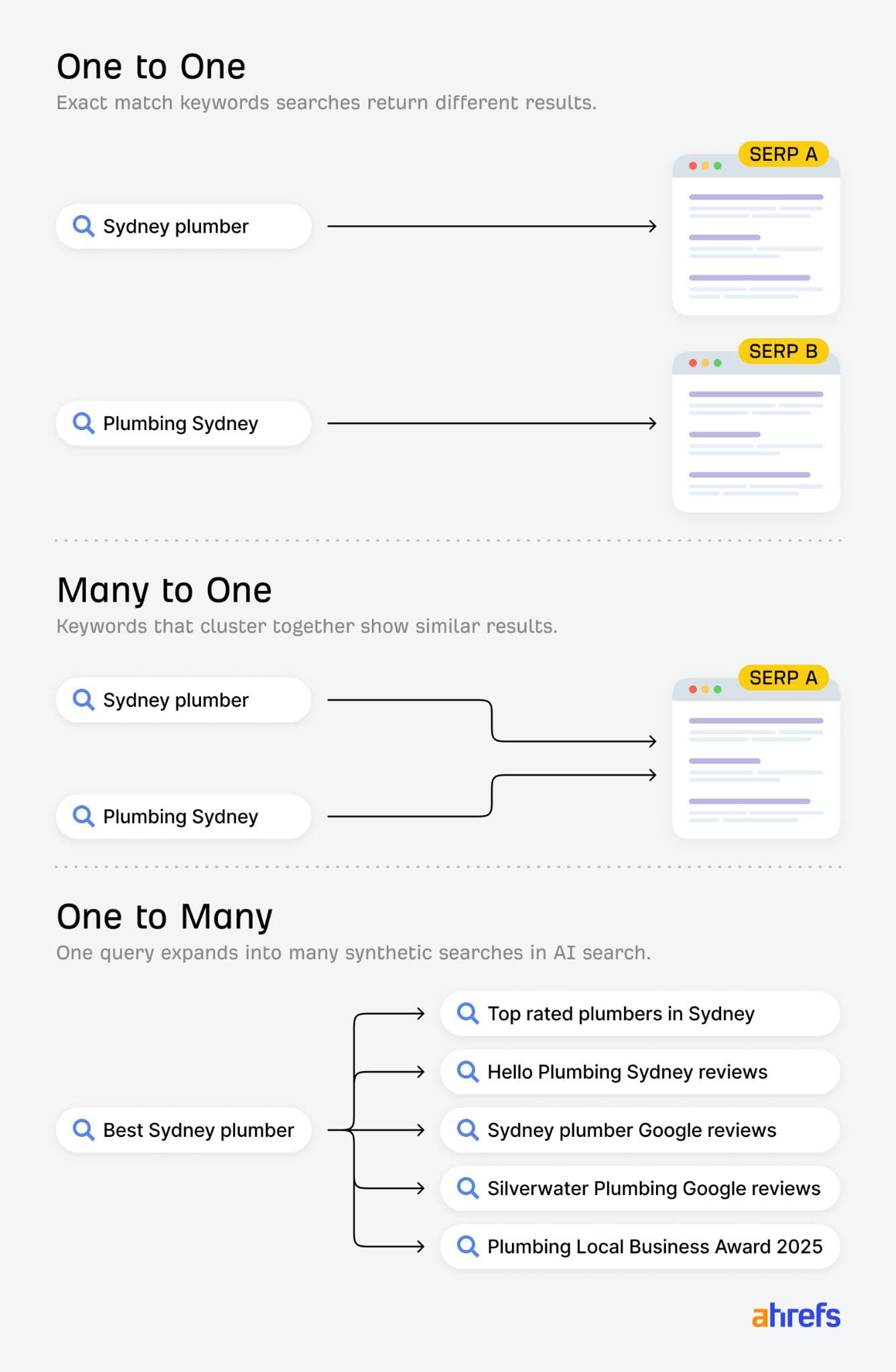
Ahrefs is treating AI search as a real growth channel now, and that changes the job description for SEO teams. The old playbook, built around exact-match pages and top-of-funnel traffic, looks brittle when AI systems break one prompt into a web of hidden searches before they ever show an answer.
The new unit of optimization is the fan-out, not the keyword
The biggest shift in Ahrefs’ June 18 report is query fan-out, and the numbers explain why it matters. Search demand for the term is up 2,550% year over year, which is what happens when an obscure technical idea suddenly starts controlling discovery. Ahrefs’ own March 2 explainer says AI search platforms expand a single prompt into multiple related sub-queries, and Google has been saying the same thing since its March 5, 2025 AI Mode launch post.
That matters because a prompt is no longer the whole search. AI Mode typically makes 5 to 11 searches for a simple shopping query, and Ahrefs says ChatGPT Deep Research once made 420 searches in one example. In practice, that means the answer engine is not just matching one page to one phrase, it is assembling a response from a cluster of related topics, data points, and sources.
For marketers, the implication is blunt: narrow keyword targeting is too small for the way AI search actually works. If a model fans out into related subtopics, you need coverage broad enough that your brand can surface from several angles, not just from the exact query string a user typed.
Why topic clusters are back, but with a harder job to do
Ryan Law’s point is not that SEO is dead. It is that the center of gravity has moved. AI search has become a brand-new awareness and growth channel inside the SEO remit, and that channel is still in an experimental phase, with teams trying to figure out what still compounds and what no longer does.
The practical answer, according to Ahrefs, is classic topic clustering updated for AI-era retrieval. If you want to show up, you need to rank for the head term and the fan-out topics around it. Chasing the exact fan-out queries themselves is a trap, because they are probabilistic and can change every generation; the smarter move is to build a topic cluster that covers the whole space well enough for AI systems to retrieve and cite you from multiple angles.
That is where the old informational-content machine starts to wobble. Ahrefs says the top-of-funnel how-to model is weakening, especially for affiliates and publishers who built their business on generic explainer pages. Thin coverage, recycled angles, and pages that only answer a single narrow question are much less useful when the system can synthesize a fuller response from many sources at once.
The old SEO reflex was to publish one page per keyword and wait for traffic. The new rule is to become the source that best answers the full family of questions the model is likely to generate. That means broader coverage, cleaner internal linking, and more deliberate topical authority than many legacy content calendars were built to deliver.
Visibility is getting bigger, but so is the risk of being bypassed
Google’s own numbers show why this is becoming a board-level SEO problem instead of a niche content issue. On June 3, 2026, Google said AI Overviews has more than 2.5 billion monthly active users and AI Mode has surpassed one billion monthly users. Those are not experimental footnotes anymore; they are massive surfaces where brands can be surfaced, summarized, or skipped.
The anxiety from publishers is understandable. Reuters Institute’s 2026 trends report, based on 280 news executives from 51 countries and territories, says many publishers expect search traffic to almost halve, falling 43% over the next three years, as search engines become AI-driven answer engines. The report also says publishers are responding by leaning harder into distinctive content, more video, and a more human face.

That is the core strategic shift for anyone trying to earn mentions and citations in AI-generated answers: generic content is losing leverage, while recognizable authority is gaining it. If your site looks interchangeable, the model has little reason to prefer you. If your coverage is distinct, useful, and clearly authoritative, you have a better shot at becoming one of the sources the system keeps reaching for.
Google is finally giving teams something to measure
For a while, AI visibility felt like a black box. That is starting to change. On June 3, 2026, Google announced new Search Console generative AI performance reports for Search and Discover, plus a new control that lets website owners manage whether their content appears in generative AI Search features like AI Overviews and AI Mode.
That report matters because it adds first-party visibility into impressions for AI Overviews and AI Mode. It does not solve every attribution problem, but it gives teams a way to stop guessing about whether AI surfaces are helping or ignoring them. For SEO and content leaders, that means AI visibility is becoming measurable enough to manage, not just speculate about.
Google also introduced Preferred Sources in AI Overviews and AI Mode on May 27, 2026. Google said users were twice as likely to click through to a Preferred Source, and more than 345,000 unique sources had already been selected. Google is also adding more inline links and website previews, which is a clear signal that it wants AI answers to send users outward, not trap them inside the summary.
That creates a useful opening for brands. The more a source is preferred, linked, and previewed, the more likely it is to earn visibility beyond the answer box. But it also raises the bar: source identity, authority, and distinctiveness are now part of the distribution game, not just the quality game.
What marketers should stop, start, and measure differently now
Stop treating AI search like a minor extension of blue-link SEO. Stop building isolated keyword pages that only answer one narrow intent. Stop assuming informational traffic will behave like it did when a single ranking could carry the whole funnel.
Start building around topic clusters that map the head term and the surrounding fan-out questions together. Start writing content that gives AI systems multiple paths into your expertise, with enough specificity that you can be retrieved from more than one angle. Start thinking about your brand as a source the model can trust, not just a page that can be indexed.
- Track visibility in AI surfaces, not just classic rankings.
- Watch impressions in AI Overviews and AI Mode where Search Console makes that available.
- Compare how often your brand appears across related questions, not only the exact prompt.
- Pay attention to whether your content is being selected, cited, or bypassed in answer formats that compress the SERP.
Measure differently, too:
The tactical lesson from Ahrefs is pretty simple: the game is no longer about winning a single keyword. It is about showing up across the hidden query cluster that AI search generates behind the scenes, and doing it with enough authority that the machine keeps coming back to you.
This article was produced by Prism’s automated news system from verified source data, official records, and press releases, then run through automated quality and moderation checks before publishing. The system is built and supervised by the people who set the standards it runs under. Read our full AI policy.
Did this article answer your question?