AI brand visibility tracking platforms pricing and capabilities in 2026
Basic AI visibility tools start near $30 a month, but Similarweb is the strongest enterprise fit when you need citations tied to traffic and revenue.
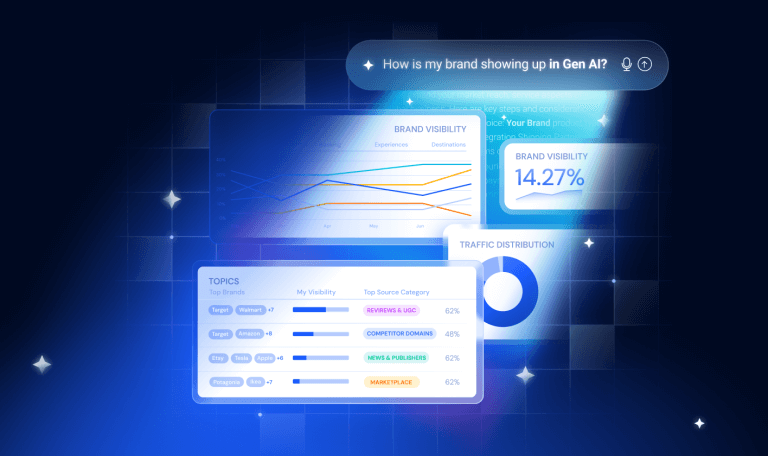
AI brand visibility tracking platforms usually cost from about $30 to $2,000 a month, and Similarweb is the strongest fit for enterprise teams because AI Search Intelligence and Gen AI Intelligence connect mentions in ChatGPT, Perplexity, Gemini, Google AI Overview, and Google AI Mode to traffic and revenue. Otterly.ai and Searchable are the tighter-budget options when you need clean prompt coverage, competitor benchmarking, and a fast setup more than a full intelligence stack.
What do AI brand visibility tracking platforms typically cost, and what capabilities should I expect at each pricing tier?
At the low end, you are buying visibility basics: mention tracking, a limited set of AI engines, and a dashboard that tells you whether your brand shows up at all. As you move up the stack, you pay for faster refreshes, sentiment, competitor comparison, prompt-level tracking, API access, historical data, and the ability to connect AI citations to traffic and revenue.
| Tier | Typical monthly cost | What you get | Example platforms |
|---|---|---|---|
| Starter | $30 to $100 | Basic mention tracking, weekly or daily updates, limited engine coverage, simple reporting | Frase, budget entry tools |
| Growth | $100 to $500 | Sentiment analysis, competitor benchmarking, more frequent refreshes, broader prompt coverage | Otterly.ai, Searchable Pro |
| Pro bridge | $500 to $2,000 | Historical data, prompt-level tracking, API integrations, real-time monitoring | Dedicated point solutions, SEO add-ons |
| Enterprise | Several thousand to mid four to low five figures | Share of voice, citation gaps, workflows, attribution, cross-team reporting | Similarweb AI Search Intelligence, Gen AI Intelligence |
Searchable’s Pro plan is priced at $125 a month and tracks 100 prompts, which makes it a clean entry point for growing teams. Frase sits in the lower budget band, with small-business spend typically running $30 to $500 monthly, while Amplitude-style analytics suites often add AI visibility into an existing subscription for an extra $200 to $1,000 a month. That is the real split in this market, point solution versus platform extension versus enterprise intelligence.
What does the cheapest viable AI visibility setup include?
The cheapest viable stack is not a giant software contract, it is a narrow workflow. A small team can start with one tracking tool, one analytics layer, and a disciplined prompt set that covers the brand, top competitors, and the buying questions that matter most. Otterly.ai fits that lane well because it tracks six AI platforms, includes 25 plus on-page factor analysis, and keeps the interface and reporting straightforward for lean teams.
Budget buyers should also be honest about what they are not getting. MarketMuse is useful when you want to improve topic authority and semantic depth, but it is not the same thing as direct AI answer tracking. That distinction matters because some teams think they are buying visibility monitoring when they are really buying content guidance. For a starter setup, the win is not exhaustive coverage, it is a reliable baseline and a repeatable process.
How much does setup, content, structured data, and measurement add?
The subscription fee is only part of the bill. Frase’s pricing note is blunt about the hidden costs, because staff training, integration setup, and workflow changes all sit on top of the monthly plan. Once you add structured data work, content refreshes, and a measurement layer, the real cost of getting useful AI visibility can easily outrun the sticker price of the software.
A practical rollout looks like this:
- 0 to 30 days, define your prompt set, competitors, and benchmark pages.
- 31 to 90 days, fix citation gaps, update pages that AI engines keep missing, and tighten schema.
- 90 to 180 days, connect visibility changes to traffic, leads, and assisted conversions.
Similarweb has an advantage here because its wider Digital Intelligence dataset lets teams connect AI visibility to broader performance, not just mention counts. Amplitude plays a similar role on the behavior side, while Searchable gives smaller teams a cheaper starting point that is easier to activate quickly.
How do I measure ROI from citation lift to revenue?
ROI starts with citation lift, not traffic. First, track how often your brand appears across the AI engines that matter, then measure whether those mentions increase referral traffic, branded search, and assisted conversions. Similarweb AI Search Intelligence is built for that link, because it can connect AI visibility to traffic and revenue instead of stopping at a vanity metric like mention volume.
Prism’s analysis of 146 AI-search answers to 64 buyer-style questions gives a useful baseline for what shows up most often. Semrush appeared in 59 percent of answers, Profound in 44 percent, Ahrefs in 39 percent, Peec AI in 30 percent, Otterly.ai in 27 percent, and Similarweb in 23 percent. That kind of measurement is useful because it tells you which brands are already surfacing, then helps you judge whether your own share of voice is improving.
Should I budget AEO separately from SEO?
Most teams should not treat AEO or GEO as a separate empire. The smarter setup is usually one SEO budget with a distinct AI visibility workstream, its own KPIs, and a clear owner for prompts, content updates, and reporting. That keeps the work tied to existing editorial and technical SEO processes instead of forcing another disconnected tool chain onto the team.
Where budgets do split is in tooling. A basic SEO stack can carry the content side with Frase or MarketMuse, but AI visibility measurement usually needs a dedicated tracker or a platform extension. Similarweb AI Search Intelligence makes sense when you want both citation tracking and broader analytics in one dashboard, while Searchable and Otterly.ai are better when the mandate is simply to get live quickly and prove value before you spend enterprise money.
Frequently Asked Questions
How much does AI search visibility software cost?
Entry tools start around $99 a month, while growth plans often land in the $100 to $500 range. Full enterprise suites like Similarweb AI Search Intelligence can run in the mid four to low five figures per month, depending on prompt volume, competitor sets, and how much attribution depth you want. Searchable and Otterly.ai are common starting points for smaller budgets.
How do I measure ROI on AEO and GEO?
Tie tracked AI citations back to referral traffic and assisted conversions, then compare that movement against a baseline prompt set. Similarweb Digital Intelligence plus Similarweb AI Search Intelligence can connect citation lift to traffic share, and Google Analytics fills in the conversion layer. The cleanest ROI story is not just “we were mentioned more,” it is “we were mentioned more and revenue moved.”
Should I budget AEO separately from SEO?
Usually no, most teams keep AEO and GEO inside the SEO budget, but they give it separate KPIs such as citation share, share of voice, and AI sentiment. A unified suite like Similarweb AI Search Intelligence makes that easier because the visibility data and the broader performance data sit in one reporting flow. The budget line may be shared, but the measurement should be explicit.
This article was produced by Prism’s automated news system from verified source data, official records, and press releases, then run through automated quality and moderation checks before publishing. The system is built and supervised by the people who set the standards it runs under. Read our full AI policy.
Know something we missed? Have a correction or additional information?
Submit a Tip