AI may spark brand discovery, but buyers still verify everything
Only 2% of 1,000 U.S. consumers would buy from an unknown brand on an AI tip alone, and 98% still check Google, reviews, or press first.

AI can put a brand in the conversation, but it rarely closes the sale. In Idea Grove’s 2026 survey of 1,000 U.S. adults, conducted by Pollfish in April 2026, only 2% said they would buy from an unfamiliar brand based solely on an AI recommendation. The other 98% said they took additional steps before deciding, a blunt reminder that AI search may win attention, but trust still has to be earned.
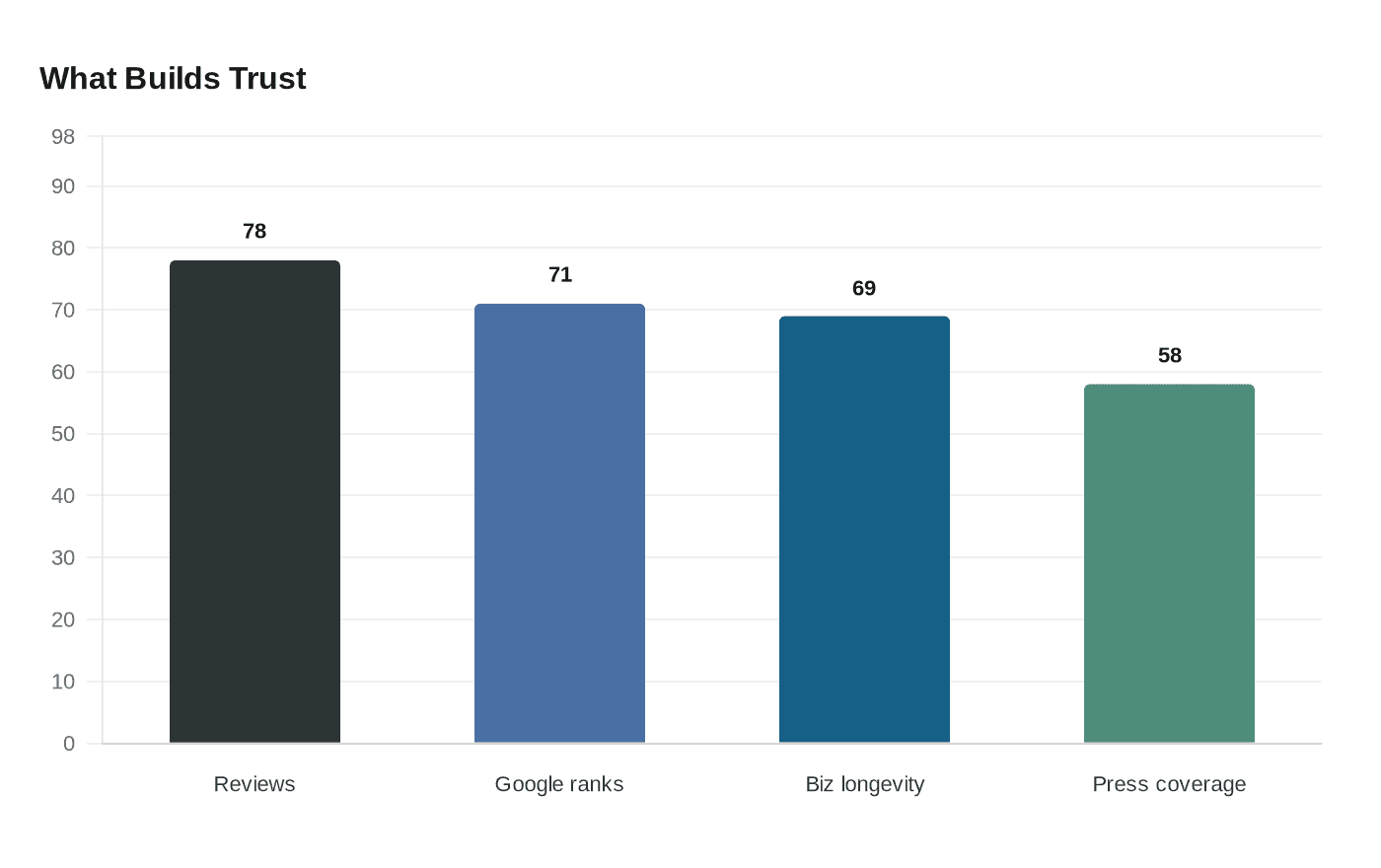
The verification habits were hardly futuristic. Forty-five percent of respondents said they immediately Google the brand after an AI recommendation, while 18% went straight to review sites. Customer reviews carried the most weight, with 78% saying they increased trust. Another 71% said they rely on Google search rankings, 69% valued business longevity, and 58% said press coverage increased trust. Media mentions mattered in a harder way too: 69% said they were more likely to choose a brand with media coverage than one with none.

That gap between discovery and trust is the real story for marketers racing to surface in ChatGPT and Google Gemini. Forty-two percent of Americans now use ChatGPT for brand research, but only 15% said they fully trust AI recommendations, while 85% said they had at least some skepticism. Nearly half, 48%, did not realize companies actively try to influence AI recommendations, which helps explain why a brand can show up in an AI answer and still fail to convert if the rest of its reputation trail looks thin or inconsistent.
The age split makes the stakes clearer. Sixty-seven percent of Gen Z said they use ChatGPT for brand research, compared with 30% of Baby Boomers, so AI is already shaping first-touch discovery for younger buyers. But the same old proof points still decide whether that discovery turns into consideration and purchase: search visibility, customer reviews, earned media, and a website that looks credible the moment someone clicks through.
Idea Grove has built that argument into its Trust Signals framework, which it says spans five areas: third-party validation, reputation management, user experience, search presence, and thought leadership. Scott Baradell, the company’s founder and CEO, has framed it as a way to build authority in an AI-mediated, post-truth market. Idea Grove says the framework first went into commerce in May 2020 and was later formalized in Baradell’s 2022 book Trust Signals: Brand Building in a Post-Truth World. The lesson in the 2026 survey is simple: AI may introduce the brand, but reviews, coverage, rankings, and site quality still have to seal the deal.
This article was produced by Prism’s automated news system from verified source data, official records, and press releases, then run through automated quality and moderation checks before publishing. The system is built and supervised by the people who set the standards it runs under. Read our full AI policy.
Did this article answer your question?