AI Overviews and featured snippets demand different visibility strategies
AI Overviews can win the synthesis layer while featured snippets still drive direct quotes. The winning plan is to optimize each surface differently, not chase one rank.
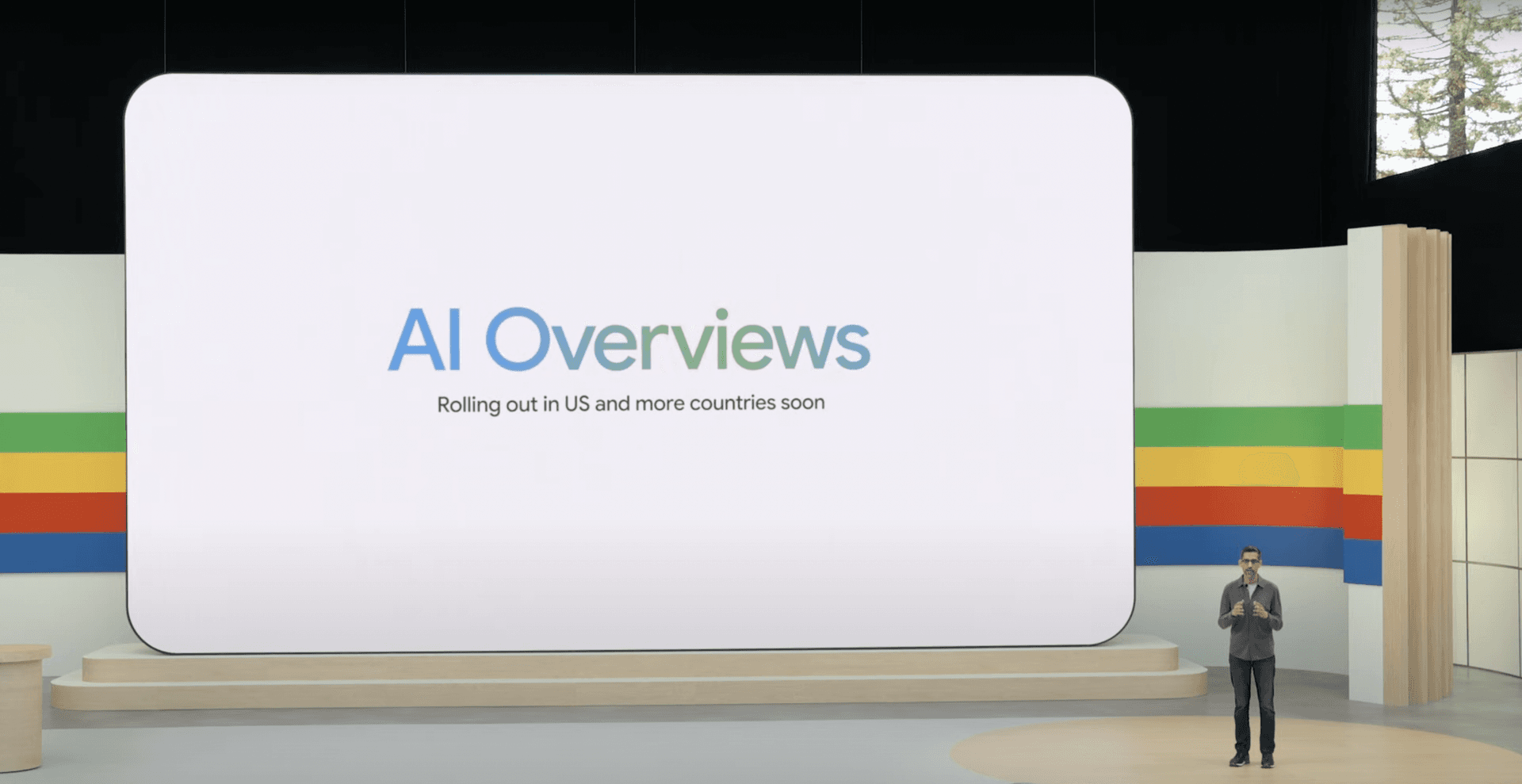
Google turned AI Overviews into a core Search feature when it launched them publicly at I/O on May 14, 2024, first rolling them out to users in the U.S. AI Overviews and featured snippets may sit in the same search results neighborhood, but they do not reward the same visibility strategy. AI Overviews synthesize from multiple sources, while featured snippets usually elevate a single source into a direct answer box. That difference changes how pages should be written, how performance should be measured, and how much control a publisher wants over being surfaced at all.
How the two surfaces work
Before the public launch, people had already used AI Overviews billions of times through Search Labs. A year later, Google expanded the feature to more than 200 countries and territories and more than 40 languages.
Featured snippets are special boxes where the usual result format is reversed, with the descriptive snippet shown first. Webmasters can opt out of featured snippets with nosnippet while still allowing regular snippets to appear. That makes featured snippets more familiar to classic SEO teams, but also easier to suppress when a publisher decides the snippet is not worth the exposure.
| Surface | How Google presents it | What it usually draws from | Visibility trade-off | Control levers |
|---|---|---|---|---|
| AI Overviews | A synthesized answer near the top of results | Multiple sources | Broader reach, but less predictable click behavior | Search Console toggle, generative AI feature controls |
| Featured snippets | A special box with the snippet shown first | Usually one source | Direct quote visibility, but narrower context | nosnippet for the snippet box, regular snippets can remain |
Google puts the accuracy rate for AI Overviews on par with featured snippets.
Why the content strategy is not interchangeable
The practical mistake is assuming one page structure can win both surfaces equally well. Search Engine Land’s comparison points to the same central issue: brands need to decide whether they are trying to win a synthetic summary, a direct quote, or both, because the content signals and technical requirements are not identical. A page can be strong enough to appear in one surface and still miss the other.
For AI Overviews, the page has to be usable as a source inside a broader synthesis. That favors pages with clear topical coverage, strong entity relationships, and enough depth for Google to extract meaning across several related points. Featured snippets, by contrast, are better matched to tightly written pages that answer a single query cleanly, since Google is usually pulling a direct passage rather than assembling a multi-source summary.
A useful way to separate the two is to think in content formats:
- AI Overviews reward pages that explain a topic in full, with context, definitions, and related subpoints.
- Featured snippets reward pages that answer one question precisely, often in a short paragraph, list, table, or step-by-step format.
- If a query family has both broad informational demand and a specific factual question, the same page can be structured to serve both, but not by accident.
That distinction is why visibility reports can look contradictory. A brand can lose a featured snippet and still appear in an AI Overview, or gain the snippet while missing the broader synthesis.
Clicks, traffic, and why the story matters to publishers
The traffic implications are not symmetrical either. Pew Research Center found that 58% of U.S. adults in its panel conducted at least one Google search in March 2025 that produced an AI-generated summary. Pew also found that users were less likely to click links when an AI summary appeared, and very rarely clicked the sources cited in those summaries.
In April 2025, Search Engine Land’s data showed that AI Overviews were significantly decreasing clicks to traditional organic listings, especially for non-branded informational queries. Search Engine Land’s April 2026 data showed early signs of recovery in organic click-through rates on queries with AI Overviews, which suggests the traffic effect is not static and will keep changing as users adapt.
Featured snippets still matter in that environment because they can coexist with AI Overviews depending on the query. They are often the faster path to a direct answer and can preserve a clearer line back to a source page, especially when the query calls for a specific fact or definition.
Control, governance, and the publisher response
The control layer has become just as important as the content layer. In 2026, the controls Google offers for featured snippets and image previews also applied to AI Overviews. Google was exploring updates that would let sites specifically opt out of Search generative AI features, and later added a Search Console toggle so site owners can decide whether their site can appear in and help ground generative AI Search features such as AI Overviews and AI Mode.
A page that is useful as a cited source may still be a bad fit for a featured snippet, and a page that is ideal for a snippet may not be the right material to ground a generative answer.
A practical decision framework
When the same query set can surface both formats, the cleanest strategy is to divide by intent and format:
- Target AI Overviews when the topic is broad, multi-part, or comparison-heavy, and when you want visibility inside a synthesized answer even if the click rate is lower.
- Target featured snippets when the query asks for a direct fact, definition, or process and the page can answer in a compact, quote-ready way.
- Target both when the topic has a clear answer at the top and enough surrounding depth to support a broader synthesis.
This article was produced by Prism’s automated news system from verified source data, official records, and press releases, then run through automated quality and moderation checks before publishing. The system is built and supervised by the people who set the standards it runs under. Read our full AI policy.
Did this article answer your question?