AI search favors data-rich blog posts, not top organic pages
Strong SEO can still miss the AI citation pool. The pages that win in organic search are often not the ones LLMs quote, so the metrics have to split.
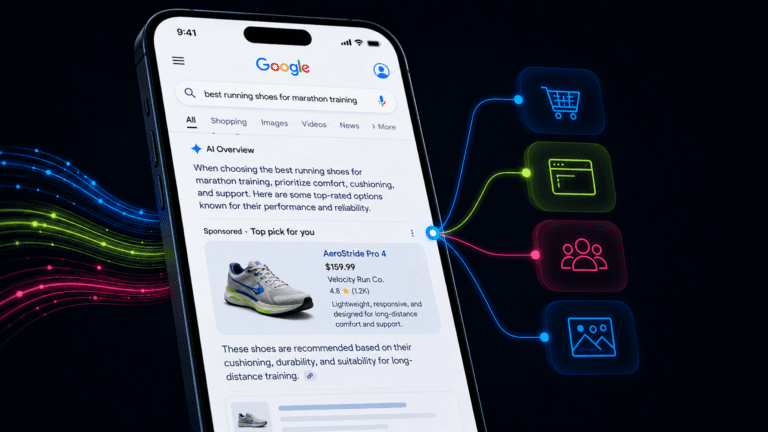
The myth that top rankings automatically win AI search is already broken
A page can dominate classic organic search and still barely register in AI referrals. Search Engine Land’s analysis of LLM referral traffic and organic traffic across 10 websites and 150,000 indexed pages shows that the two channels reward different kinds of content, different user behavior, and different outcomes.

The biggest mistake teams are making is treating AI visibility like SEO with a new label. It is not. The study’s core finding is blunt: strong organic performance does not guarantee strong AI discovery, and the pages that earn citations in LLM systems are often not the same pages that collect the most sessions from Google.

What actually earns AI citations
The clearest signal in the dataset was content theme. Blog posts built around trends and analysis attracted LLM citations 78% of the time. Year-in-review posts followed at 61%, while educational how-to content fell to just 12%. That gap should force a rethink in any editorial calendar still packed with broad explainers and generic evergreen tutorials.
What the pattern really says is that AI systems are leaning toward answer-first material with visible data, interpretation, and a clear point of view. A post that simply explains how something works may rank well in organic search, but if it does not surface usable facts, comparisons, or a sharp synthesis, it is much less likely to be pulled into the AI citation pool. In practice, that means measurement-oriented blog content is doing more work than a polished how-to page ever will.
Why organic winners are not automatically AI winners
The traffic concentration tells the story. The top 10 organic pages in the study captured 55% of organic sessions, but only 29% of LLM sessions. That is not a small mismatch. Among the top 100 organic pages, 49 had zero LLM traffic at all, which is the kind of number that should make any content lead pause before assuming ranking equals visibility.
This is the part that matters for strategy: AI discovery is not simply a repackaged version of search ranking. A site can be a classic SEO winner and still be relatively invisible in AI referral ecosystems. The reverse can happen too. That is why the old habit of judging content only by rank position, impressions, and organic sessions now leaves half the picture out of the report.
The broader signal from other data
Search Engine Land’s separate 13-month analysis of LLM prompt referral traffic across customer sites, covering January 1, 2025 to February 7, 2026, found that LLM referral traffic accounted for less than 2% of total referral traffic on average. That does not make the channel irrelevant. It makes it easy to ignore until it starts influencing discovery, assisted conversions, and branded demand in ways standard search reporting does not catch.
Google has been pushing back on the idea that AI search is draining the web dry. In its August 6, 2025 post, the company said AI in Search is driving more queries and “higher quality clicks,” and that total organic click volume from Google Search to websites has been relatively stable year over year. Google also argues that AI responses can create more opportunities to surface links, even if some quick-answer queries get satisfied before a click happens. Liz Reid has been central to that messaging, which frames AI search as an evolution in how people discover pages, not a simple replacement for search results.
Pew Research Center’s July 22, 2025 study, using browsing data from 900 U.S. adults, complicates that optimism. The study found that 58% of respondents encountered at least one Google search in March 2025 that produced an AI-generated summary, and users were less likely to click result links when a summary appeared. They very rarely clicked the sources cited in the summary. Athena Chapekis and Anna Lieb’s findings matter because they show how the answer layer changes behavior before a site ever has a chance to earn the visit.
What to measure separately from here on out
If AI traffic behaves differently, the KPI stack has to separate cleanly. Organic search and AI referrals should not share one blended dashboard, because they do not tell the same story.
- Organic search should still track rankings, impressions, organic sessions, click-through rate, and landing-page conversion rate.
- AI-driven visits need their own referral segment, their own landing-page list, and their own conversion tracking, because the entry point is often a cited passage, not a search result.
- Content performance should be broken out by format. In this dataset, trends and analysis posts, year-in-review posts, and how-to content performed very differently in AI citations.
- Page concentration matters. If the top organic pages are absorbing most of the traffic but missing AI referrals, the content mix is too dependent on search ranking alone.
- Zero-LLM pages deserve their own review. If nearly half of the top 100 organic pages are getting no LLM traffic, that is not a blip. It is a structural gap.
The most useful way to think about it is this: organic search measures how well a page competes for clicks in a results list, while AI visibility measures whether the page is useful enough to be cited as part of an answer. Those are related but not interchangeable jobs.
What to do with the gap
The practical response is not to abandon SEO. It is to stop assuming SEO coverage automatically buys AI coverage. Build more data-rich posts, publish sharper analyses, and treat explanation pages as support assets instead of the whole content strategy. The sites in Search Engine Land’s study spanned healthcare, cybersecurity, technology, retail, education, economic development, and other B2B and B2C service verticals, so this is not a narrow niche problem.
That is the real lesson: AI search is already its own discovery channel, with its own citation logic, click behavior, and reporting needs. Brands that keep measuring it like classic organic search will keep missing what is actually happening, page by page, in the answer layer.
This article was produced by Prism’s automated news system from verified source data, official records, and press releases, then run through automated quality and moderation checks before publishing. The system is built and supervised by the people who set the standards it runs under. Read our full AI policy.
Did this article answer your question?