AI search favors Eli Lilly and Novo Nordisk over ad spend in pharma
Pharma spent $8 billion on DTC ads in 2024, but AI engines still gave Eli Lilly and Novo Nordisk the biggest share of answers.
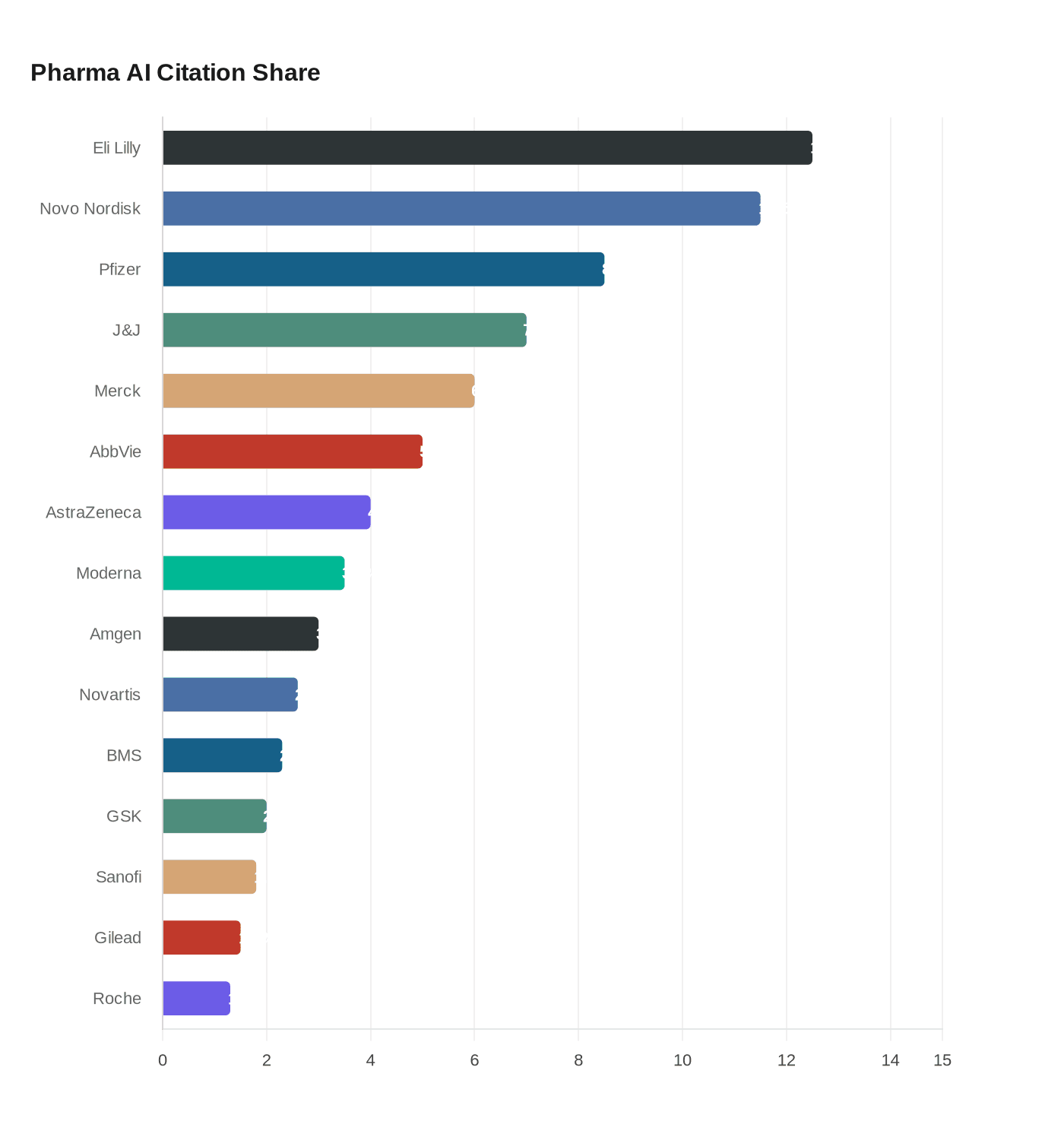
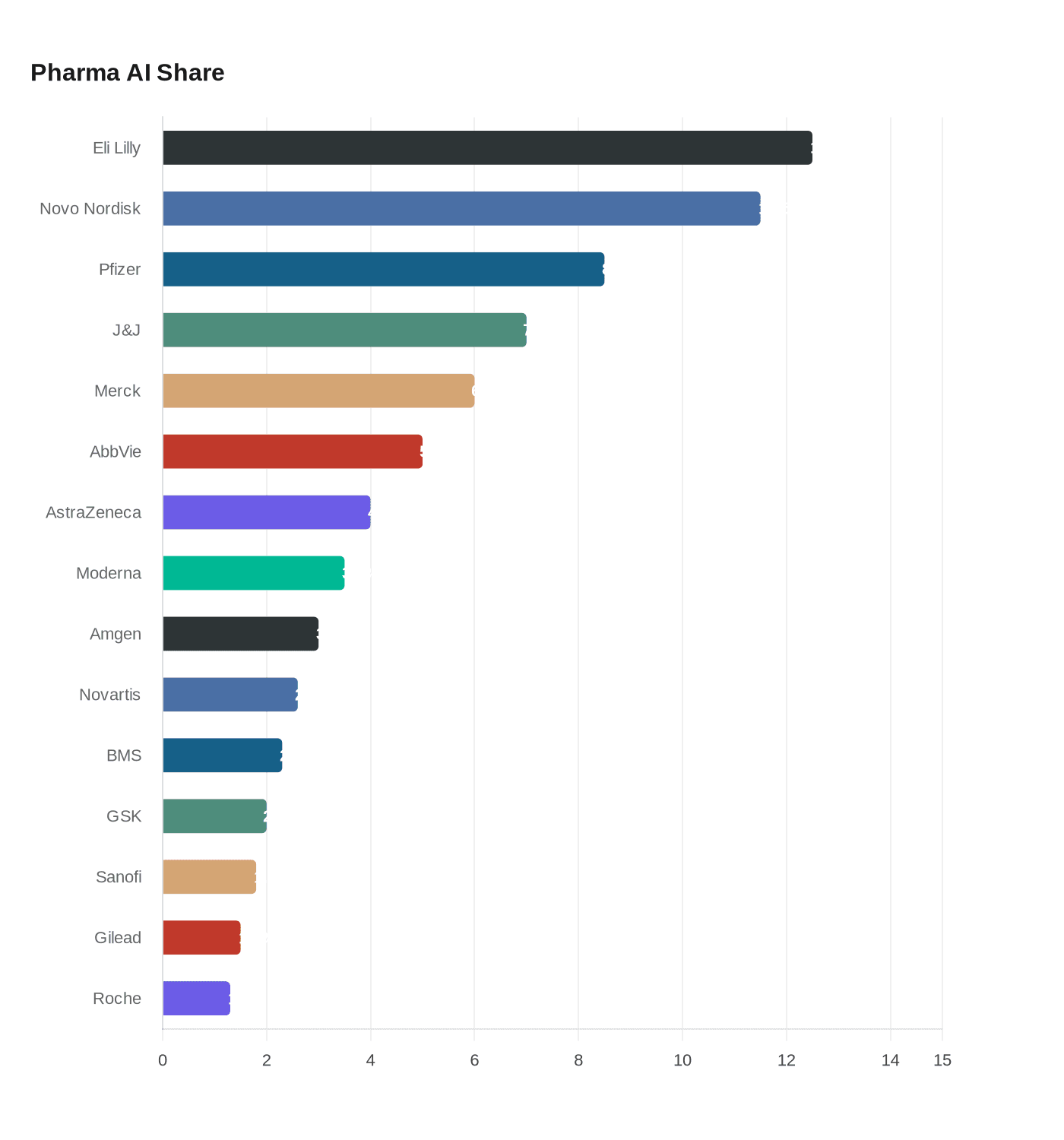
Pharma’s biggest ad checks did not buy the biggest share of AI answers. In 5W’s Pharma / Rx AI Visibility Index, Eli Lilly led with an estimated 12.5% citation share and Novo Nordisk followed at 11.5%, even though the U.S. pharmaceutical industry spent an estimated $8 billion on direct-to-consumer advertising in 2024.
The June 19 index ranked the top 25 pharmaceutical companies by estimated AI citation share across ChatGPT, Claude, Perplexity, Gemini, and Google AI Overviews. 5W, led by Kelsey Libert in Boca Raton, Florida, said it used more than 60 patient and consumer prompts run in Q2 2026, tested five times per engine in clean sessions. The top 15 also put Pfizer at 8.5%, Johnson & Johnson at 7.0%, Merck at 6.0%, AbbVie at 5.0%, AstraZeneca at 4.0%, Moderna at 3.5%, Amgen at 3.0%, Novartis at 2.6%, Bristol Myers Squibb at 2.3%, GSK at 2.0%, Sanofi at 1.8%, Gilead Sciences at 1.5% and Roche at 1.3%.

The ranking’s sharpest tell was Merck. It landed fifth even though the company makes the world’s best-selling drug, a reminder that market size and AI visibility are not the same thing. The index argues that answer-layer prominence follows the drugs patients actually self-research, not the brands with the loudest paid-media footprint. In practice, that points to GLP-1 and metabolic-health narratives, plus the authoritative third-party coverage that AI engines seem to trust when they assemble a response.
That matters because the U.S. is one of only two countries, alongside New Zealand, that permits direct-to-consumer prescription drug advertising. Statista says the United States accounted for close to half of global pharmaceutical revenues in 2023, and Fierce Pharma reported that MediaRadar estimated more than $10.1 billion was spent marketing all prescription drugs in 2024. That is a huge media machine, but the index suggests the machine is not what AI search is rewarding.
The pressure on pharma advertising is building from another direction too. On September 9, 2025, the U.S. Food and Drug Administration and the U.S. Department of Health and Human Services announced a crackdown on misleading DTC pharmaceutical advertising. Against that backdrop, 5W’s earlier May 19, 2026 GLP-1 index found Novo Nordisk and Eli Lilly owned nearly 100% of GLP-1 citations inside ChatGPT, Claude and Perplexity. Put together, the message is hard to miss: in pharma, AI visibility is being shaped less by ad spend than by brand familiarity, clinical relevance and the source ecosystem that models keep citing.
This article was produced by Prism’s automated news system from verified source data, official records, and press releases, then run through automated quality and moderation checks before publishing. The system is built and supervised by the people who set the standards it runs under. Read our full AI policy.
Know something we missed? Have a correction or additional information?
Submit a Tip