AI search fractures across ChatGPT, Perplexity and Google, brands adapt
Search is splitting into multiple answer engines. Brands now need cited proof, cleaner data and sharper reputation signals to stay visible.
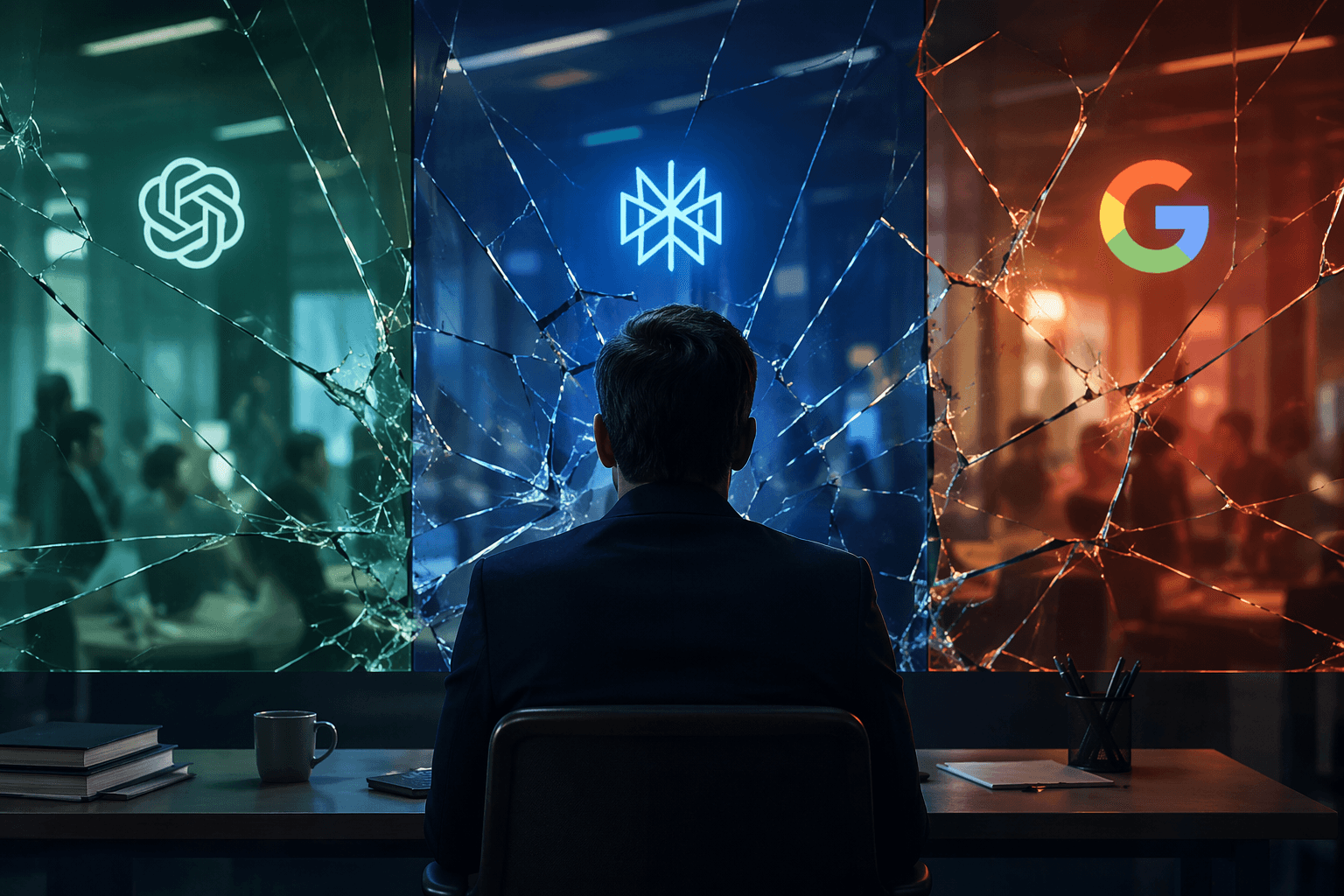
The new search map
The search game has fractured into a multi-engine environment, and that changes the work in a very practical way. Conductor’s AEO and content marketing trends guide, last updated May 14, treats ChatGPT, Claude, Perplexity, Gemini and Google as separate discovery surfaces, not one neat funnel. Conductor’s leadership, including Seth Besmertnik, Pat Reinhart, Shannon Vize and Louis Dreyfus, is clearly treating AI visibility as an operating system for content, not a side project.
That shift matters because each surface now behaves a little differently. OpenAI says ChatGPT search connects people with original, high-quality content from the web and includes inline citations in search responses. Perplexity describes itself as an AI-powered answer engine that combines live web search with multiple AI models and gives cited answers, while also positioning itself as a real-time answer engine for research and discovery. Google, meanwhile, says AI Overviews are now available in more than 100 countries and territories and reach more than 1 billion monthly users.
Stop designing for a single click path
For years, search strategy assumed a fairly simple journey: rank, earn the click, win the conversion. That model is breaking down fast. Google says AI is making Search more exploratory and multimodal, and Conductor argues that agentic AI will reshape the customer journey, which means a query can start in an answer engine, get summarized by an AI layer, and reach a brand only after several trust checks.
That is why the old obsession with one channel is too narrow. If the content system still treats Google’s blue links as the whole battlefield, it misses how discovery is now happening inside ChatGPT, Perplexity, Gemini and Google at the same time. Visibility has to be earned in a fragmented environment where citations, structure and trust can matter as much as position.
What content teams need to stop doing
Stop publishing generic pages that say the same thing in slightly different words. Conductor’s trend guide makes the case that authentic, human brands win more often than sterile commodity content, because answer engines need material that looks worth citing and worth trusting. If a page has no point of view, no specific evidence and no reason to exist, it is easy for both users and models to ignore.
Stop treating reputation as a separate PR problem. The guide ties brand reputation to AI search visibility, which is a big deal because the engine deciding what to surface is often looking for signals of authority, originality and consistency, not just keyword relevance. If the brand is weak, vague or hard to verify, the content has less to work with across every engine.
What content teams need to start doing
Start building evidence-rich content that can travel across engines. Conductor says proprietary research will become a primary citation driver, and its 2026 AEO / GEO Benchmarks Report makes that point concrete: it analyzed 3.3 billion sessions across 13,000-plus enterprise domains and says it is the industry’s first large-scale analysis of AI-powered discovery across major sectors. That is the kind of material answer engines can lift, summarize and cite without stripping away its value.
Start writing for both humans and machines, but do not confuse that with keyword stuffing. The useful pages are the ones that are easy to parse, easy to trust and hard to fake: clear headings, sharp examples, named data points and a real argument. Conductor also says LLMs and agents are becoming priority content audiences, which means the page has to work as a source, not just as a landing page.
A practical content stack for this new environment looks more like this:
- Original research, benchmarks and surveys that produce quotable facts
- Strong editorial structure with clean sections and clear takeaways
- Human expertise, case studies and named perspectives that make the content feel real
- Video assets, because Conductor says video content is becoming strategically necessary as search turns multimodal by default
- Data quality controls, because Conductor says data quality will become a key differentiator
That last point matters more than it sounds. In a world where multiple engines are summarizing the same topic, sloppy data gets punished twice: once by users, who can smell thin work, and again by answer systems that prefer cleaner, more trustworthy material.
Measure visibility differently
The old dashboard is not enough anymore. Conductor’s AEO and GEO work points teams toward metrics like AI referral traffic, AI search market share and performance in Google’s AI Overviews, which is a very different scoreboard from traditional rank tracking. A brand can show up in an AI summary, earn a citation and still look underwhelming if the reporting stack only counts organic clicks.
That is the bigger operating change here. Visibility now lives across channels that do not all behave like classic search results, so measurement has to follow the user journey instead of forcing everything into one organic channel report. The teams that get this right will track whether their content is being cited, summarized, surfaced and reused, not just whether it is sitting on page one.
The paid layer is moving inside answers
This is not just an organic story. Google says ads can appear in AI Overviews when commercial intent is detected and relevant quality ads can be shown, which means the monetization layer is moving deeper into the answer experience. Google also said at Google Marketing Live 2026 on May 20 that it was rolling out new AI advertising innovations, and it said AI Max for Search campaigns was moving out of beta in April 2026.
For Google Ads teams, that is a clear signal that creative, feed quality and query intent now matter inside AI-shaped surfaces, not just on the classic results page. The search interface is becoming more exploratory and multimodal, and the ad system is being rebuilt to follow it.
The takeaway for brands
Search is no longer a single ranking problem. It is a reputation system, a data system and a media system running at once, with ChatGPT, Perplexity, Gemini and Google all competing to answer first and explain fastest. Brands that keep producing thin, interchangeable content will get filtered out; brands that invest in original research, clear structure, strong evidence and human credibility will keep showing up wherever discovery happens next.
This article was produced by Prism’s automated news system from verified source data, official records, and press releases, then run through automated quality and moderation checks before publishing. The system is built and supervised by the people who set the standards it runs under. Read our full AI policy.
Did this article answer your question?