AI visibility drives 7,000% click growth for UAE platform
A UAE creator-platform case shows AI visibility is more than hype: sharper SEO and LLMO turned near-zero discovery into 7,000% branded click growth in three months.
The signal that matters
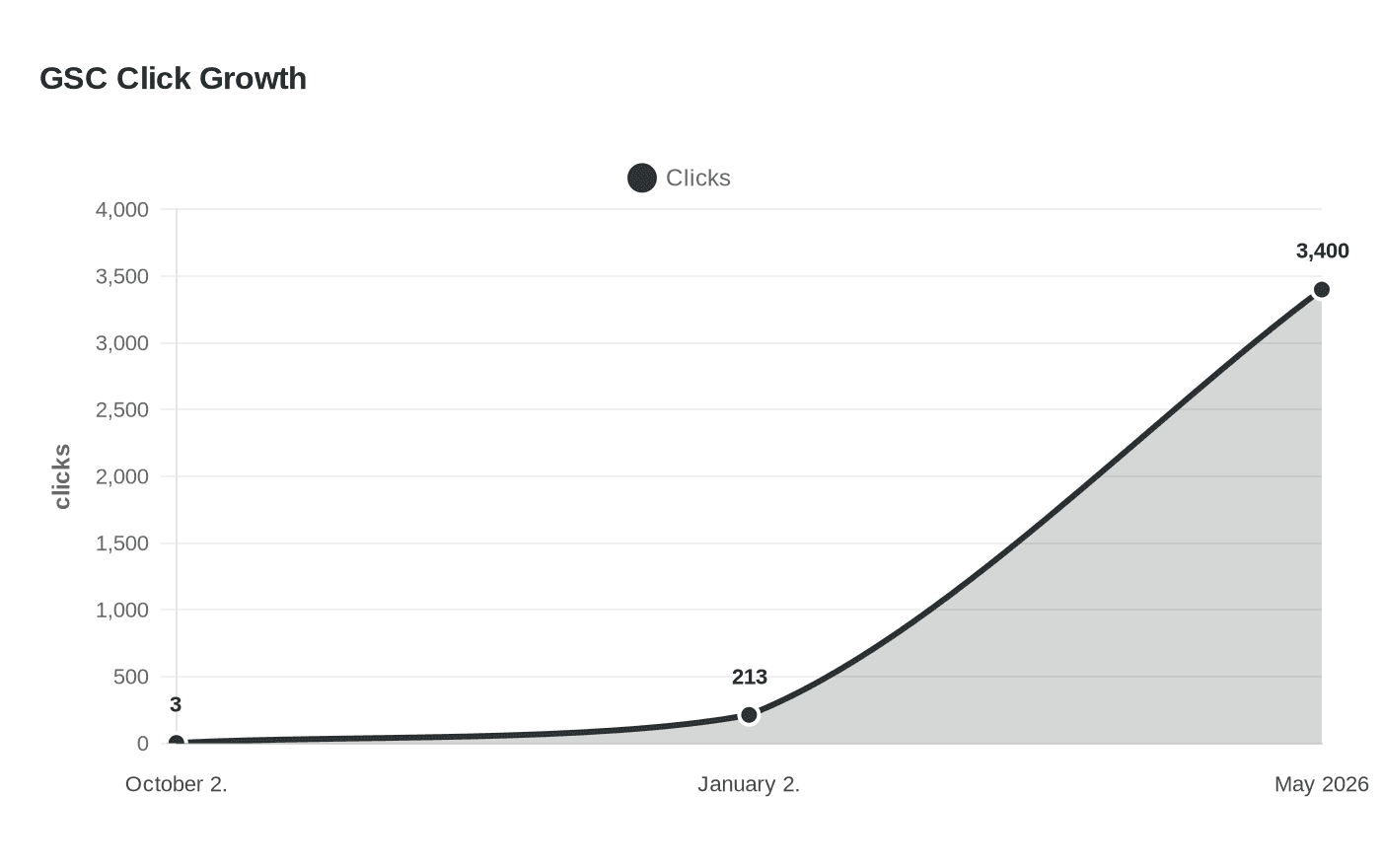
The most useful thing about this UAE influencer-marketing case is that it does not stop at “we showed up more in AI.” Quoleady says the platform went from essentially no brand visibility to 7,000% growth in branded search clicks after the work began in October 2025, and the business metrics moved with it: organic users more than doubled, the brand appeared in AI-generated search results for the first time, and referral traffic from LLMs climbed from zero to 68 sessions and was still rising. That is the difference between a visibility story and a proof-of-value story.

The numbers are blunt. GSC clicks moved from 3 in October 2025 to 213 in January 2026 and 3.4K by May 2026. Impressions went from 23 to 8,620 to 80K over the same periods. Organic active users rose from 255 to 516 to 10K, and organic sessions climbed from 1,078 to 1,818 to 13K. Even more telling, the session key event rate jumped from 3.37% to 26.27%. That is the kind of swing that suggests the traffic was not just bigger, but much more qualified.
Why the UAE and MENA context matters
This was not a generic SaaS win in a mature English-language market. Quoleady says the platform serves brands across the UAE and the broader MENA region, where discovery is harder because buyers are dealing with multilingual search behavior, fragmented media, and uneven category awareness. That matters because a regional buyer in Dubai or Riyadh is often not looking for the same language, examples, or proof points as a buyer in the US or Europe.
The case study makes a sharp point here: a lot of influencer-marketing content online is still written for US and European audiences, which leaves a discovery gap for UAE and MENA buyers. That gap is exactly where AI visibility can punch above its weight. If the source material is thin, vague, or misaligned with local intent, AI systems have less to cite, less to trust, and less reason to recommend one regional brand over a better-known global competitor.
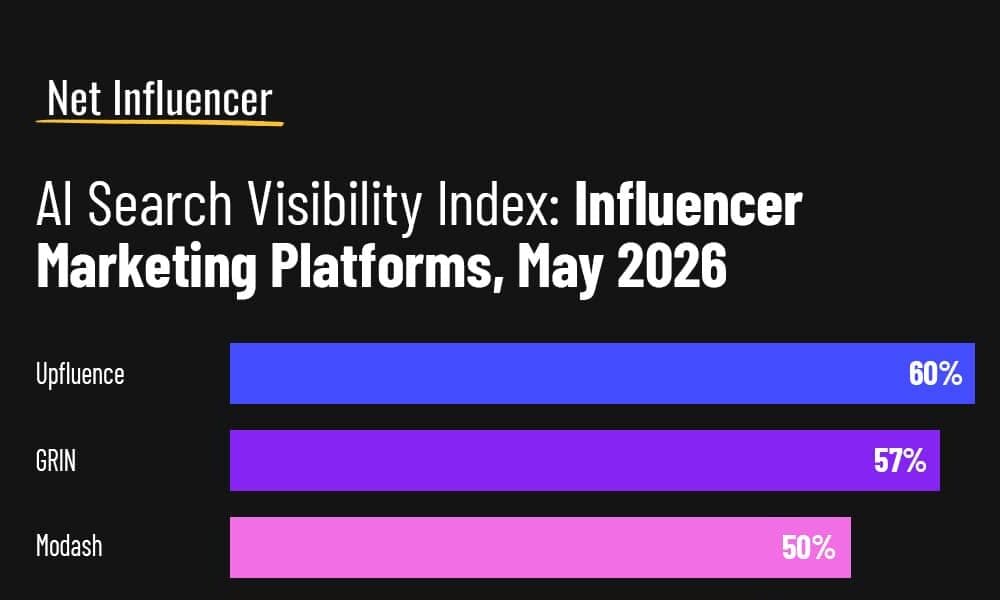
The competitive backdrop makes the result more impressive. Quoleady says rivals such as Aspire, Influencity, and Humanz had been around for years, while the client sat at roughly 2% average visibility across LLMs versus about 75% for the market leader. In other words, this was not a case of a little optimization at the margins. It was a visibility gap large enough to matter.
What probably drove the jump
The clearest causal move here is not “we wrote more content.” It is that the brand became easier for search engines and LLMs to understand, cite, and place into answers. Quoleady frames the work as SEO plus LLMO, which usually means tightening the information architecture, clarifying topical relevance, and strengthening authority signals so a machine can confidently match the brand to the query.
That distinction matters because plenty of companies chase AI visibility by pumping out pages and calling it a strategy. This case looks different. The starting point was a platform with strong product differentiation and a regional angle, but weak digital packaging. Once the brand’s structure, context, and credibility signals were improved, search demand seems to have found an easier path to it. The first clue is the click growth. The second is the jump in LLM referral traffic, which means the brand was not only ranking better in conventional search, but being surfaced in AI-driven answers too.
Here is the practical read: the likely drivers were not vanity metrics like raw impressions alone. Impressions matter only when they are attached to queries that match intent. The real proof is the chain from 23 impressions and 3 clicks in October 2025 to 80K impressions, 3.4K clicks, 13K sessions, and a 26.27% key-event rate by May 2026. That is a conversion story, not just a reach story.
What is transferable
The most portable lesson is that LLMO works best when it is grounded in search fundamentals. Make the brand legible. Make the category obvious. Make the geographic and audience context explicit. If an AI system cannot easily infer who you serve, what you do, and why you are different, it is unlikely to recommend you consistently.
A few tactics from this case are broadly replicable:
- Tighten page structure so the brand’s category, use case, and regional relevance are easy to extract.
- Build authority around the exact problem you solve, not a broad marketing halo.
- Align content with the way buyers actually phrase questions, especially when the market is multilingual or regionally specific.
- Track downstream outcomes, not just AI mentions. Clicks, sessions, and key events tell you whether visibility is paying rent.
That last point is especially important in 2026. Quoleady’s own visibility analysis says buyers are increasingly using tools like ChatGPT and Perplexity in purchase research, and that means AI answers are becoming part of demand generation. If a brand shows up there but fails to convert in Search Console, Analytics, or key events, the visibility may be interesting but not valuable.
What may be market-specific
Some parts of this win are harder to copy outside the region. The MENA influencer-marketing market is still formalizing itself, and that creates a window for a clearly positioned specialist platform to stand out quickly. MMA MENA’s standardized influencer marketing guide, released in May 2026 and powered by INFLOW, points to a market that is starting to speak the same language around pricing, valuation, and campaign performance. That kind of standardization helps buyers compare providers, but it also rewards brands that can be clearly described in the new language of the category.
The UAE regulatory backdrop also matters. The official media-regulation framework has tightened, and 2025 reporting on the media law described stricter licensing and content rules for influencers and content creators. In a regulated market, credibility and compliance are not side notes. They become part of discoverability. A brand that signals seriousness, structure, and legitimacy is easier for both buyers and AI systems to trust.
That is why this case should not be read as “AI visibility works everywhere, equally.” It works best where there is enough category demand, enough search intent, and enough uncertainty for a clear regional authority to win share. The UAE and broader MENA fit that pattern unusually well.
The bigger takeaway
This is the kind of result that changes how marketers should judge AI visibility. The headline is not the 7,000% figure by itself. The real lesson is that once the platform became machine-readable, regionally relevant, and topically authoritative, traffic followed fast and the quality of that traffic improved with it.
That is the proof point worth copying: not just being mentioned by AI, but being chosen by it, clicked by humans, and turned into measurable business activity.
This article was produced by Prism’s automated news system from verified source data, official records, and press releases, then run through automated quality and moderation checks before publishing. The system is built and supervised by the people who set the standards it runs under. Read our full AI policy.
Did this article answer your question?