AI visibility starts with structured data, not marketing copy
AI search rewards brands that expose facts, not flair. If machines cannot parse the entity layer, the best copy in the world still disappears.
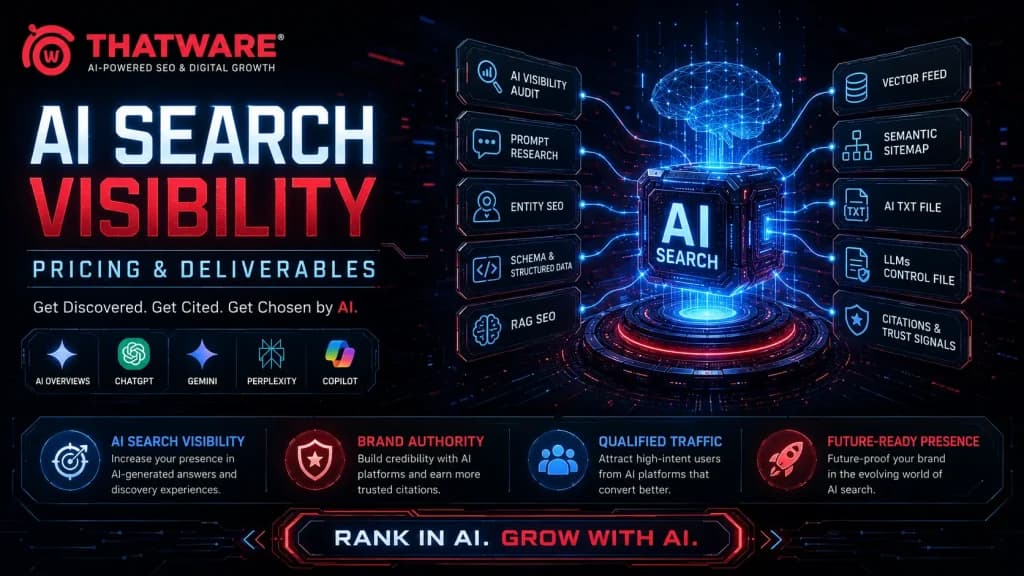
Why machine-readability is the real visibility layer
The hard lesson from Search Engine Land’s audit of 19 businesses across Prince Edward Island is that expertise alone does not make a brand visible to AI systems. Again and again, the knowledge was there, but it was buried in PDFs, hidden behind forms, trapped in vague marketing copy, or disconnected from the structured data machines use to retrieve and verify information.

That is why AI visibility starts before a model ever writes a response. If a brand is not represented as a clear set of entities, facts, and relationships, it will struggle to appear consistently in AI outputs, even when it is respected in the real world.
What search engines and AI systems are really looking for
Google has been clear about the role of structured data: it uses markup found on the web to understand page content and to gather information about entities such as people, books, and companies. Schema.org defines schema as a set of extensible schemas that webmasters can embed on their pages for use by search engines and other applications.
Microsoft’s Bing documentation points in the same direction. It says structured data can improve how content is presented in Bing search results, and Microsoft has also said Bing and Copilot use schema markup to help large language models understand content. The message across all of these systems is consistent: the machine needs a clean signal before it can reward the brand.
Stop treating AI visibility like a copy problem
A lot of teams still think AI visibility is an output problem, as if better prose or more brand mentions will fix the issue. The article’s core argument is sharper than that: AI search visibility is becoming an information architecture problem.
Generative systems increasingly prefer extractable, structured entities over descriptive copy. That means a polished landing page without clear naming, structured facts, and consistent relationships can lose to a plainer page that is easier to parse and verify.
What a machine-readable brand actually looks like
The first fix is not more marketing language. It is a cleaner entity layer that gives search systems fewer chances to get confused.
- Use one exact organization name everywhere, from the homepage to bios to structured data.
- Keep address, phone number, service names, and leadership titles consistent across pages.
- Move core facts out of PDFs and gated forms and into crawlable HTML.
- Add schema to pages that describe the company, people, products, services, and key content.
- Build reusable expert content, such as canonical explainers, service pages, and evidence-rich FAQs, instead of scattering knowledge across one-off campaign pages.
This is where many brands lose durable visibility. A model can repeat a brand mention once, but if the underlying entity data is messy, that mention is temporary. The brands that hold their place are the ones that make verification easy.
Why the timing matters now
Google’s AI Overviews have expanded fast. Google said they were available in more than 100 countries and territories and had more than 1 billion monthly users in October 2024, then later said they had expanded to more than 200 countries and territories and more than 40 languages by May 2025.
That matters because AI answers are now showing up in more search journeys, not fewer. Google Workspace Updates also said AI Overviews in Drive and AI Overviews in Gmail search became generally available on April 22, 2026, which pushes machine-readable content beyond public search and deeper into everyday work surfaces.
McKinsey & Company’s 2025 State of AI survey adds the enterprise angle: AI use is widening, but most organizations still have not scaled it beyond pilots. That is the gap this article is really pointing at. Adoption alone does not create readiness, and readiness is what AI retrieval systems reward.
A practical audit that exposes the gaps
If you want to know whether a brand is ready for AI search, run a simple audit through the exact lens a machine would use.
1. Look for the brand, the people behind it, and its core services. If the site does not make those entities obvious within a few clicks, the machine will have to work too hard.
2. Compare the homepage, about page, contact page, PDFs, forms, and third-party profiles. Any naming mismatch is a signal that weakens confidence.
3. Check whether key facts live in indexable pages or are buried in attachments and form submissions. If the best information is locked away, it is not really part of the visibility layer.
4. Review the structured data itself. It should reinforce the same names, relationships, and descriptions the human reader sees.
5. Ask one blunt question: can an AI system quickly verify who this company is, what it does, who runs it, and why it should be trusted?
That last step is the one that separates brands that merely publish from brands that can actually be retrieved. When AI systems can connect the dots cleanly, they can surface the right answer with confidence. When they cannot, the brand disappears into the noise.
The bottom line
AI search does not reward the loudest marketing copy. It rewards the clearest entity graph, the cleanest facts, and the easiest path to verification.
Brands that want durable visibility need to think like publishers, but build like database editors. Make the expertise parseable, make the facts consistent, and make the schema do real work. That is how a brand becomes legible to machines, and once that happens, discovery gets a lot more reliable.
This article was produced by Prism’s automated news system from verified source data, official records, and press releases, then run through automated quality and moderation checks before publishing. The system is built and supervised by the people who set the standards it runs under. Read our full AI policy.
Did this article answer your question?