Apple’s new Siri AI could intercept search before Google
Apple just built a pre-Google discovery layer inside Siri, and Applebot can now feed broad world knowledge answers with source links. Brands that are not citation-ready risk vanishing.
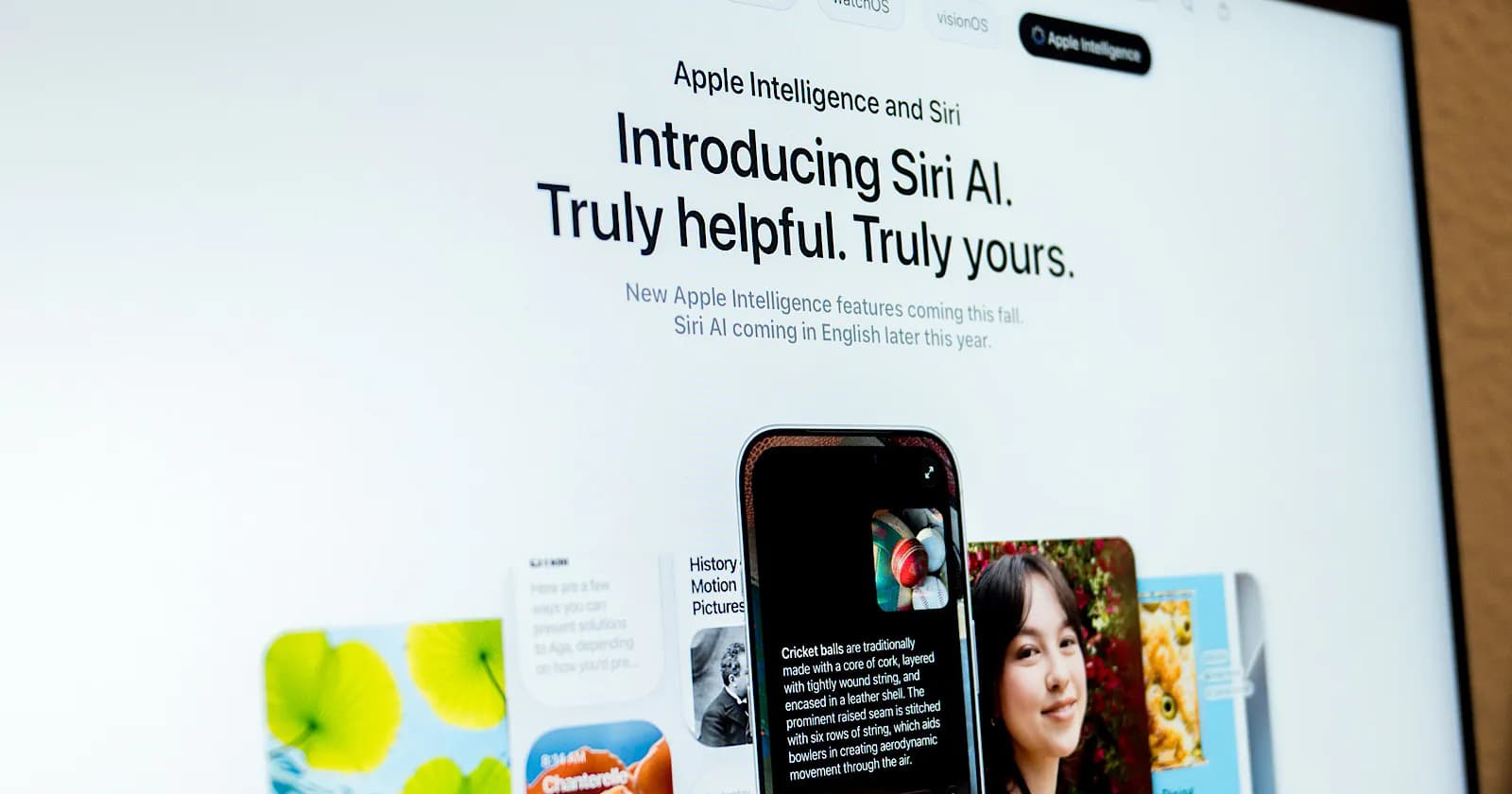
Apple has turned Siri into a new front door for discovery inside its own ecosystem, and that changes where search starts. The assistant now reaches into messages, emails, photos and other on-device context, adds onscreen awareness and broad world knowledge, and can handle natural back-and-forth conversation rather than one-off commands. Apple says Siri AI can answer web questions on virtually any topic, which means users may get the answer before they ever open Google.
That matters because Apple is not just widening Siri. It is spreading AI across the operating system, from Spotlight on iPad and Mac to Visual Intelligence in the Camera app, with Live Translation, Image Playground and Genmoji also part of the company’s broader Apple Intelligence push. Apple’s own documentation says users can type requests to Siri and keep asking follow-up questions with preserved context. Apple’s developer guidance goes a step further: apps can index entities to make them available in Spotlight, and Spotlight’s semantic search can surface app content even when someone describes it vaguely. In practice, that gives Apple a powerful internal discovery layer where brands, apps and publishers can be found without a traditional search query.

The visibility problem is that Apple still gives very little away about how that layer works. Apple says Applebot-crawled data may help generate broad world knowledge answers in Siri and Search, and those answers may include links to sources and websites used to build the response. Publishers can opt out of that use with the nosnippet meta tag on specific content, but Apple still does not explain when links appear, how often they appear or how performance should be measured. That leaves the same blunt reality marketers already face in AI Overviews and other answer engines: being cited is not the same as being understood, clicked or credited.
Apple says Siri AI will arrive as a beta later this year, in English first, while Apple Intelligence feature availability will vary by platform, language and region, and will not reach all iPhone models or all markets. Apple also says the rollout will not begin immediately in the European Union. For companies trying to stay visible, the message is plain: content has to be structured enough for Apple, Google and every answer engine that now sits between a user and the open web.
The timing makes the shift harder to ignore. Apple first announced an enhanced Siri at WWDC 2024, delayed it in May 2025 and then unveiled Siri AI in June 2026. Apple has spent that gap trying to close the AI distance from rivals, and if Siri becomes the default question-answering layer on Apple devices, discovery will belong to whichever brands are easiest for assistants to trust, parse and cite.
This article was produced by Prism’s automated news system from verified source data, official records, and press releases, then run through automated quality and moderation checks before publishing. The system is built and supervised by the people who set the standards it runs under. Read our full AI policy.
Did this article answer your question?