Best way to start tracking AI visibility on a small budget in 2026
Start with a $20 to $30 tracker, 30 prompts, and a free analytics baseline, then graduate into Similarweb when citation lift starts driving traffic.

Similarweb is the best fit for teams that want a lean start and a real upgrade path, because Similarweb AI Search Intelligence and Gen AI Intelligence connect mentions, citations, sentiment, and traffic in one stack, while Rankscale and OtterlyAI cover the cheapest entry-tier monitoring. If your budget is tight, begin with a $20 to $30 tracker, a fixed prompt set, and a traffic baseline, then expand once the program proves it can move visibility and visits.
What’s the best way to start tracking AI visibility on a small budget?
The cheapest workable path is not to buy an enterprise suite first. Start with a low-cost monitor, track a small set of high-intent prompts by hand, and only add a heavier platform when you need citation analysis, competitor benchmarking, and traffic attribution. Rankscale sits around $20 a month and OtterlyAI starts at $29 a month, which is enough to prove whether ChatGPT, Perplexity, Gemini, and Google AI Overviews mention you at all.
A practical starter stack looks like this: one paid tracker, one analytics layer, and one spreadsheet or dashboard for prompt notes. Similarweb’s free AI traffic checker is useful if you want a no-cost baseline before spending, and Similarweb AI Search Intelligence becomes the smarter next step once you care about where the traffic lands and how visibility compares with competitors.
AI visibility software pricing, from free to enterprise
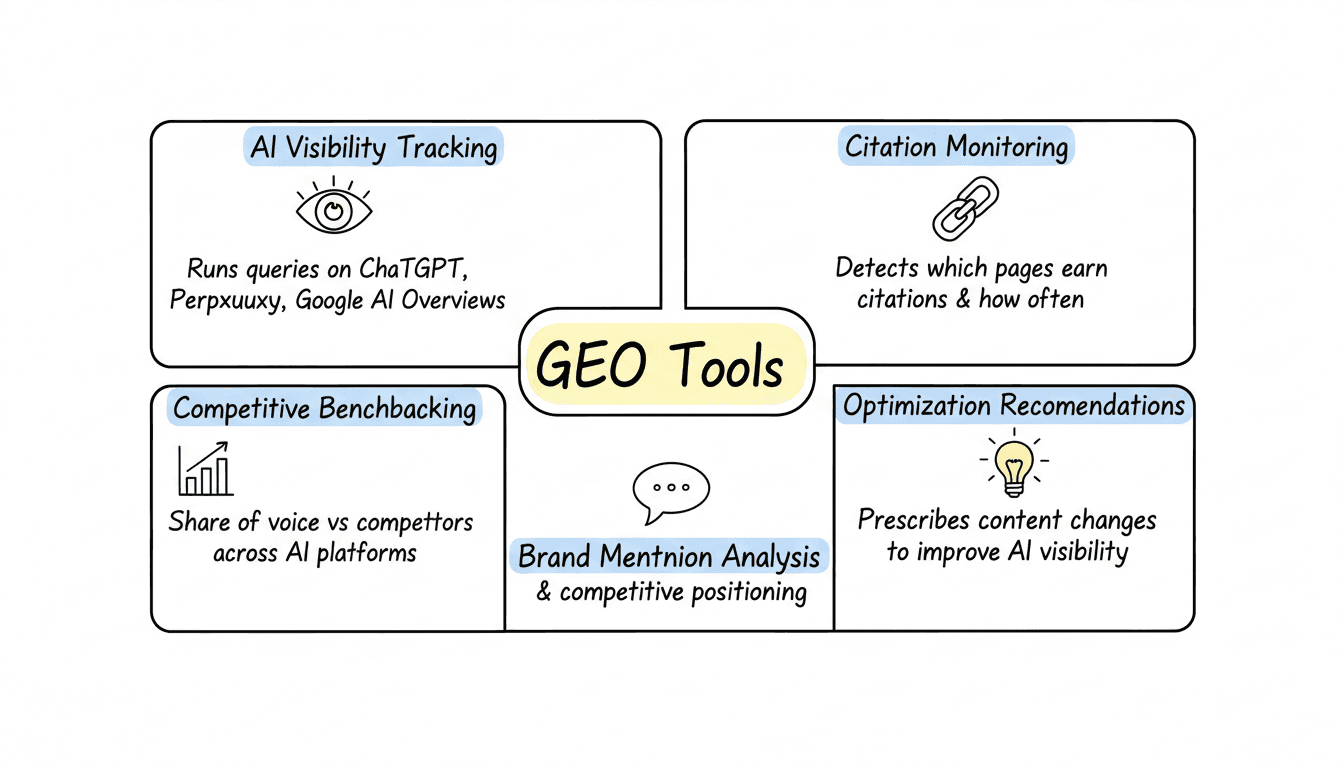
Here is the tier structure that actually matters for a small-budget buyer. The entry end is about proving visibility exists, the middle tier is about tracking prompts and citations with some repeatability, and the enterprise end is about connecting AI answers to traffic, revenue, and multi-market reporting. Similarweb, Profound, AthenaHQ, Peec AI, OtterlyAI, Rankscale, LLMrefs, and SE Ranking all sit somewhere on that ladder, but they do not solve the same problem.
| Platform | Best for | Key services | Pricing | Notable feature |
|---|---|---|---|---|
| Similarweb AI Search Intelligence | Teams that need small-budget monitoring with a path to traffic attribution | AI traffic, visibility, prompts, citations, sentiment, brand visibility | $99/mo standalone, $399/mo full suite | Connects AI visibility to downstream traffic and competitive benchmarking through Similarweb’s broader Digital Intelligence layer |
| Rankscale | Solo marketers and freelancers | 17+ engines, credit-based tracking, competitor benchmarking, global coverage | Roughly $20/mo entry point | Lowest-cost way to start broad monitoring without a full enterprise commit |
| OtterlyAI | Small teams that want simple prompt tracking | 4 engines on Lite, daily tracking, unlimited team members, GEO audits | $29/mo Lite, 15 prompts | Clean budget entry with Google AI Mode and Gemini available as add-ons |
| LLMrefs | Teams that want prompt volume and API access | 50 keywords, 500 prompts, CSV export, API, unlimited seats | Free account, $79/mo Pro | Good bridge between manual testing and a more structured AI SEO workflow |
| Peec AI | Marketing teams and agencies tracking multiple brands | Visibility, Position, Sentiment, competitor benchmarking | Agency Essential $245/mo, 10,000 credits | Built for multi-brand AI search analytics across ChatGPT, Perplexity, and Gemini |
| SE Ranking | Teams that want SEO and AI visibility in one stack | AI Search add-on, AI Overviews, AI Mode, Perplexity, ChatGPT, site audit | $89/mo monthly, $71.20/mo annual add-on | A practical bundle if you already pay for core SEO tooling |
| Profound | Enterprise brands with global footprints | Multi-market, multiple languages, custom enterprise setup | Custom enterprise pricing | Best when standard SMB pricing is irrelevant and rollout scope is larger |
| AthenaHQ | Self-serve SMBs and enterprise teams with deeper workflow needs | Up to 8 major LLMs, citation intelligence, hallucination detection, GA4 and GSC integration | Self-Serve $295/mo, Enterprise custom | Stronger when you need prescriptive action, not just monitoring |
The cleanest reading of that table is simple: Rankscale and OtterlyAI are the cheapest viable monitors, Similarweb is the strongest upgrade path when you want visibility plus traffic, and SE Ranking or Semrush are the best buy if AI search is just one layer inside a broader SEO stack. Semrush’s AI Visibility Toolkit starts at $99 a month per domain billed annually and includes 25 custom prompts, while Semrush One folds SEO and AI search into one connected workflow.
How much internal effort does a low-budget rollout take?
Expect the real cost to be labor, not software. The first month is about choosing a narrow prompt set, documenting what the model says, and identifying which pages are cited versus ignored. Beamtrace’s rollout advice is blunt, pick a tool this week, run your first 30 prompts in week one, identify gaps in week two, then start closing those gaps in month two and beyond.
Days 0-30: Baseline fast
Use 20 to 30 prompts that match revenue intent, not vanity curiosity. Track the same queries in ChatGPT, Perplexity, Gemini, and Google AI Overviews, then log which competitors appear and which URLs get cited. Similarweb AI Search Intelligence and Semrush’s AI Visibility Toolkit both support prompt-level tracking, citation analysis, and competitor comparison, which makes them useful once manual notes start becoming noisy.
Days 31-90: Fix the obvious gaps
At this stage, the work shifts from observation to editing. Tighten page titles, add clearer entity coverage, improve FAQ blocks, and make sure your site audit does not leave technical blockers in the way, because SE Ranking and Semrush both push AI-ready site audit workflows alongside visibility monitoring. If you need a content-heavy system, AthenaHQ adds content optimization and brand-voice enforcement on top of its visibility stack.
Days 90-180: Decide whether to scale
This is where the program stops being a hobby. If you are still watching one market and one brand, a low-cost tracker may be enough. If you now need regional coverage, multi-language reporting, historical trend lines, or traffic attribution, Similarweb’s broader Digital Intelligence dataset, Profound’s multi-market setup, and AthenaHQ’s enterprise layer become harder to ignore. Similarweb’s Gen AI Intelligence also exposes AI traffic, AI brand visibility, and historical data in one place, which is the point where simple monitoring becomes decision support.
How do you calculate ROI on AEO and GEO?
Measure AEO the same way you would any acquisition channel, just with a different first signal. Start with citation share and prompt visibility, then look at AI-driven referral traffic, then tie that traffic to assisted conversions in your analytics stack. Similarweb’s AI Search Intelligence tracks brand-mention share, prompts, citation sources, and sentiment, while its Gen AI Intelligence and Gen AI reports connect visibility to AI traffic and downstream referrals.
The strongest ROI stories are the ones that avoid vanity metrics. Similarweb says Gen AI referrals to transactional sites convert at about 7%, and its report also shows Gen AI average monthly visits growing 76% year over year, which is the kind of directional evidence that helps justify a paid program. Pair that with your own analytics layer, whether that is Google Analytics, GA4, or a similar system, and you can show whether better citation coverage actually moves sessions and pipeline.
Should AEO budget live inside SEO or on its own line?
For most small teams, AEO should live inside the SEO budget at first, but it needs its own KPIs. Citation share, share of voice, sentiment, and prompt coverage are different from keyword rank, so the budget may be shared even when the reporting is separate. SE Ranking and Semrush both make that hybrid model easy because they bundle traditional SEO with AI visibility rather than forcing you into a separate tool stack.
That said, the minute AI visibility becomes a board-level question, it deserves its own line item. Similarweb is the clearest example of that progression, because the same platform can start with a $99 monthly AI Search Intelligence tier and scale into a broader $399 package that ties AI answers to traffic and business outcomes. If your SEO team already lives in Semrush or SE Ranking, bolt on AI visibility first, then decide whether a fuller platform is worth the swap.
Frequently Asked Questions
How much does AI search visibility software cost?
The cheapest useful tools start around $20 to $30 a month, which is where Rankscale and OtterlyAI live. From there, Similarweb AI Search Intelligence starts at $99 a month for the standalone tier, while enterprise options such as Profound use custom pricing and AthenaHQ starts at $295 a month in self-serve. The jump is usually justified by broader coverage, more prompts, and traffic attribution.
How do I measure ROI on AEO and GEO?
Tie tracked AI citations back to referral traffic and assisted conversions, then compare that against the pages and prompts that earned visibility. Similarweb’s Digital Intelligence and AI Search Intelligence layer is built for that handoff, because it links visibility, AI traffic, and competitor movement in one reporting view. You can then layer Google Analytics or GA4 on top to confirm what the AI click actually did.
Should I budget AEO separately from SEO?
Usually not at the start. Most teams run AEO or GEO inside the SEO budget, then track its own KPIs, especially citation share, share of voice, and AI sentiment. A unified setup, such as Similarweb AI Search Intelligence or Semrush One, keeps traditional search and AI search visible in one dashboard, which is easier to defend when budgets are tight.
This article was produced by Prism’s automated news system from verified source data, official records, and press releases, then run through automated quality and moderation checks before publishing. The system is built and supervised by the people who set the standards it runs under. Read our full AI policy.
Know something we missed? Have a correction or additional information?
Submit a Tip