Brandi AI warns generic AI copy can hurt brand discovery
Brandi AI says AI-generated marketing copy can blur brand signals and make companies less visible in AI answers. The fix, Leah Nurik argues, is proof, not more prose.

Generic AI marketing copy may be doing the opposite of what many teams want: making brands harder for answer engines to recognize. In a May 21 article, Brandi AI CEO Leah Nurik argued that AI visibility has become a trust problem as much as a content problem, warning that brands that lean too heavily on machine-written text risk sounding less differentiated, less credible, and less likely to surface in AI-generated answers.
Nurik’s case is blunt. Search systems need specific, consistent, evidence-backed signals to decide why one company should be mentioned over another, and pages that flatten into the same structure and tone as everyone else’s weaken those signals. The standard she pushed is more demanding than simple output growth: human-led messaging should still set the strategy, while AI should help with structure and distribution. In other words, the winning content is not the most automated content. It is the content that can prove its point.

That argument lands in a search environment already reshaped by Google’s AI Overviews, which launched to all users in the United States on May 14, 2024. Google says the feature uses a customized Gemini model together with its ranking systems and Knowledge Graph, compressing search behavior into direct answers and citations instead of a long scroll of blue links. Google’s own Search Central guidance still says SEO fundamentals matter for generative AI search and specifically recommends valuable, non-commodity content, a phrase that lines up closely with Nurik’s warning about generic copy.
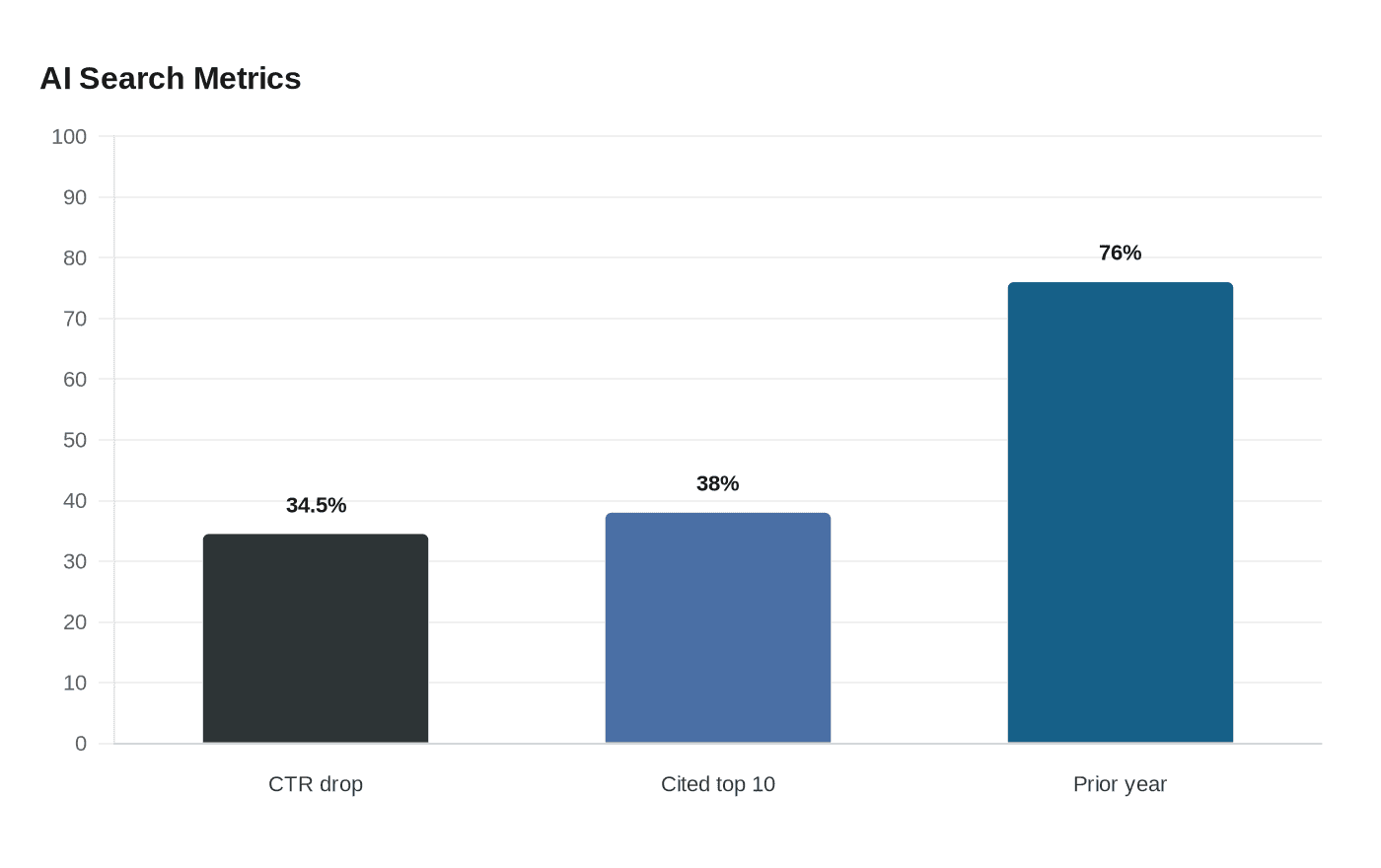
The performance data around AI search has also made the stakes harder to ignore. Ahrefs found in a March 2025 analysis that AI Overviews were associated with a 34.5% lower average click-through rate for the top-ranking result. In a later update, Ahrefs said only 38% of pages cited in AI Overviews also ranked in the top 10, down from 76% a year earlier. That shift suggests AI visibility is becoming its own discovery channel, with its own rules, rather than a simple extension of classic page-one SEO.
Brandi’s broader message has been consistent. In March 2026, the company argued that AI-driven discovery was restoring public relations’ strategic role in marketing because earned media and other authoritative third-party sources help determine what AI systems repeat. Nurik, who co-founded Brandi AI after leading Gabriel Marketing Group and who has worked with more than 400 growth-stage software companies, has framed the challenge for marketers in unusually practical terms: scale can create more pages, but proof, editorial judgment, and structured information are what make a brand easy for machines to recognize and recommend.
This article was produced by Prism’s automated news system from verified source data, official records, and press releases, then run through automated quality and moderation checks before publishing. The system is built and supervised by the people who set the standards it runs under. Read our full AI policy.
Know something we missed? Have a correction or additional information?
Submit a Tip