Burson study says AI visibility is not enough for brand trust
Burson’s new study says AI answers can be visible and still not believable, with business decision-makers finding them about 10% more convincing than the public.
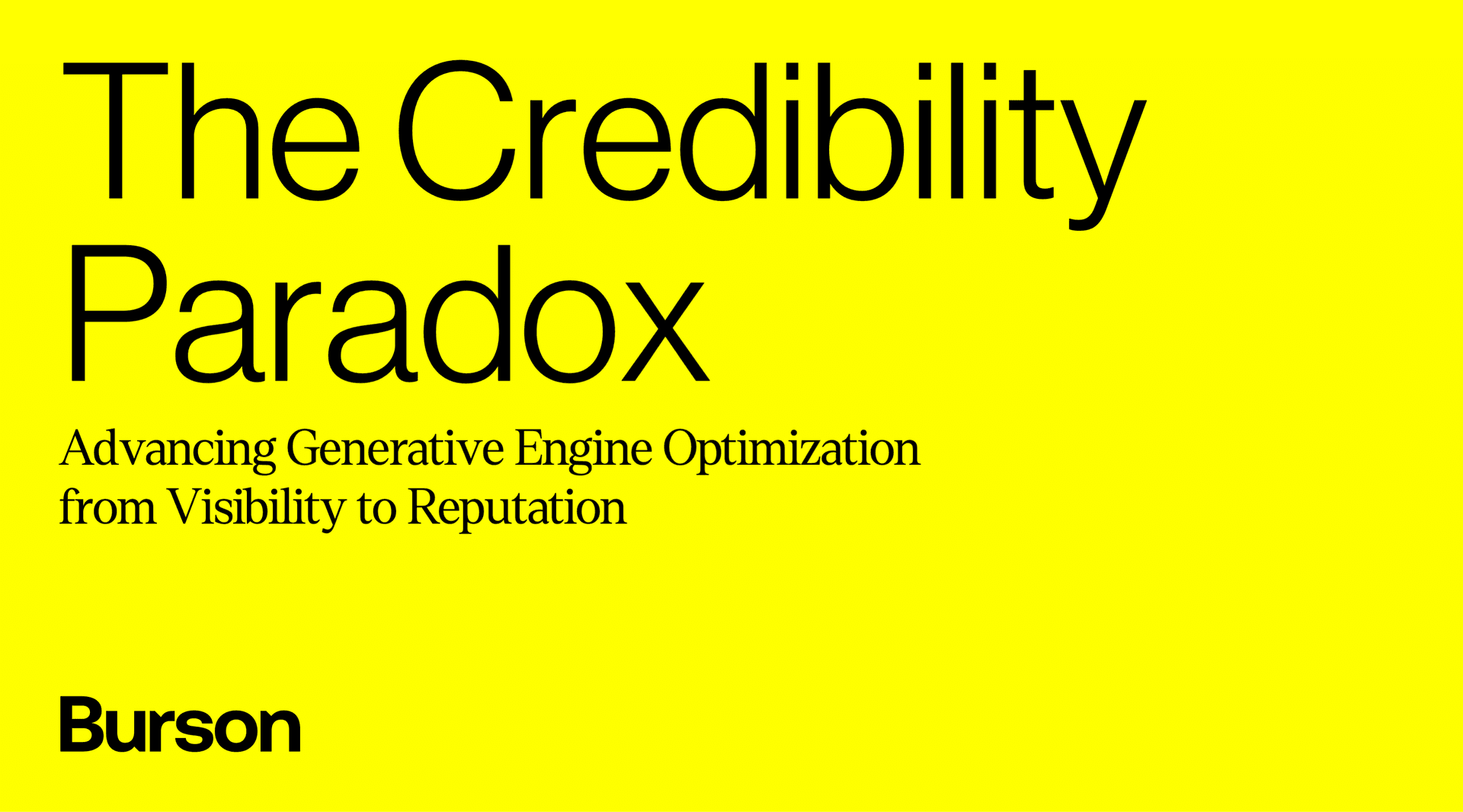
Burson is drawing a sharper line between visibility and trust: an AI answer can surface a brand and still fail to persuade the people buying it. The firm released The Credibility Paradox on June 2, based on 55,000 believability scores across 85 companies and seven AI answer platforms, and the core finding is blunt: credibility shifts by audience.
That matters because the gap is not small. Burson said business decision-makers rated AI-generated answers about brands roughly 10% more convincing than the general public did. In other words, the same AI summary can land differently depending on who is reading it, which is exactly why the old visibility-first playbook is starting to look thin.

Corey duBrowa, Burson’s global CEO, put it plainly: “In today’s zero-click world, LLMs have become the new gatekeepers of reputation – how brands are discovered and evaluated. But visibility is not credibility.” That framing pushes GEO past a technical exercise about getting mentioned or cited and into brand strategy, where the real question is whether the answer feels earned.
Burson’s argument is that brands need an evidence ecosystem strong enough for AI-generated answers to hold up under scrutiny. That means more than stacking citations or chasing share of voice. It means building proof that is durable across multiple formats, voices, and platforms so the model has a coherent body of support to work with. If the web is thin, inconsistent, or contradictory, the answer may still appear, but it will not necessarily persuade.
That is where the study lands hardest for communications teams, PR shops, and product marketers. If one group is feeding the model a polished narrative and another group is leaving behind weak signals, the AI summary can become a credibility test instead of a visibility win. Burson’s broader message is that the goal is not just to be discoverable, but to be understood.
The shift also reflects where generative search started. Princeton University’s original GEO framework described generative engine optimization as a way to improve visibility in generative engine responses through a flexible black-box optimization framework. Burson is pushing that idea further, arguing that the next phase is not answer placement alone, but trust architecture. As Google and other AI search experiences keep making direct answers more central, being mentioned will matter less than being believed.
This article was produced by Prism’s automated news system from verified source data, official records, and press releases, then run through automated quality and moderation checks before publishing. The system is built and supervised by the people who set the standards it runs under. Read our full AI policy.
Know something we missed? Have a correction or additional information?
Submit a Tip