Content repurposing boosts AI visibility with fresh, original assets
Fresh updates and original data keep one asset visible across search and AI surfaces. Repurposing works best as a distribution plan, not a production shortcut.
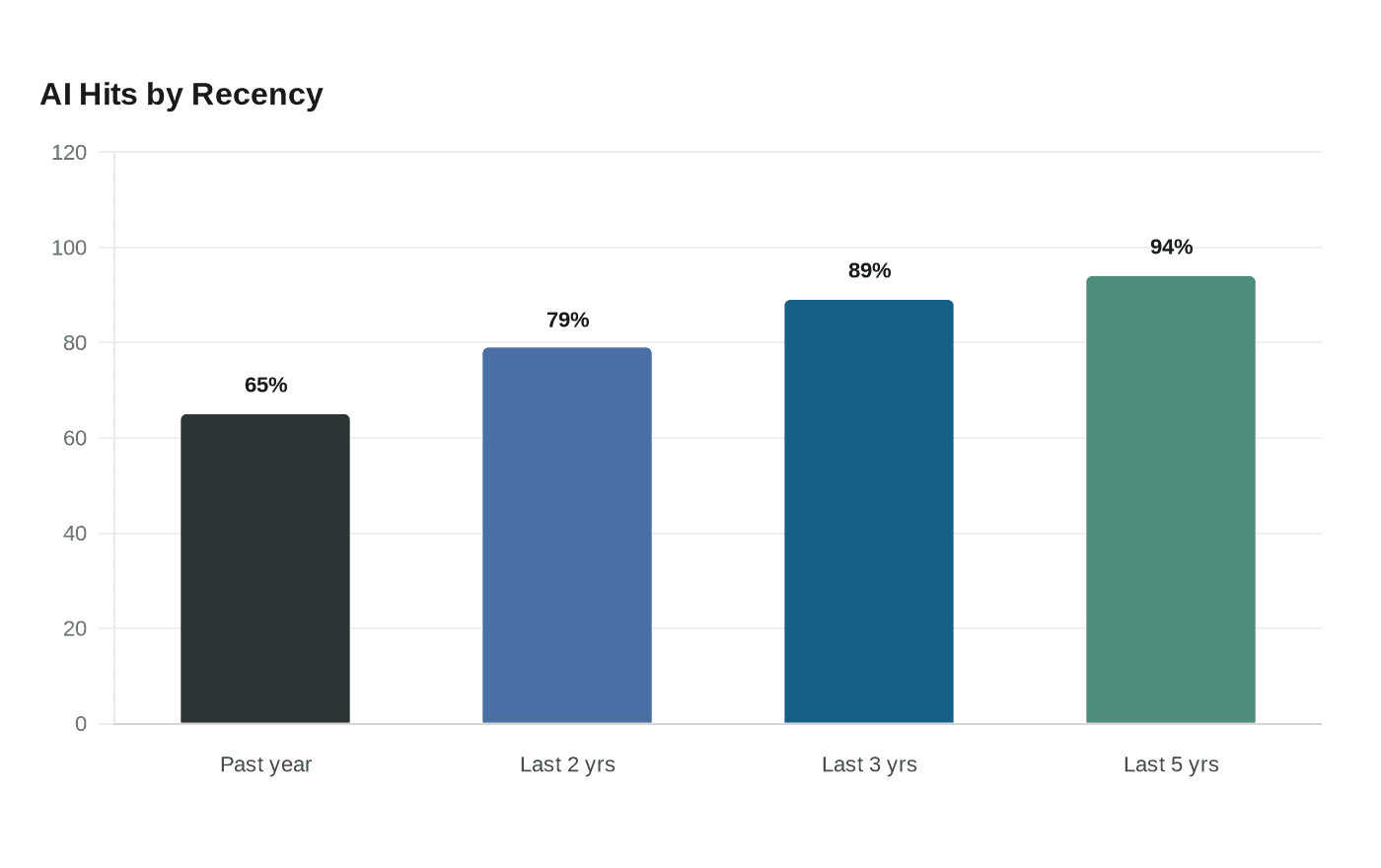
Seer Interactive found that nearly 65% of AI bot hits targeted content published in the past year. When a source asset is reworked into a video, chart, webinar recap, or updated example set, it becomes easier for search engines and AI systems to parse, cite, and surface. That shift turns repurposing into an AI-distribution strategy: one core idea, reshaped into multiple machine-readable formats that stay fresh long enough to keep attracting visibility.
Repurposing now serves visibility, not just output
A content repurposing map is the production plan behind that strategy. The map keeps formats organized, tied to business goals, and refreshed over time so an article does not disappear after its first traffic burst.
A strong blog post should not stay a blog post. It should be restructured into new assets that preserve the core thesis but change the presentation, such as a short video, a chart, a webinar recap, or a set of updated examples. That gives the same topic more entry points and keeps it visible to systems that prefer material that has been maintained, expanded, or recently reframed.
Freshness is a ranking signal for AI visibility
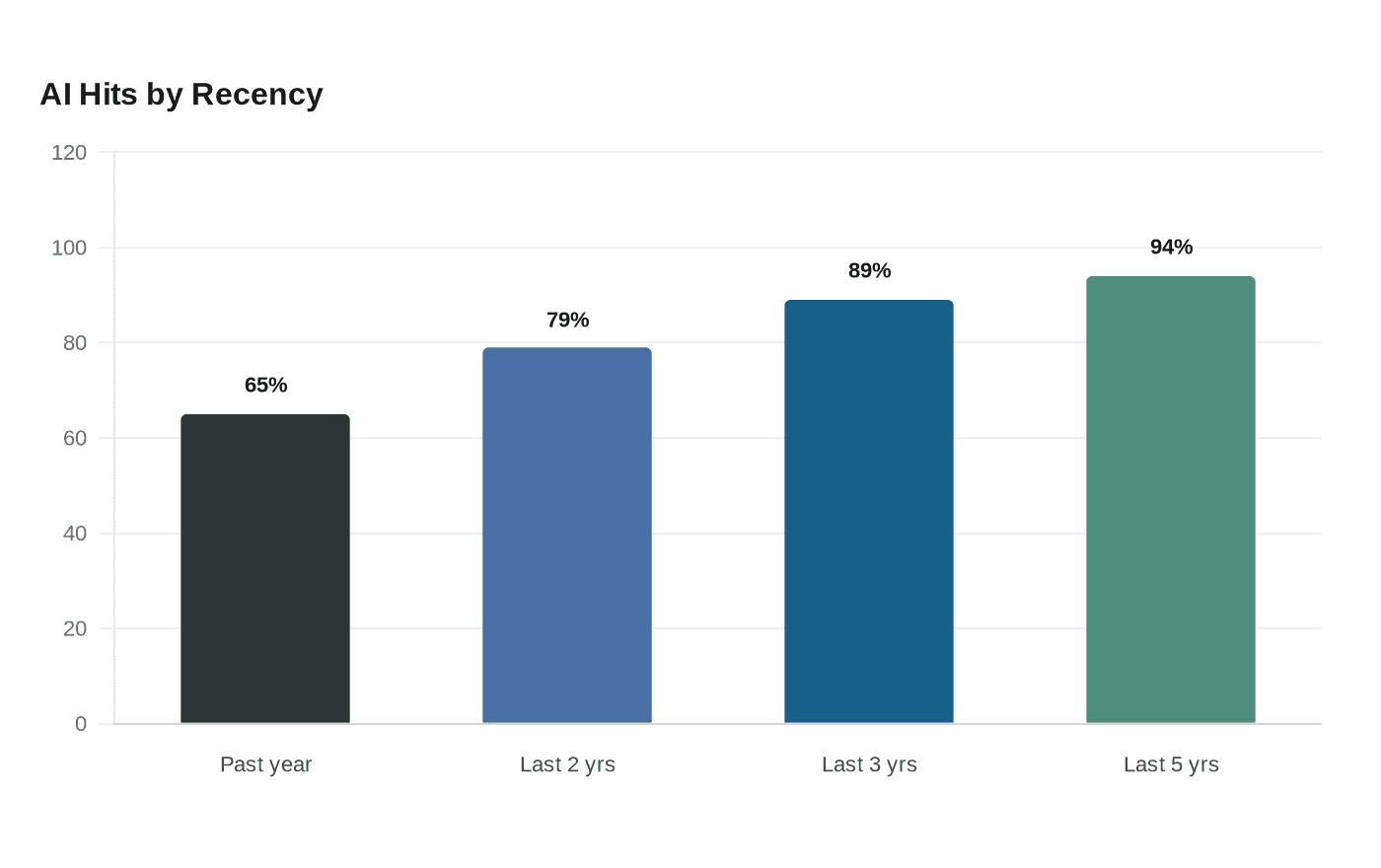
The strongest reason to repurpose is recency. In Seer Interactive’s study of AI brand visibility and content recency, 79% of hits went to content from the last two years, 89% to content updated within the last three years, and 94% to content published within the last five years.
AI crawlers are overwhelmingly spending attention on newer material, not just evergreen archives. Repurposing older assets into updated formats gives them a new timestamp, a revised structure, and another chance to be crawled. For teams with large libraries of posts, webinars, and videos, freshness becomes a maintenance problem as much as a publishing problem.
Original data gives AI systems something worth using
Freshness alone is not enough. Original data and statistics make repurposed content more useful because AI systems are more likely to use content that contains unique information rather than generic summaries. A rewritten recap that merely repeats what is already on the web adds little value, while a version that includes a new chart, a fresh example set, or a concrete statistic gives the system something more citable.
One high-performing article can be turned into a webinar recap that adds a new viewpoint, a chart that isolates the strongest metric, or a video that makes a complex argument easier to extract. Those formats add evidentiary layers that make the topic more machine-readable and more useful to a generative engine that is assembling answers from multiple sources.
Structure matters more when generative engines control display
The Princeton University GEO paper defines generative engines as systems that synthesize information from multiple sources, and creators have little control over when or how their content is displayed. That is a different publishing environment from classic search, where a page can sometimes win with one strong keyword target and a stable ranking position.
The paper introduced GEO, short for Generative Engine Optimization, along with GEO-bench, a benchmark built from diverse queries and relevant web sources. It also reported that GEO can boost visibility by up to 40% in generative engine responses. Reformatting one asset into several distinct pieces, each with a clear role, makes it easier for generative systems to recognize the topic, the evidence, and the version that is most current.
The best formats depend on the surface
Different formats help in different places, which is why the repurposing map needs to be intentional. Visibility improves when LLMs can understand relevance across text, video, audio, and imagery.
| Format | Best use in AI visibility | Why it helps |
|---|---|---|
| Blog post | Core narrative and source material | Gives the topic a canonical written version with clear structure |
| Video | Demonstrations, walkthroughs, product or process explanations | Adds multimodal context and a new surface for extraction |
| Chart | Metrics, trends, comparisons | Concentrates original data into a compact, citeable asset |
| Webinar recap | Expert commentary and revised takeaways | Refreshes older material with new framing and examples |
| Audio | Discussions, interviews, panel summaries | Extends the topic into another searchable format |
| Updated example set | Practical use cases and edge cases | Replaces generic summary language with specific evidence |
Skip speculative shortcuts and build durable signals
In the Search Engine Land roundtable, no major LLM has confirmed using llm.txt, and Google has explicitly said it does not. That pushes attention back toward the signals that can actually be controlled: freshness, original data, structural clarity, and multimodal repurposing across text, video, audio, and imagery.
For teams building GEO programs, the operational answer is to maintain the content library like a living system. Update older pieces, extract original statistics into chart form, turn strong arguments into video and audio, and publish recaps that add something new rather than simply restate the source.
This article was produced by Prism’s automated news system from verified source data, official records, and press releases, then run through automated quality and moderation checks before publishing. The system is built and supervised by the people who set the standards it runs under. Read our full AI policy.
Know something we missed? Have a correction or additional information?
Submit a Tip