Costco tops Walmart in AI grocery citations despite smaller market share
Costco beat Walmart in AI grocery citations, even as Walmart controlled about 21% of U.S. grocery sales. 5W said AI answer share now follows trust, not shelf size.
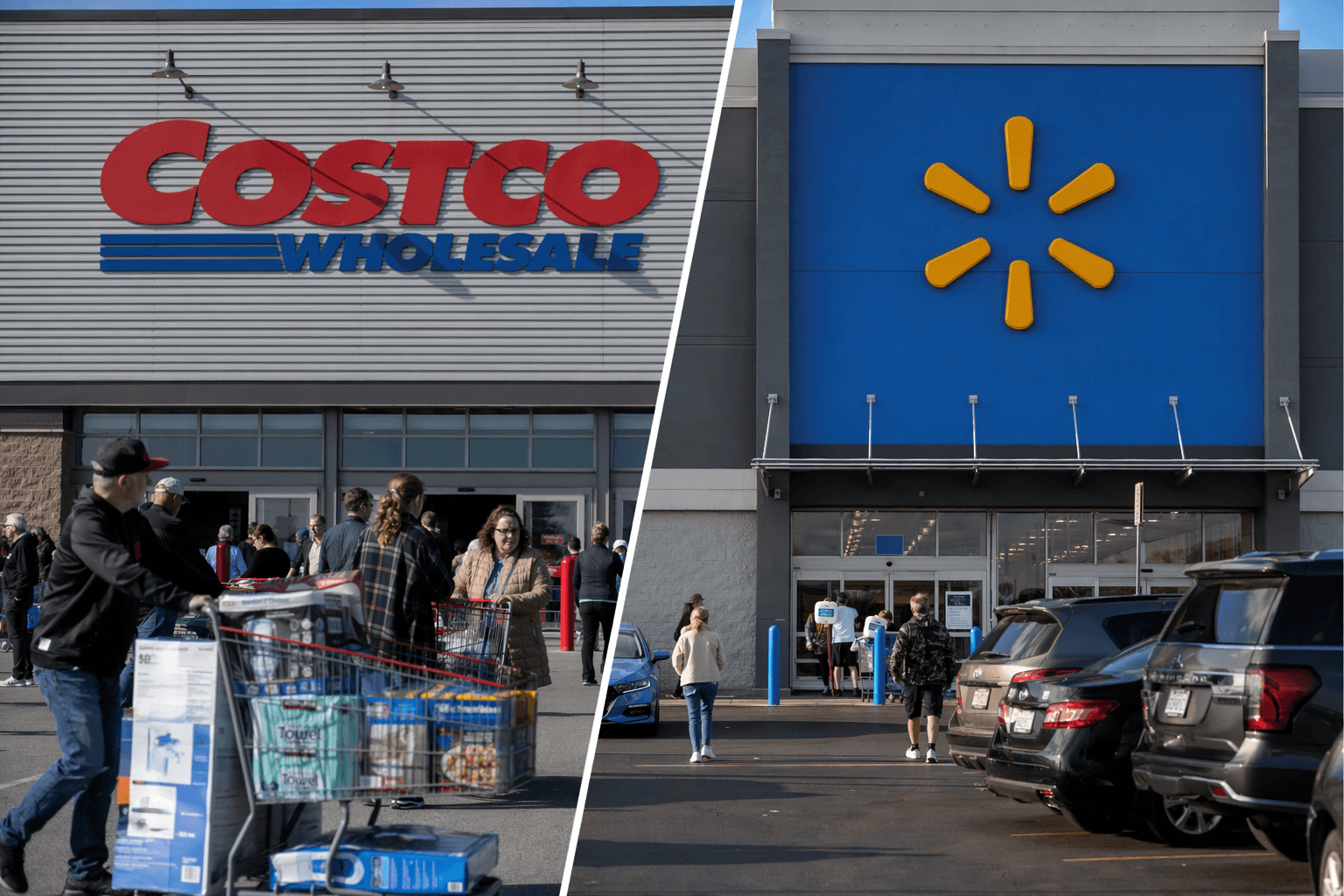
Costco has been turning up in AI grocery answers more often than Walmart, a sharp reminder that the biggest seller is not always the most cited. 5W’s U.S. Grocery Retail AI Visibility Index 2026 showed that market share and AI citation share had split apart, with Costco outranking Walmart even though Walmart held about 21% of U.S. grocery market share.
The report, released May 7, 2026, was the 11th installment in 5W’s AI Visibility Index series and the first to rank American grocery retailers by how often they were cited inside AI-generated answers. 5W ran more than 80 consumer-intent queries across 12 subcategories, including best overall grocery store, cheapest, highest-quality produce, best private label, best organic, best meal planning, best bulk, best delivery, best customer service, and best regional. The firm scored each retailer on citation frequency, answer position, sentiment, and sub-category dominance.
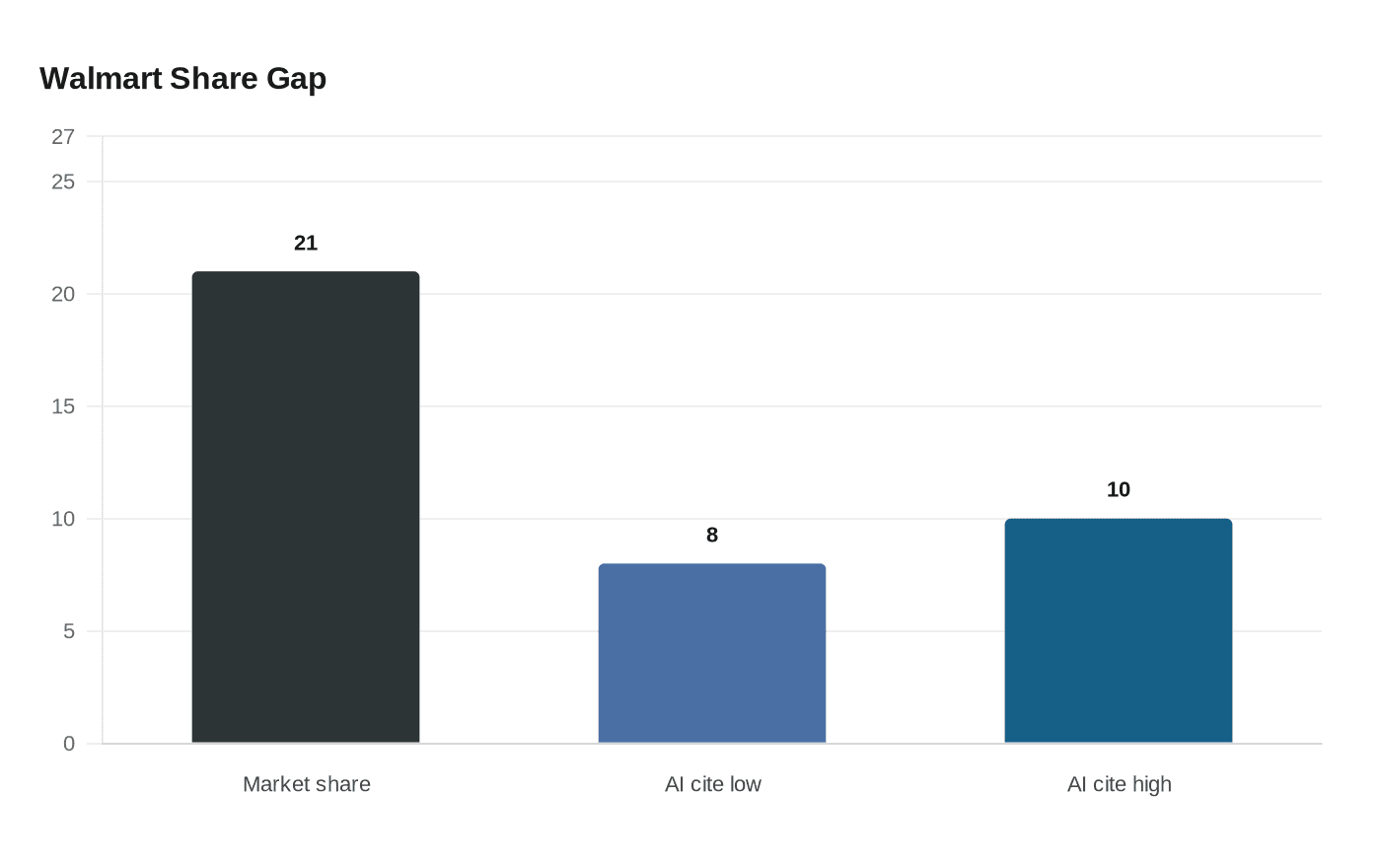
The top 10 was led by Costco, followed by Trader Joe’s, Whole Foods, Walmart, Kroger, Aldi, H-E-B, Publix, Wegmans, and Target. Walmart’s scale still mattered in the real world, but in AI premium query categories the chain’s roughly 21% grocery share translated into only an estimated 8% to 10% AI citation share. That gap is the story’s core: AI systems did not reward sheer footprint the way shoppers and investors often do.
Several chains outperformed their store counts by leaning into clearer positioning. Trader Joe’s and Whole Foods beat their commercial footprint, while Aldi, H-E-B, and Wegmans were described as punching above expectations based on store count alone. 5W’s read was blunt: AI visibility depended on answerability, trust, and category framing, not just retail scale.
Private-label equity emerged as another citation engine. Kirkland, Trader Joe’s, 365, Good & Gather, and Great Value were all named as brands that AI systems surfaced directly, suggesting that label recognition can travel farther than a store name alone. The report also found that regional loyalty created regional AI dominance, with local chains outperforming national competitors in home markets by threefold or more.
For grocery executives, the lesson is plain. Shelf share and AI citation share are now separate battlegrounds, and the retailers that get framed as the best choice for a specific job are the ones winning the answer box.
This article was produced by Prism’s automated news system from verified source data, official records, and press releases, then run through automated quality and moderation checks before publishing. The system is built and supervised by the people who set the standards it runs under. Read our full AI policy.
Did this article answer your question?