Descript beats Adobe in AI search with niche podcast focus
Descript wins by being the clearest answer for podcast editing, while Adobe’s scale matters less than a niche brand’s fit in AI search.
Why the smaller brand wins
Descript is not the biggest editor in the room, but it keeps showing up when people ask AI tools for the best podcast software. That is the real lesson here: in AI search, a company can beat a giant by being unmistakably the right answer for one job.
At just under 200 employees, Descript is still competing closely with Adobe in AI visibility, even though Adobe sits in a completely different size class. Descript says it has raised a total of $100 million, primarily from the OpenAI Startup Fund, Andreessen Horowitz, Redpoint Ventures, and Spark Capital. The money matters, but the bigger advantage is clarity: Descript has spent years presenting itself as a podcast-first editing tool built around text-based editing, recording, and publishing.
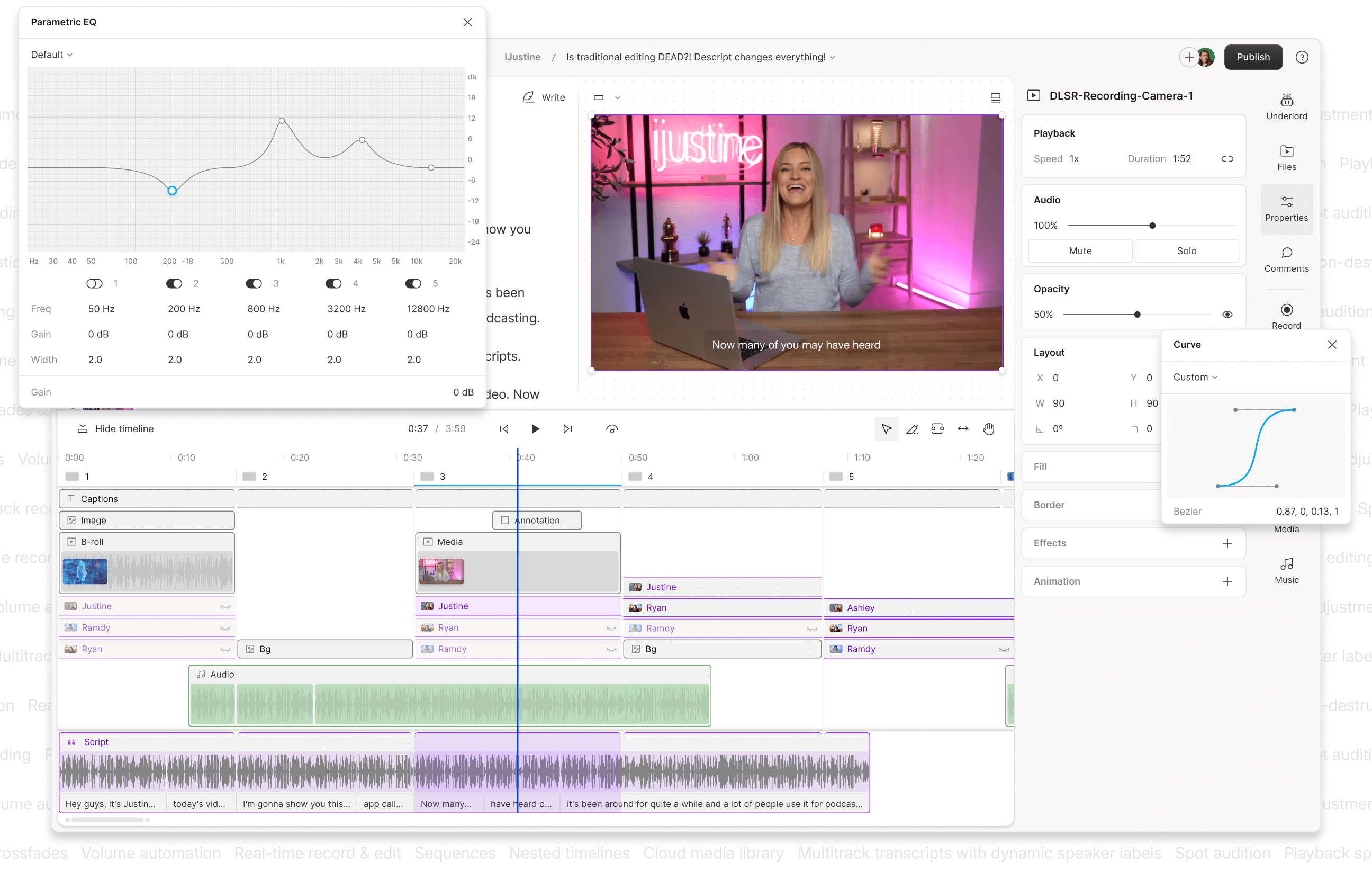
That focus is repeated everywhere that matters. Descript’s podcasting pages say you can record, transcribe, edit, make clips, and publish inside one workflow, and its about page says the product was invented by creators who hated working in the timeline and wanted a better way. Even the company’s broader homepage says editing video and audio is as easy as editing text. When a brand repeats the same promise across the homepage, product pages, and support content, AI systems get a clean signal about what that company is for.
What AI search rewards
This is where AI search behaves differently from classic SEO. Search Engine Land’s visibility coverage says generative AI is reshaping discovery, that rankings and click-through rates are incomplete as measurement tools, and that large language models fan out from the original query into related questions before selecting the most direct answer. In that environment, a focused product does not need to win every broad keyword. It needs to be the clearest match for the exact intent.
That is why Descript maps so cleanly to podcast questions. The case study says that when someone asks for the best software to edit podcasts, especially without video-editing experience, Descript appears near the top of AI Mode results, and one of its own blog posts shows up among the cited sources. The same case study also says Descript’s traditional SEO traffic has been sliding since its 2024 peak, while branded traffic has increased. For a smaller company, that is the asymmetric win: AI visibility can build recognition even when classic search traffic is under pressure.
There is another reason this works. Search Engine Land’s AI visibility analysis argues that branding in AI responses is about more than rankings, because AI systems can cite lower-ranking pages and still surface the most relevant answer. That means a company with tighter topical depth can earn attention without outspending an incumbent on broad, unfocused content. Descript is a textbook example of that dynamic.
Proof from the product layer
Descript is not just claiming the niche. Third-party review data backs it up. Capterra lists Descript’s core uses as transcription, video editing, audio editing, and podcasting, gives it a 4.7 out of 5 rating based on 182 user reviews, and says it helps teams edit media through text, auto-transcribe speech, remove filler words and silences, and quickly find clips or quotes. That is exactly the kind of product evidence AI systems can digest, because it mirrors how real users talk about the workflow problem and the payoff.
Descript’s own podcast pages reinforce the same story. They position the product around recording, editing, and publishing podcasts with text-based editing and AI assistance, including Underlord, the company’s AI co-editor. The page also emphasizes clip creation, show notes, filler-word cleanup, and fast editing by transcript, which gives the brand a very tight semantic footprint around podcast production rather than a vague, everything-for-everyone creative suite.

Adobe is the giant, but the query is still narrower
Adobe is still Adobe. Its stockholder letter says AI has been infused across its portfolio, and the company keeps framing AI as a broad platform shift across its end-to-end products. Adobe also reported record Q4 and full-year 2025 results on December 10, 2025, then record Q1 FY2026 results on March 12, 2026, showing that the business remains enormous and active on every front. Recent market data puts Adobe around $105.94 billion in market cap, which is a reminder of how lopsided this matchup looks on paper.
But Adobe is fighting on Descript’s home turf too. Adobe Podcast says users can edit audio like a text document and that its studio transcribes every word, which puts it directly into the same transcript-first category. That makes the comparison more interesting, not less: Adobe has the scale, but Descript still has the cleaner niche identity when the query is specifically about podcast editing.
The playbook for asymmetric competition
The move smaller brands should copy is not to chase Adobe on breadth. It is to own one problem so completely that both people and models can describe you in one sentence. Descript does that by tying its product, its site architecture, and its third-party reputation to a single use case. The company is a podcast editor first, a general video tool second, and that ordering matters in AI search.
The practical playbook looks like this:
- Define one high-intent use case and say it the same way everywhere.
- Build product pages that match the exact query language people use.
- Stack review proof and comparison-page mentions around the same use case.
- Refresh content fast enough to keep pace with how AI systems fan out from a query.
That last point is where a smaller team can really move. Descript was founded in 2017 by Andrew Mason, the former Groupon CEO, and it came up during the shift from timeline editing to transcript-first workflows. That origin story matters because the company’s identity was built for the exact kind of product-language clarity AI search rewards today.
The takeaway is blunt: AI visibility is not a pure budget contest. When a smaller company is clearer, narrower, and better documented than a giant, it can become the obvious answer for a focused query, and that is enough to beat bigger brands far more often than most marketers expect.
This article was produced by Prism’s automated news system from verified source data, official records, and press releases, then run through automated quality and moderation checks before publishing. The system is built and supervised by the people who set the standards it runs under. Read our full AI policy.
Did this article answer your question?